


Desert’s Fury: New Mexico Wildfire Roars Unchecked, Igniting Policy Fault Lines
POLICY WIRE — CARSON NATIONAL FOREST, N.M. — The wind, you see, it wasn’t just a breeze. Not out here, not when it rips through the pines and canyons of northern New Mexico, carrying something far...

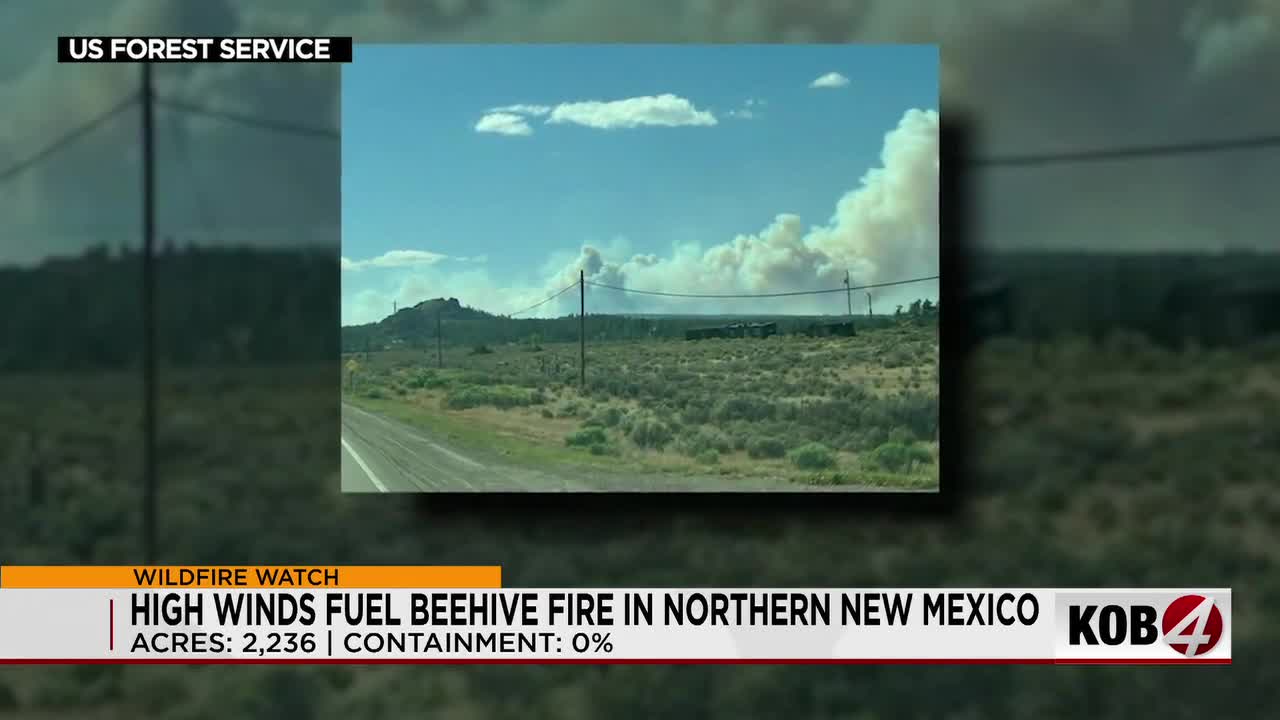
POLICY WIRE — CARSON NATIONAL FOREST, N.M. — The wind, you see, it wasn’t just a breeze. Not out here, not when it rips through the pines and canyons of northern New Mexico, carrying something far more menacing than dust. It carried fire—a raging beast christened the Beehive Fire—that, as of the latest reports, had chewed its way through a gut-wrenching 2,236 acres, leaving a swirling pall of smoke over an already parched landscape.
No containment. Just that terse, brutal assessment from officials who know all too well what a lack of a break line means when 40 mph gusts turn timber into kindling. This isn’t just another wildfire, not for a region already teetering on an ecological knife-edge. This is a visceral symptom of something much larger, something policy makers have—for too long—dithered over.
Fire managers, perpetually locked in a Sisyphean struggle against nature’s increasingly dramatic tantrums, scrambled. Helicopters and air tankers, when the relentless gales allowed them to even consider taking to the skies, tried to beat back the flames. On the ground, crews and their bulldozers — bless ’em — carved out what they hoped would be firebreaks, praying the winds wouldn’t just hop right over ‘em. Because, honestly, what’s a little dirt path to a fire driven by an invisible force of nature that feels utterly intent on claiming its bounty?
It’s a stark picture painted across Highway 285, a crucial artery now intermittently choked by smoke between Tres Piedras and the Colorado border. The sort of inconvenience that morphs into a genuine threat with unsettling speed. And though nobody’s been ordered out of their homes yet – a minor miracle, all things considered – the quiet hum of anxiety is undoubtedly rising.
Governor Michelle Lujan Grisham, keenly aware of the delicate balance between environmental catastrophe and political capital in a state deeply reliant on its natural beauty (and, let’s be honest, federal aid), didn’t mince words. “We’ve been here before, haven’t we? Too many times,” she said in a statement to this wire. “Our response teams are dedicated, but we cannot, for the life of us, keep fighting these monster fires without a coherent, national strategy that recognizes this isn’t a seasonal fluke anymore. This is our reality, year-round, and Washington needs to get with the program—or get out of the way.” Her frustration? It’s palpable.
And she’s not wrong. According to data from the National Interagency Fire Center (NIFC), New Mexico has experienced a sobering increase in average annual acres burned, more than doubling over the last two decades compared to the prior twenty-year span. It’s a stark, undeniable trend line, sketching a future where forests aren’t just vulnerable, they’re predisposed to inferno.
Local incident commander for the Beehive Fire, Sarah Chen, whose voice was frayed even over a crackling satellite connection, focused on the immediate, grinding work. “My folks are exhausted, but they’re not quitting,” Chen told us. “When you’ve got these sorts of conditions, you’re not thinking about a ‘win.’ You’re thinking about slowing it down, boxing it in, saving what you can. It’s a marathon of grit, played out under a sky that’s turned a shade of sickly orange.” Her voice conveyed a weariness that only those who battle such raw power can truly understand.
This isn’t a uniquely American predicament, of course. It’s a script playing out across arid lands globally. Consider Pakistan, for instance. Just like the high-altitude forests of New Mexico, its southern provinces like Balochistan grapple with increasingly severe heatwaves, prolonged droughts, and erratic rainfall patterns that—you guessed it—spark their own brand of devastating wildfires. The very same policy challenges related to water scarcity, land management, and emergency preparedness that plague the American West find eerie parallels in regions like the Indus River basin.
What This Means
This Beehive Fire, while geographically confined to a relatively remote part of New Mexico (for now), holds significant political and economic implications. For one, it highlights the chronic underfunding of federal land management — and firefighting agencies. When every fire becomes a scramble, every resource stretched thin, the preventative work—the forest thinning, the prescribed burns—gets deferred. But, hey, who’s counting? Taxpayer money is easier to cut from preventative measures than it’s to deny once the cameras are rolling and the sky is ablaze.
Economically, even without direct structural damage (yet), the impact on tourism and local economies, particularly those reliant on outdoor recreation, can be immediate and severe. Small towns along the scenic byways don’t just lose tourists; they lose part of their identity. And beyond that, the Beehive serves as yet another stark reminder, not just for New Mexico, but for every administration that continues to fudge its climate policy: ignore these warnings at your collective peril. Because eventually, the fire knocks at your own door, demanding a response beyond press releases and fleeting commitments. It’s an inconvenient truth, isn’t it? One the wind keeps howling.