
Desert Dream, Dollar Drain: NEOM’s Grand Vision Collides With a Staggering Bill
POLICY WIRE — Riyadh, Saudi Arabia — For years, it’s been the jewel in Saudi Arabia’s Crown Prince Mohammed bin Salman’s — MBS, as he’s known —...

POLICY WIRE — Riyadh, Saudi Arabia — For years, it’s been the jewel in Saudi Arabia’s Crown Prince Mohammed bin Salman’s — MBS, as he’s known — audacious Vision 2030: NEOM. A utopian, trillion-dollar futuristic metropolis springing from the arid embrace of the kingdom’s northwest. But these days, the price tag for the grand experiment isn’t just about building; it’s about not building. Because, it seems, even retreating from a sci-fi fantasy comes with a wallet-scorching cost.
Sources whispering behind closed doors suggest the Saudi Public Investment Fund (PIF), NEOM’s principal financier, is staring down a formidable $16 billion tab. This isn’t for glittering skyscrapers or self-driving taxis, mind you. Oh no. That hefty sum? It’s largely dedicated to compensating contractors and suppliers for agreements gone south, projects scaled back, or simply shelved entirely. It’s the silent hum of ambition meeting brute financial reality. And it isn’t a good look for a nation intent on rewriting its economic future.
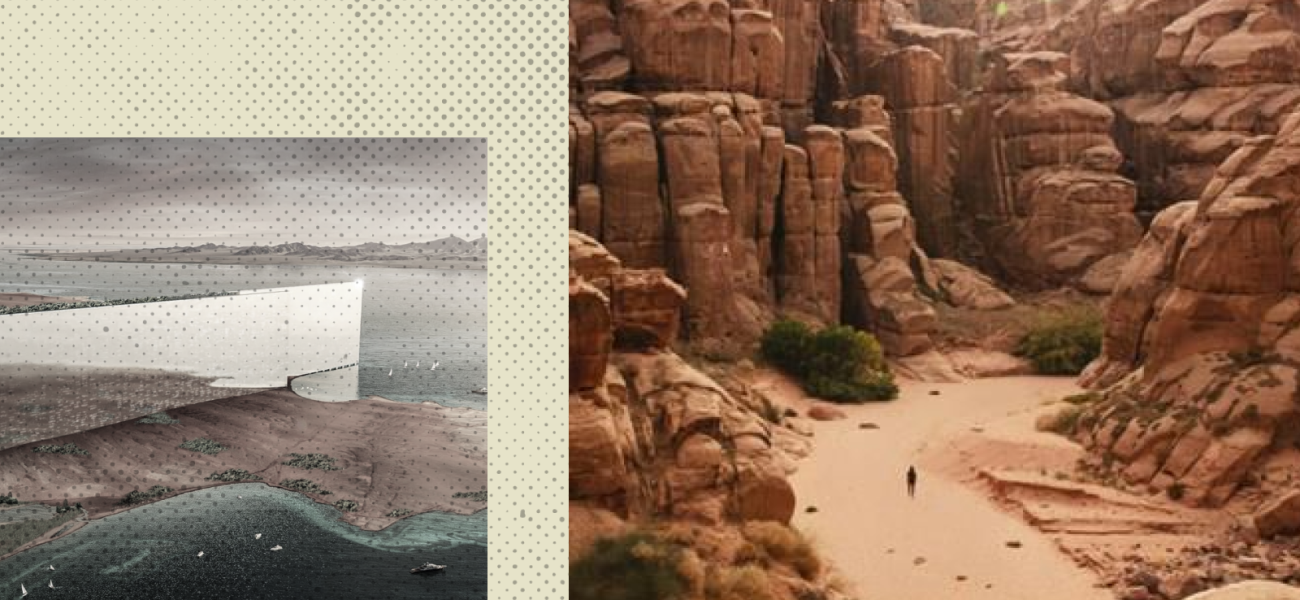
NEOM, with its radical components like ‘The Line’ — a proposed 170-kilometer-long, mirror-clad linear city — and its envisioned floating industrial complexes, was designed to redefine urban living, tourism, and innovation. It was supposed to draw in the world’s best, showcasing a Saudi Arabia powered by brains, not just barrels of oil. But whispers began long ago. First about logistical hurdles, then about population targets — an original goal of 1.5 million residents by 2030 for ‘The Line’ now looks to be a fraction of that, maybe 300,000, according to a recent Bloomberg report from April 2024 — and now, the outright cost of unwinding contracts. They’ve really hit a snag.
It’s not just a budget tweak; it’s a strategic reassessment. Khalid Al-Hajri, a NEOM project spokesperson, recently insisted that “these are expected adjustments in any mega-project of this unprecedented scale. We’re prioritizing, optimizing resources, ensuring every riyal spent serves the ultimate vision." He makes it sound like smart business, doesn’t he? A bit too tidy, perhaps.
But analysts don’t quite buy the smooth reassurances. Dr. Sana Mirza, a London-based economist specializing in Gulf investments, put it more bluntly: “When a state-backed behemoth like NEOM has to pay billions to effectively stop doing things, it signals significant miscalculations — either in initial projections, resource allocation, or market foresight. It’s a harsh lesson in project management, plain and simple.” It’s the kind of bill that’d make any CFO’s blood run cold, especially one tied to a venture this visible.
And let’s be clear: $16 billion could fund entire national infrastructure programs elsewhere. For Saudi Arabia, while a fraction of its immense wealth — its sovereign wealth fund, the PIF, manages trillions — it still represents a staggering capital burn. That’s money that could’ve diversified the economy, bolstered social programs, or invested in new industries beyond this singular desert marvel.
📄 POLICY WIRE WHITEPAPER PUBLISHED: PAKISTAN'S NATIONAL SECURITY POLICY PRIORITIES
👉 READ BY CLICKING HEREThe NEOM situation isn’t just a Saudi headache; it carries echoes across the broader Muslim world. Countries like Pakistan — grappling with their own ambitious development targets and relying heavily on Gulf investment — watch these unfolding sagas with keen interest. The ease with which Riyadh can greenlight and then seemingly reconsider projects offers a stark illustration of the uneven distribution of capital and risk. Are mega-projects truly a path to sustained growth, or a flashy — — and often financially fraught — detour? The global trend of constructing artificial mega-structures only amplifies these concerns about scale and sustainability.
It raises questions about accountability, too. Who’s really holding the reins when billions are allocated, then reallocated — or, in this case, paid out to halt progress? It’s not often we see such transparent costs associated with scaling back, even in ventures of this size. And it’s sure got tongues wagging throughout the corridors of global finance — and power.
What This Means
This hefty cancellation bill isn’t merely an accounting entry; it’s a profound political and economic recalibration for Saudi Arabia. On the economic front, it signals a potentially painful reevaluation of ‘Vision 2030’s’ more ambitious, cash-guzzling components. While MBS is keen to project an image of unstoppable progress, this figure suggests a recognition of limits, a necessary evil to keep the broader economic transformation on track without bleeding dry other priority sectors. We’re talking resource allocation on a truly grand scale, aren’t we? Politically, it represents a minor dent in the Crown Prince’s carefully crafted persona as the visionary strongman. He can afford it, financially speaking. But perceived missteps, even strategic ones, can chip away at the narrative of infallible leadership, both domestically and internationally. For the wider Middle East, it offers a cautionary tale: the siren call of mega-projects might promise future glory, but present realities — and immense capital outflows for cancellations — often prove far more unforgiving. It forces a pause, making everyone consider whether a project’s true cost is only realized once it’s too late.