


Deluge of Despair: India’s Monsoon Cycle Exacts Familiar, Deadly Toll
POLICY WIRE — New Delhi, India — It’s a familiar tableau, one that plays out with grim predictability as the annual monsoon rains sweep across the subcontinent. The rivers swell, the ground softens,...

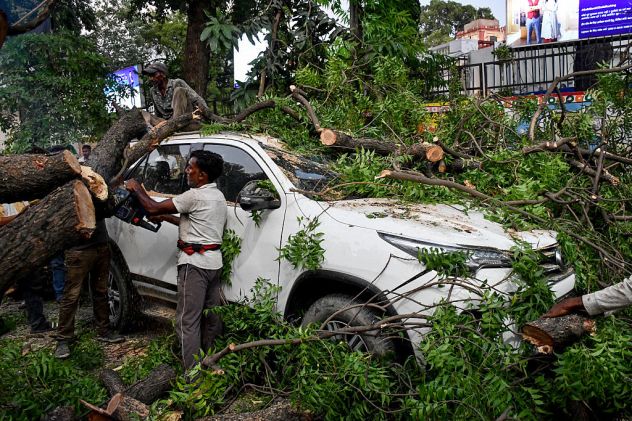
POLICY WIRE — New Delhi, India — It’s a familiar tableau, one that plays out with grim predictability as the annual monsoon rains sweep across the subcontinent. The rivers swell, the ground softens, — and then, the collapses begin: homes, bridges, lives. This year’s torrents, particularly brutal in parts of India, aren’t just meteorological events; they’re stark, visceral reminders of infrastructure stretched thin, development pushing against nature’s boundaries, and a climate shift that won’t be ignored. More than ninety-six souls have already been claimed by these deadly storms and the resulting inundations across several northern and western states, but that tally—everyone knows it—is hardly final.
And so, the ritual unfolds. Disaster crews race against rising waters, political figures issue grave warnings and promises of aid, and the television cameras capture scenes of heartbreaking displacement. In Himachal Pradesh, a mountainous state where cloudbursts trigger cataclysmic landslides, entire stretches of road simply aren’t there anymore. Families, those who’ve managed to escape, sit bewildered by heaps of rubble that, until recently, were their livelihoods, their futures. It’s not merely property damage; it’s an erasure of generations of effort.
But the monsoon isn’t some new, surprising phenomenon. It’s a fundamental part of life here. What has changed, dramatically, is its temper. Climatologists have observed an increasing frequency of ‘extreme precipitation events’—shorter, more intense downpours that overwhelm natural and man-made drainage systems. The ground simply can’t drink it all in. “We’ve seen the patterns shift so much, it’s not the gentle, nourishing rain we remember,” lamented Dr. Anisha Sharma, an environmental policy expert based in Dehradun, Uttarakhand. “It’s like the sky opens up with a vengeance, — and our old safeguards, frankly, don’t cut it anymore.”
Because, while the blame often settles on ‘acts of God,’ there are always layers of human decision-making—or neglect—involved. Unplanned urbanization, rampant deforestation in ecologically sensitive zones, and construction in floodplains all contribute to the increased vulnerability. It’s an open secret. Infrastructure, while improving in parts, can’t keep pace with a population swelling into hazardous areas, seeking opportunity regardless of the peril. One telling statistic, cited by the Indian Meteorological Department (IMD) in its annual summary, revealed that extreme weather events, including heavy rainfall and floods, were responsible for over 1,200 fatalities in India during 2022 alone. This isn’t an anomaly; it’s a trend line.
Across the border, the situation often mirrors India’s own, just with different accents. Pakistan, sharing several river systems, particularly faces its own unique challenges when glacial melt in the Himalayas combines with unprecedented monsoon rains. Flash floods routinely devastate communities there, displacing millions and ravaging agricultural land – critical for a nation whose food security already hangs precariously. The waters know no political lines, after all. “We send aid, of course, where we can, but the shared vulnerability is becoming a regional burden,” a source close to India’s Ministry of External Affairs told Policy Wire, requesting anonymity given the sensitive geopolitics. Regional cooperation, though discussed at forums like SAARC (South Asian Association for Regional Cooperation), often falters on broader diplomatic fissures. For an example of how interconnected global challenges are, and how politics often stands in the way of coherent solutions, one might consider the broader discussion on BRICS Discord regarding international cooperation.
📄 POLICY WIRE WHITEPAPER PUBLISHED: PAKISTAN'S NATIONAL SECURITY POLICY PRIORITIES
👉 READ BY CLICKING HERE“We’ve rebuilt these roads, these homes, countless times over my career,” asserted Harish Kumar, Chief of Disaster Response in Himachal Pradesh. “It’s like we’re on a treadmill. The funding arrives, the shovels dig, the concrete sets—and then the next extreme event just sweeps it away again. It’s exhausting, and it makes you question if we’re truly building smart, or just building back the same vulnerability.” And that’s the rub, isn’t it? It’s not simply about rebuilding; it’s about rethinking an entire development paradigm under a changing sky.
What This Means
The perpetual cycle of monsoon devastation isn’t merely a natural calamity; it’s a political and economic pressure cooker. Economically, agricultural output, a cornerstone of India’s rural economy, takes a direct hit. Crop losses, infrastructure damage—roads, bridges, power lines—and disruption to supply chains can collectively shave significant points off regional GDP growth. State budgets, already stretched thin, get further strained by relief and rehabilitation efforts, diverting funds from long-term development projects like schools and healthcare.
Politically, the immediate aftermath inevitably sparks blame games. Local authorities accuse central governments of insufficient aid; central authorities point to local zoning failures. This electoral ping-pong, while momentarily satisfying for some, does little to address the systemic issues: the accelerating impacts of climate change, the critical need for climate-resilient infrastructure, and more robust early warning systems. Without a coherent, nationally integrated strategy that factors in localized geological vulnerabilities and rapidly shifting weather patterns, India—and its neighbours—will continue to grapple with this tragic routine. It’s a recurring, deadly tax on progress, one paid mostly by the poor and marginalized communities who have the least say in policy but bear the greatest brunt.