


Defiance in the Skies: Ben-Gurion Airport Navigates War’s Edge Amid Missile Threats
POLICY WIRE — Tel Aviv, Israel — Amidst the scorched afterglow of a dramatic missile exchange, the ordinary mechanics of air travel in the Middle East feel impossibly jarring. You’d think a...

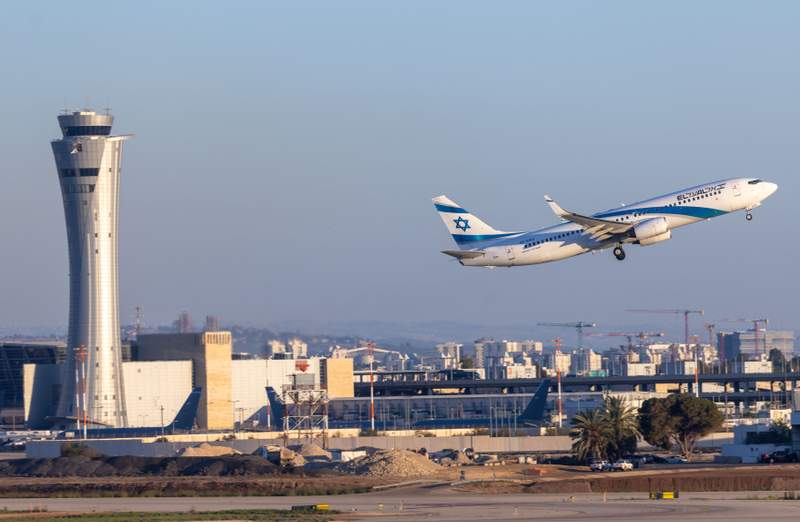
POLICY WIRE — Tel Aviv, Israel — Amidst the scorched afterglow of a dramatic missile exchange, the ordinary mechanics of air travel in the Middle East feel impossibly jarring. You’d think a barrage of hundreds of drones and missiles – an event that, in any other theatre, would ground every bird in the sky for weeks – would mean an immediate, unequivocal halt to civilian aviation. But you’d be wrong. Tel Aviv’s Ben-Gurion International Airport, a facility designed as much for strategic defiance as for travel convenience, keeps humming along. It’s a testament to the strange normalcy Israel has carved out of perennial conflict, a defiant flick of the wrist in the face of escalating regional tensions.
It’s not business as usual, mind you; it never really is here. Flights have seen cancellations, airlines are understandably cautious, — and insurance premiums? Don’t even ask. Yet, the main international gateway for Israel remains open. A reduced flight schedule, certainly, but open nonetheless. This isn’t merely about logistics; it’s a high-stakes psychological game, played out daily against a backdrop of war. “We’ve built resilience into our bones,” said Maya Ben-Israel, a spokesperson for the Israel Airports Authority. “Operations here aren’t just about logistics; they’re a statement. We don’t halt life for every bluster — and bang, do we? Passengers have booked, airlines are flying, and we make damn sure they can.”
The decision to keep the gates open, even as Israel was busy intercepting incoming projectiles from Iran, underscores a broader strategic posture. It communicates not just domestic steadfastness but also, critically, a projection of control to international partners and adversaries alike. Because if Israel’s economic arteries are seen to be constricting, if its primary connection to the outside world grinds to a halt, then a critical front in this multi-layered conflict might just be conceded without a shot fired. And this isn’t lost on observers across the wider region.
Security concerns, of course, are paramount. Israeli defense systems are some of the most sophisticated on earth—you simply don’t doubt that. But no system is infallible, and the sheer volume of the recent attacks surely tested every fiber of that protective web. For instance, according to an analysis by IHS Markit in 2023, insurance costs for commercial flights operating into and out of Israeli airspace saw a jump of nearly 40% immediately following the Gaza conflict’s intensification – a trend that only exacerbated with the direct Iranian assault.
For nations across the Muslim world, from Cairo to Karachi, the continued operation of Ben-Gurion carries different weight. Some might see it as hubris, others as an inconvenient truth of Israeli operational prowess, and still others perhaps as a reflection of their own struggles in maintaining stability under duress. But it undoubtedly shapes regional perceptions of Israeli vulnerability. An air corridor open implies a society that can withstand—even mock—attacks, however devastating they might appear from afar.
Lieutenant Colonel Gideon Oren (Ret.), a senior defense analyst with close ties to the Ministry of Defense, didn’t mince words. “Iran’s strategy isn’t just military, it’s economic warfare. But disrupting our main international gateway? That’s not happening on our watch. Our continued operations signal not just military preparedness but also economic resolve, both to the financiers in Frankfurt and to the strategists watching from Tehran to Islamabad.” It’s a defiant economic and psychological gamble, he suggests.
But can this hold? The international aviation industry is not known for its tolerance of instability. Airlines make commercial decisions, after all. Travelers opt for safer routes. Because for all the brave talk from Tel Aviv, the specter of civilian aircraft flying through a literal war zone – or over one, to be precise – isn’t exactly a selling point for tourism, is it?
What This Means
Keeping Ben-Gurion Airport open isn’t just about Israelis getting to their holiday in Cyprus. This is geopolitics painted in stark, high-contrast colors. Economically, a fully functional international airport under siege provides a semblance of continuity crucial for investor confidence. Its closure would transmit a potent signal of destabilization far beyond Israel’s borders, impacting global markets sensitive to Middle Eastern volatility and amplifying concerns about shipping and energy supplies. The psychological impact domestically is equally profound; it’s a visible manifestation of resilience, a tangible sign that life, however perilous, must go on. It’s designed to deny adversaries the satisfaction of disruption and to project an image of invincibility to its populace and the world.
Strategically, this maneuver also tests international resolve — and norms. How long can commercial carriers be expected to operate under such heightened threat levels before external pressures – or perhaps simply astronomical insurance premiums – force a re-evaluation? The balancing act for Israel involves maintaining this façade of normalcy without pushing international partners, and their airlines, too far. Every flight departure and arrival from Ben-Gurion is now a tacit endorsement of Israel’s risk assessment, an acknowledgment of its ability to manage an acutely dangerous environment.