


Decoding the Flaws in the Taliban’s Regime in Afghanistan
The situation in Afghanistan is on the verge of a crisis, five years after Taliban returned to power. The situation in the country is complicated and problematic: the general suppression of the human...

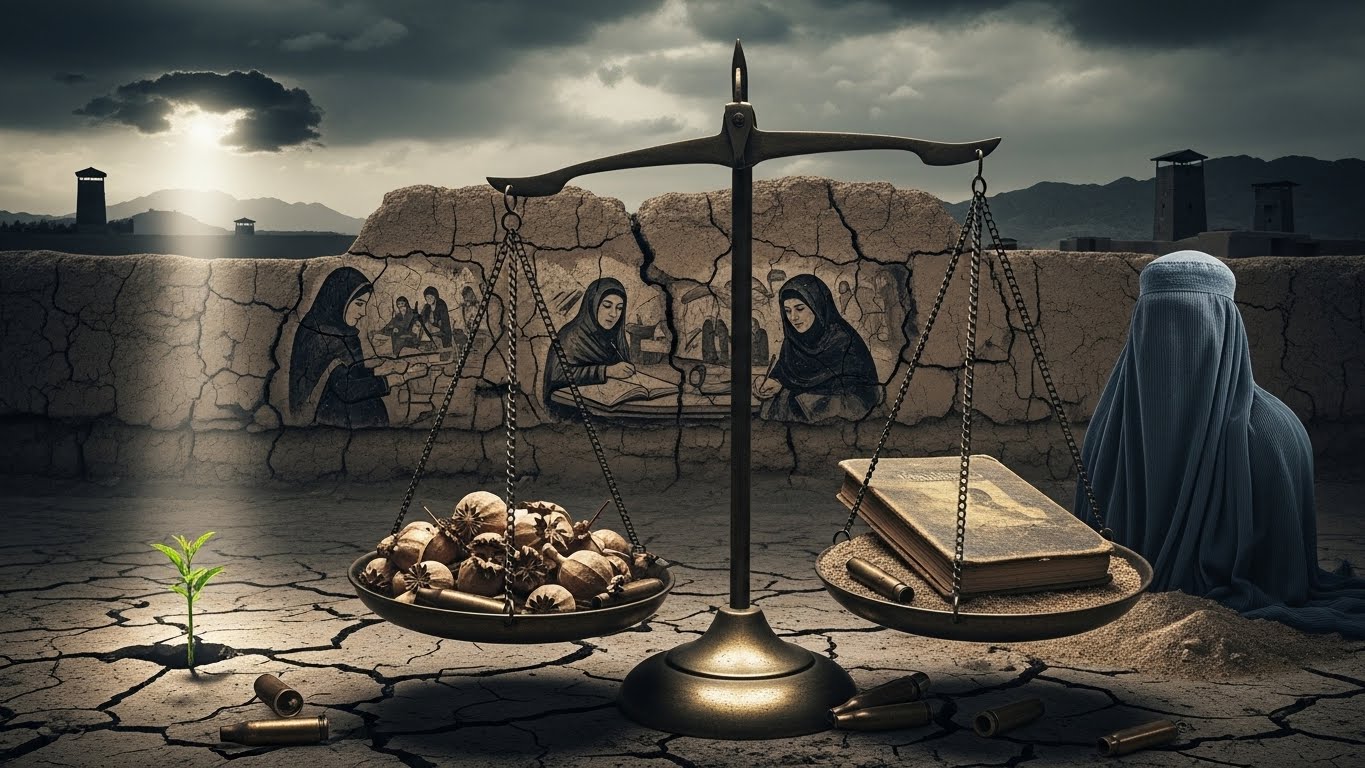
The situation in Afghanistan is on the verge of a crisis, five years after Taliban returned to power. The situation in the country is complicated and problematic: the general suppression of the human rights is systemic, the local rivalry over resources is local, and the strategic use of the regional powers is aimed at the stability and influence. These interrelated issues are outlined by the recent developments. UN deputy secretary-general Amina Mohamed has given warning calls regarding the limitations placed on women and girls. At the same time, the human price of exploitation of resources controlled by Taliban is revealed by the bloody conflicts between Taliban-allied miners and local people in Takhar province. China and Pakistan are also on the same page at the diplomatic level whereby they are urging the Taliban to embrace a more accommodative political system as Afghanistan increasingly gains prominence in regional geopolitics.
The Ongoing Crisis of Women’s Rights
The human rights issue in Afghanistan is one of the most acute and the most ethically burning crisis of nowadays. January 5, 2026, the UN Deputy Secretary-General Amina Mohammed has highlighted the fact that millions of Afghan women and girls are deprived of basic rights, such as access to education, employment, safety, and free movement. She cautioned against the international community turning a blind eye to such sins as she pointed out that women rights are human rights, everywhere. The Taliban has made many decrees since August 2021, which is the time of the Taliban coming back to power, and virtually reverses almost twenty years of gender equality achievements.
Statistics emphasize the gravity of the state of affairs. Approximately 80 percent of girls in the country are not enrolled to secondary level and this is between 2.2 to 2.5 million school-age girls. According to the surveys conducted by the UN Women, more than 90 percent of the Afghan adults favor the right of girls to an education proving that Taliban limitations are incompatible with the hopes of the population. Regarding the general civil liberties, Afghan women have retained about 17 percent of the rights that men have as opposed to an average of over 60 percent of all women around the world. Other than education, the limitation of the participation of women in the workforce poses a challenge on the stability of the society and economic growth. UN estimates show that such restrictions may cost Afghanistan over 920 million dollars in lost economic benefits between 2024 and 2026 and at the same time elevate the incidences of child marriage, early pregnancy and maternal deaths.
The psychosocial aspect of this crisis is immense. Millions of girls who used to want to become doctors, teachers and engineers have its future limited by ideology and legislation. Not only does the oppression of the freedoms of women amount to a human rights abomination, but such a move is also a military defeat to Afghanistan, hurting the social unity and the ability of the nation to develop sustainably.
Local Conflicts Over Natural Resources
When international discourse is primarily centered on rights infringements and diplomacy, many Afghans have a different experience as local tensions and resource-oriented conflict are their defining reality. On January 5, 2026, in Chah Ab District, Takhar province, there were violent conflicts between locals and Taliban-linked gold miners. The Taliban gunfire shot dead three villagers, and one Taliban was reported killed with a shovel by the residents. The Taliban officials of Kandahar were involved in the mining activities in collaboration with the Chinese investors, which points to the overlap of local grievance, the extraction of natural resources, and the economic interests of foreigners.
These wars demonstrate that the monopoly on use of force and control of resources by the Taliban is usually a source of tensions with the groups that are not included in the economic gains. Afghanistan is blessed with a lot of mineral resources, such as gold, lithium, and rare earth elements, but mining of these resources often yields no prosperity and only violence. The Takhar event is a part of the larger trend in which the local communities, who are not part of decision-making and gains, oppose the encroachment of Taliban-related operators, which can lead to the repetition of conflicts and unstable conditions.
Geopolitical Engagement: China and Pakistan
As the internal repression and localized violence were taking place, Afghanistan has turned out to be a subject of strategy of the regional powers, most prominent among them China and Pakistan. After the seventh round of China-Pakistan Strategic Dialogue in Beijing, the two nations agreed to urge Taliban to establish an inclusive political system and implement policies that would help them achieve sustainable development and integration into the region. Their words made it clear that no other country should use the territory of Afghanistan to shelter or organize attacks on other nations and demanded tangible and verifiable measures to destroy terrorist organizations that are active in Afghanistan.
The involvement of China is highly associated with its Belt and Road Initiative (BRI) and China-Pakistan Economic Corridor (CPEC). According to Beijing, Afghanistan is a strategic centre of regional connectivity and energy corridors as well as extracting of minerals. On its part, Pakistan aims at achieving stability in Afghanistan so as to cope with the security of the borders, flows of refugees, and political interests locally. The diplomatic activity of both countries is marked by a pragmatic calculus: the stability of Afghanistan is crucial to the peace in the entire region, but with such pragmatism, the legitimization of the government that still infringes upon the basic human rights can be achieved.
However, this diversion cannot be extended to an extent that accountability ranks below it. The only seriousness attached to inclusivity and moderation can only be achieved when it is accompanied by feasible standards such as reopening of schools to girls, admission of women in the labor force and the reinstatement of civil liberties. Otherwise, the intervention will only reinforce an existing status quo in which millions of individuals are stigmatized and institutionalized inequalities are enabled.
The Cost of Inaction
These three forces, the repression and civil war within the country, and the transactional diplomacy come in conflict, and it is very important to note that neglecting the factor of human rights in Afghanistan is not cheap, in the long run. Lack of an opportunity to educate women and girls and secure employment removes the country of a pool of human capital that is crucial in economic recovery and social solidarity. Out of the 2.5 million girls, they are not receiving education and the exclusion is a huge loss not only to Afghanistan but also of development opportunities in the region.
Simultaneously, when a country faces a domestic power war over resources, e.g. in Takhar, it means that the existence of the governance based on limited set of interests promotes instability and insecurity. This is aggravated by the fact that the economic entities associated with the Taliban is exploiting the natural resources without their restoration to the local communities giving fertile grounds to another wave of violence. This is a silent lesson that internal instability and human rights violation are directly connected with the general area security.
Despite the fact that diplomatic efforts by the Chinese and Pakistani can be utilized in the region to achieve stability, it must not be employed instead of the principled international action. Regional initiatives will be cosmetic and not radical, unless there is some sort of mechanism and coercion on the Taliban to accommodate human rights, inclusive governance, and equitable participation in the economy.
Conclusion
The contemporary Afghanistan can be raised as a fine illustration of the cost of authoritarianism combined with the global indifference. The violation of the rights of women, the employment of force in order to gain the local resources of a particular region and the game of chess between the superpowers of the region are issues that go hand in hand with each other and need the joint and decisive acts. The international community cannot afford to have a blind eye in such violations as highlighted by United Nations Deputy Secretary-General Amina Mohammed. Sustainable peace and development situation in Afghanistan should include not only participation of the diplomatic level but advocacy of human rights, community empowerment and accountability. It will be when it will be able to solve these basic issues when Afghanistan will have any chances to live in the world of repression, war and chaos, the outcomes of which are stretched far beyond the borders of the country.
Author