
In international affairs, patience is not weakness; generosity has limits. As Hans J. Morgenthau warned, no state should allow moral posturing to block the political duty of national survival. Pakistan today acts on that hard lesson.
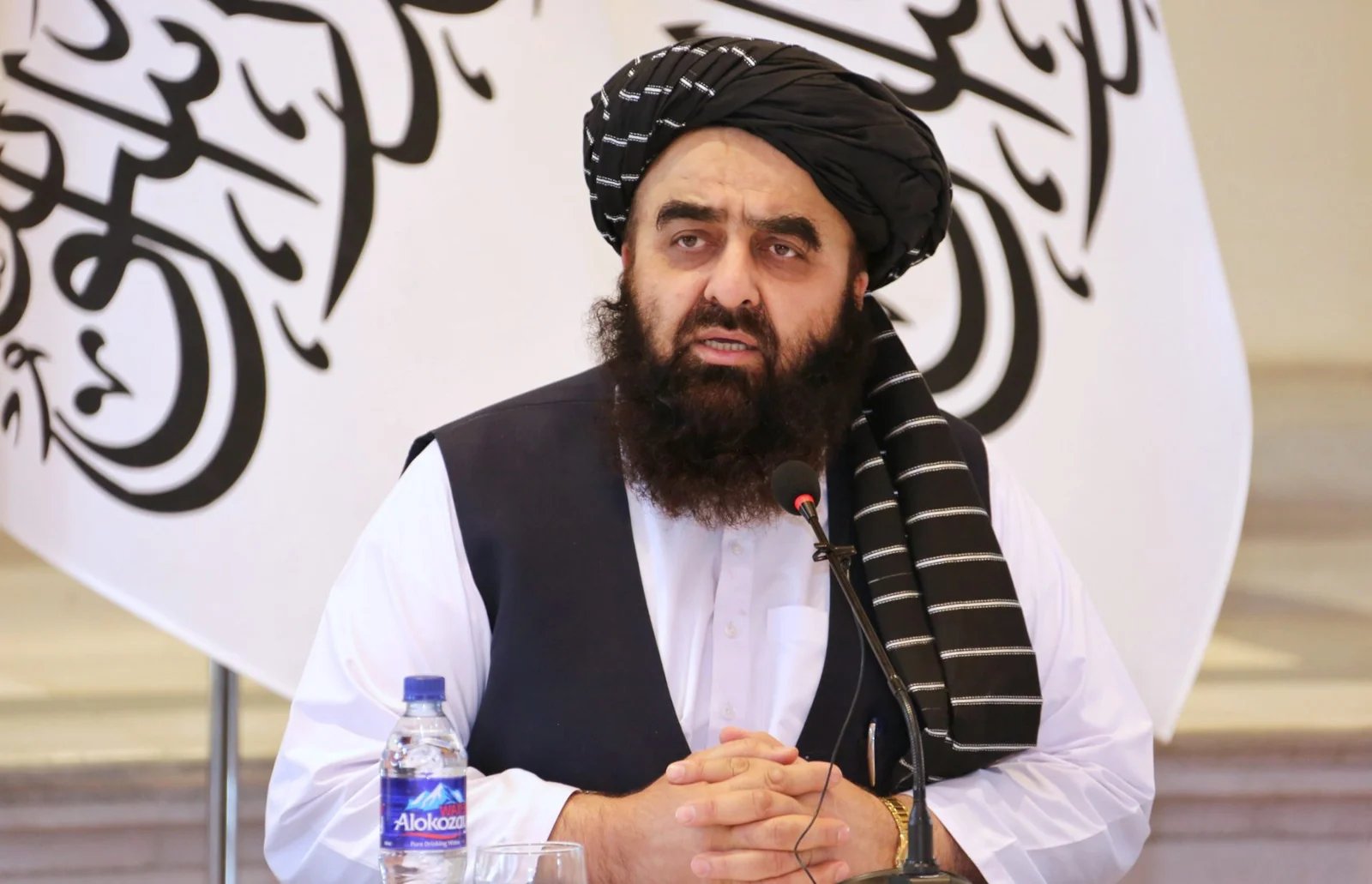
Amir Khan Muttaqi’s recent charges, that Pakistan violated Afghan airspace, choked trade, and turned against refugees who once found shelter in Pakistan, are not only misleading, they are painfully hypocritical. Those who once accepted Pakistan’s help are now pointing fingers while Afghan soil continues to be used to strike Pakistan. The record tells a different story: Pakistan’s measures are defensive, calibrated, and driven by a simple responsibility, to protect its people.
Terror Strikes First, Pakistan Answers
October 2025 was a grim reminder that attacks against Pakistan are being planned and launched from across the border. On 8 October, militants linked to FAK ambushed a Pakistani convoy near the Afghan frontier in Orakzai district, killing 11 soldiers, including two officers. Just a few days later, 12 October, cross-border clashes along the Pakistan-Afghanistan border resulted in 23 Pakistani soldiers martyred and 29 injured, highlighting the escalating threat. These incidents forced temporary border closures, a direct consequence of the violence emanating from Afghan soil, and prompted Pakistan to respond decisively to defend its territory and citizens.
On November 10–11, 2025, FAK (Fitna-al-Khawarij) terrorists attacked Cadet College Wana in South Waziristan, attempting to seize students. Around 650 people, including 525 cadets, were present in the college. The attackers detonated explosives at the main gate, but Pakistan Army forces swiftly neutralized all five militants. Nine civilians were injured, and all students and staff were safely evacuated. Investigations confirmed the attackers were guided from Afghan soil, highlighting the ongoing cross-border threat and Pakistan’s legitimate self-defense.
The next day, a suicide bomber targeted the district court in Islamabad, killing at least 12 people and injuring 27 others. The attacker detonated explosives near a police vehicle at the court entrance. A breakaway faction of FAK (Fitna-al-Khawarij/TTP) claimed responsibility. The attack struck at the heart of Pakistan’s judicial system, underscoring the persistent cross-border militant threat. Security forces responded swiftly to contain the area, ensuring no further casualties. The government describes the scale and tempo of these strikes as pushing Pakistan into an effectively wartime posture.
When a sovereign state faces repeated attacks originating from across its borders, it not only has the right but also the duty to defend its citizens and institutions. Pakistan’s actions, whether targeting militants in South Waziristan or responding to attacks in Islamabad, are measured defensive responses. Any claims that Pakistan is violating airspace ignore the reality: these operations are a legitimate exercise of self-defense against threats emanating from Afghan soil.
The Bitter Irony of Kabul’s Complaint
It is a stark irony that Kabul now accuses Islamabad of aggression while, according to multiple UN and independent assessments, Afghan territory has become a haven for FAK. The UN Security Council monitoring apparatus and independent reporting have documented the terrorist group’s growth inside Afghanistan and external support networks that enable attacks on Pakistan. Reports have even claimed regular payments and sanctuary to FAK leadership and affiliates, allegations Kabul has repeatedly denied but failed to rectify.
Those who accepted Pakistan’s trade, transit, and humanitarian generosity, including sanctuary for millions of Afghan nationals, now reject Islamabad’s pleas for basic guarantees: stop using Afghan land to strike Pakistan. That reversal is not just political posturing; it is a betrayal of reciprocity.
Diplomacy, Evidence and Repeated Rebuffs
Pakistan has not abandoned diplomacy. During talks in Istanbul in October and November 2025, Islamabad asked for a simple, written, internationally witnessed guarantee that Afghan territory would not be used to attack Pakistan. Pakistan presented UN-verified evidence of safe havens in provinces such as Kunar, Nangarhar and Paktika; Kabul refused to deliver the concrete, verifiable commitments Islamabad sought. When repeated diplomatic requests are met by denial or inaction, deterrence becomes unavoidable.
Trade and Refuge: Pakistan’s Record of Restraint
Pakistan has continued to host and feed millions of Afghans. It remains one of the largest hosts of Afghan refugees in the world. At the same time, Islamabad has allowed trade to flow, until security concerns made temporary border slowdowns unavoidable. Exports to Afghanistan grew markedly in 2024; yet Islamabad has also targeted illicit transit and smuggling routes that, independent analysts say, can and do fund terrorist networks.
Pakistan’s tightening of customs and transit in early 2025, which reportedly cost Afghan trade around US $1.4–1.5 billion, was strictly a security measure, not a punishment for ordinary Afghans who have relied on Pakistan’s hospitality. These steps targeted illicit trade routes that could fund FAK (Fitna-al-Khawarij) operations, ensuring that trade privileges are linked to security and safety, rather than being used as arbitrary economic pressure.
📄 POLICY WIRE WHITEPAPER PUBLISHED: PAKISTAN'S NATIONAL SECURITY POLICY PRIORITIES
👉 READ BY CLICKING HEREA Clear and Practical Roadmap
Pakistan’s demands are modest and verifiable, not maximalist:
A written, neutral-witnessed agreement prohibiting cross-border terrorism.
Extradition or neutralization of key FAK terrorists who plan attacks on Pakistan.
Joint border management, intelligence hotlines and real-time cooperation.
A clear, measurable linkage between trade/travel privileges and on-the-ground counter-terror outcomes.
These steps protect both states’ interests and give Kabul the tools to prove its seriousness, instead of tweeting accusations while terrorists plan from its soil.
Patience Has Limits
Since 2021, Pakistan has tolerated a rise in attacks against its soldiers and civilians while maintaining trade and sheltering refugees. That restraint was generous, and costly. But patience ends where the lives of citizens and the integrity of the state are endangered. Diplomacy is not an infinitely renewable resource; deterrence is a sober necessity when diplomacy is rebuffed.
Amir Khan Muttaqi’s complaints ring hollow against the facts on the ground. Islamabad has sought proof, sought guarantees and sought partnership; what it has often met is denial and deflection. The international record, UN monitoring reports and independent news agencies, shows FAK operating from Afghan territory and mounting lethal operations against Pakistan.
If Kabul wishes to reclaim moral high ground, it should stop sheltering those who attack Pakistan, sign the simple guarantees Islamabad requests, and cooperate to crush FAK’s networks. Until then, Pakistan will continue to protect its people, firmly, legally, and decisively.
Author