


Cricket’s Uneasy Diplomacy: PCB Chief’s IPL Appearance Looms Over Ahmedabad Summit
POLICY WIRE — Islamabad, Pakistan — It’s a curious turn of events, isn’t it? The grandest spectacle in franchise cricket, the Indian Premier League, potentially becoming a diplomatic...

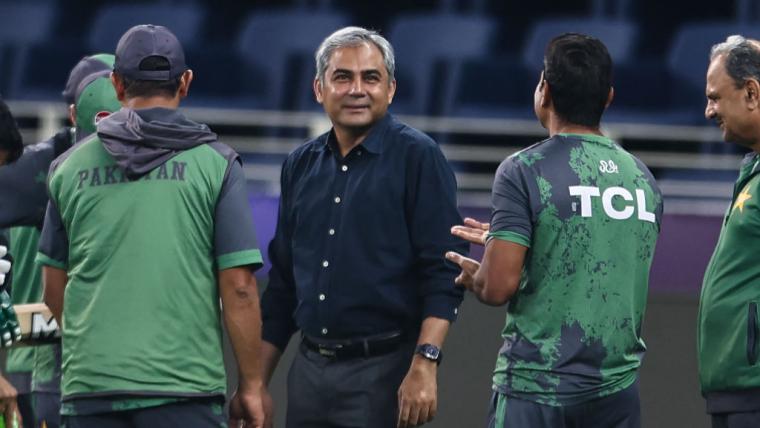
POLICY WIRE — Islamabad, Pakistan — It’s a curious turn of events, isn’t it? The grandest spectacle in franchise cricket, the Indian Premier League, potentially becoming a diplomatic minefield, or perhaps, a surprising bridge. News filters down that Mohsin Naqvi, the high-flying Chairman of the Pakistan Cricket Board (PCB), could well be a spectator at the IPL 2026 final, set to be staged in Ahmedabad. And no, he isn’t a surprise big-money signing. He’d be there for an ICC meeting, making his attendance at the game a logistical no-brainer—and a political high-wire act.
Because let’s face it, India-Pakistan cricket matches aren’t just games; they’re geopolitical weather vanes. And the prospect of Pakistan’s top cricket boss sauntering into an Indian stadium, even for a global council meeting, it’s weighty. For years, cross-border cricketing ties have been, well, frigid. No bilateral tours since 2012, no series in India since 2007. Just high-stakes, high-pressure encounters in ICC tournaments, almost exclusively on neutral turf. Or sometimes, on Indian turf, but with Pakistani officials often conspicuously absent, or making carefully timed appearances.
But the ICC has opted for India to host a board meeting around that IPL final. That’s a clever bit of scheduling, wouldn’t you say? It forces the issue. It tests the water. It pushes senior figures from rival boards into the same room, onto the same tarmac. It’s an arrangement that could very well see Naqvi – a powerful figure also serving as Punjab’s Chief Minister – in the Narendra Modi Stadium, a place steeped in cricketing history, yes, but also undeniably resonant with India’s current political leadership.
It’s not just a matter of convenience; it’s a calculated maneuver. A subtle prod from the global cricket body to perhaps, just perhaps, thaw things out a little. Consider the economics: a 2010 report from the Federation of Indian Chambers of Commerce and Industry (FICCI) estimated that a full bilateral cricket series between India and Pakistan could generate upwards of $1 billion in revenue across media rights, advertising, and tourism. That’s an awful lot of money left on the table each year this impasse continues. That’s real cash. Imagine the fan fervor, the advertising revenue – it’s astronomical. Nobody’s giving up that kind of money for mere principles forever.
“Our objective is always to promote cricket and foster sporting relations globally,” a high-ranking Indian cricket official, speaking off the record but reflective of the BCCI’s general stance, reportedly remarked recently. “If attendance at an ICC gathering facilitates dialogue, that’s positive. Sport, after all, transcends politics, or at least it should try to.” It’s the usual rhetoric, isn’t it? Diplomatic but with that unmistakable underlying implication of a larger economic driver.
📄 POLICY WIRE WHITEPAPER PUBLISHED: PAKISTAN'S NATIONAL SECURITY POLICY PRIORITIES
👉 READ BY CLICKING HEREAnd for Pakistan? “Any engagement, especially at an international forum, serves our broader interest in showcasing Pakistan’s commitment to global cooperation,” Pakistan’s Foreign Office spokesperson Mumtaz Zahra Baloch was quoted stating, when asked about potential high-level interactions. “However, specific travel arrangements and participation remain subject to broader foreign policy considerations and official confirmation.” It’s the delicate dance of national dignity versus pragmatic opportunity. It’s never simple.
The Pakistan Super League (PSL) has steadily grown, gaining significant viewership within Pakistan and across the Muslim world, even attracting players who once shunned the region due to security concerns. But it’s no IPL, not yet. Pakistan’s ambition for consistent international competition, especially against its traditional rival, isn’t merely about the game; it’s about visibility, prestige, and ultimately, hard currency for its struggling cricket board. Getting to an IPL final, for any PCB official, it’s seeing what a potential future, funded differently, could look like.
What This Means
The symbolic power of Naqvi’s potential presence in Ahmedabad isn’t lost on anyone. Politically, it signals a cautious, almost glacial, movement towards easing tensions between two nuclear-armed neighbors, if only on the cricketing front. It doesn’t mean a bilateral series is suddenly around the corner; governments still have their rigid stances. But it’s a crack in the wall, isn’t it? Economically, even these small gestures hint at the vast untapped commercial potential if India and Pakistan ever decide to normalize sporting ties. The cricketing world—and businesses tied to it—would rake it in. From a regional standpoint, for South Asia and indeed the broader Muslim world which keenly follows Pakistani cricket, any direct interaction between top officials, however constrained, carries immense weight. It could influence regional perceptions — and even pave the way for other, non-sporting engagements down the line. Because sometimes, a boundary hit is worth a thousand words—or at least a slightly less frigid stare across the table.