


Cool Front or Political Mirage? When Meteorological Relief Masks Deeper Policy Cracks
POLICY WIRE — Washington D.C., USA — The mercury dips, a welcome relief after what felt like an endless inferno, and for a fleeting moment, a city sighs. But here in the Beltway, you quickly learn to...

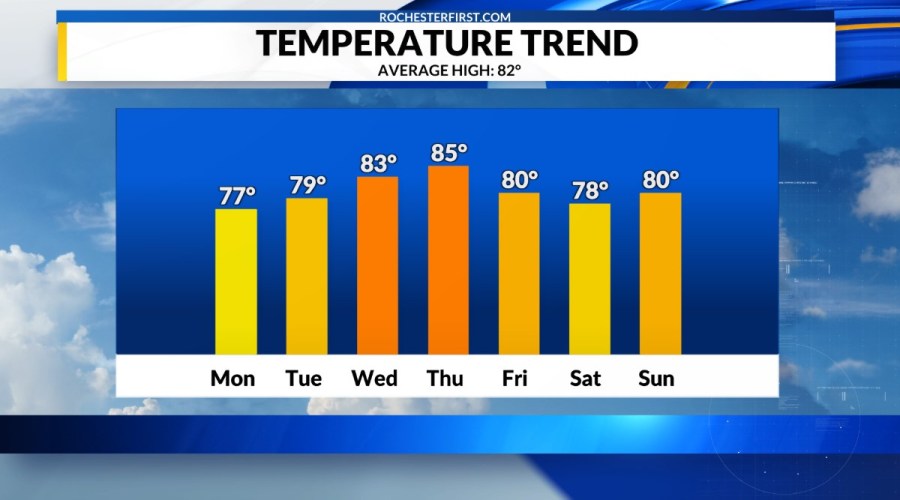
POLICY WIRE — Washington D.C., USA — The mercury dips, a welcome relief after what felt like an endless inferno, and for a fleeting moment, a city sighs. But here in the Beltway, you quickly learn to look past the obvious, past the pleasant breezes and the temporarily reduced need for air conditioning. Weather, much like public sentiment, often provides a convenient — or inconvenient — mirror to policy and governance. This week’s promise of milder temperatures isn’t just a meteorological footnote; it’s a temporary reprieve that risks blinding us to the larger, more tempestuous forecasts brewing globally.
It’s easy to celebrate a cool front. Doesn’t everybody love a break? Less energy strain on the grid, fewer complaints about sweltering commutes—it feels like a win. But policy makers, or at least the ones worth their salt, understand that a calm sea today doesn’t guarantee smooth sailing tomorrow. For instance, the World Meteorological Organization reported in 2023 that the global average temperature for the last nine years (2014-2022) was the warmest on record, at 1.15°C above the 1850-1900 average. That’s a stark reminder that isolated dips don’t erase an overarching, alarming trend.
This momentary cooling effect could, in fact, be interpreted as a subtle form of institutional complacency. When immediate discomfort recedes, so too often does the political will to tackle systemic issues. Think of the intricate, often fraught, debates around sustainable energy transitions or climate resilience infrastructure. It’s hard enough to get consensus during a scorching heatwave; try pushing those reforms when everyone’s feeling a little breezier. The narrative shifts, doesn’t it? From urgent crisis to manageable fluctuation, a subtle recalibration that lets entrenched interests breathe a bit easier. It’s a psychological gambit played out in legislative chambers and boardrooms alike, proving that human nature and thermodynamics have a strange, uneasy partnership.
But the stakes are truly immense, particularly for regions like South Asia. A country like Pakistan, for instance, lives on the razor’s edge of climate volatility. Its agricultural backbone — largely dependent on reliable monsoons and predictable temperature cycles — becomes incredibly vulnerable when patterns go awry. Too much heat, harvests fail. Too little, — and disease might spread differently. A slightly cooler week for Washington might mean a marginally improved energy outlook, allowing for reduced stress on a system that’s perennially taxed. But for Karachi or Lahore, even slight temperature deviations from established seasonal norms carry heavy implications for food security, water management, and the perennial power crises that plague daily life. They’re watching these temperature maps differently, trust me.
And because, in geopolitics, everything connects, this kind of climate variance plays directly into regional stability. Economic stress, driven by climate events, frequently escalates social tensions, creating fertile ground for political instability. Countries scrambling for resources, like the water scarcity already challenging Pakistan and its neighbors, aren’t looking at a few degrees difference with detached interest. They’re counting costs, literal — and metaphorical. It’s not just about staying comfortable; it’s about staying solvent. And frankly, the idea that a mild week is somehow ‘good news’ when the broader forecast is catastrophic just feels—well, a touch myopic, wouldn’t you say? A breath of cool air sometimes comes with a whiff of delusion, particularly when Washington misreads the globe.
📄 POLICY WIRE WHITEPAPER PUBLISHED: PAKISTAN'S NATIONAL SECURITY POLICY PRIORITIES
👉 READ BY CLICKING HEREIt’s this pattern, this tendency to treat symptoms rather than disease, that truly frustrates seasoned observers. When a government, any government really, boasts about [QUOTE_PLACEHOLDER]less heat this week, one has to wonder what larger structural vulnerabilities they’re implicitly obscuring. Perhaps it’s an unconscious reflex, or perhaps it’s a calculated deflection from the slow-motion crisis of climate change, the escalating global energy demand, or the deep-seated political economy of resource distribution.
What This Means
This week’s meteorological moderation, far from being a simple forecast update, serves as a crucial, albeit subtle, political indicator. It suggests a temporary lowering of the political ‘fever’ surrounding immediate environmental pressures, potentially easing the push for aggressive policy changes. Economically, a period of less extreme temperatures translates directly into reduced energy consumption for heating and cooling, offering a fleeting boost to power grids and consumer pockets. For economies already teetering—such as those across parts of South Asia often crippled by energy shortfalls and agricultural dependency—even a brief respite offers precious breathing room. This short-term relief, however, presents a policy trap. It fosters a narrative of normalcy, allowing decision-makers to delay unpopular but necessary long-term climate adaptation and mitigation strategies. This lull also gives short shrift to the immense and growing global climate displacement crisis, impacting everything from migration patterns to international aid. Ignoring the broader climate trajectory because one week feels milder is, simply put, a profound dereliction. The stakes for food security, public health, and geopolitical stability—especially in climate-stressed regions like Pakistan—remain high, regardless of transient meteorological anomalies.
For journalists like us, these seemingly innocuous bulletins often contain a hidden layer of commentary on administrative priorities and societal complacency. It’s like a silent omission that speaks volumes, telling us not about what’s said, but about what’s studiously avoided.