


Rules of Engagement: FIFA’s Balogun U-Turn Ignites Global Outcry Over Sporting ‘Justice’
POLICY WIRE — Zurich, Switzerland — For nearly six decades, the legend of Manuel Garrincha served as a solitary, perplexing footnote in the annals of World Cup disciplinary action. The Brazilian...

POLICY WIRE — Zurich, Switzerland — For nearly six decades, the legend of Manuel Garrincha served as a solitary, perplexing footnote in the annals of World Cup disciplinary action. The Brazilian maestro, famously red-carded in the 1962 semi-final, somehow sidestepped a ban to play in the final, a move then shrouded in allegations of political arm-twisting. It was a bizarre aberration—a whispered anomaly in a sport that otherwise prided itself on universal application of its strictest edicts. But sometimes, history isn’t just forgotten; it’s alarmingly replicated, perhaps even brazenly updated for the 21st century.
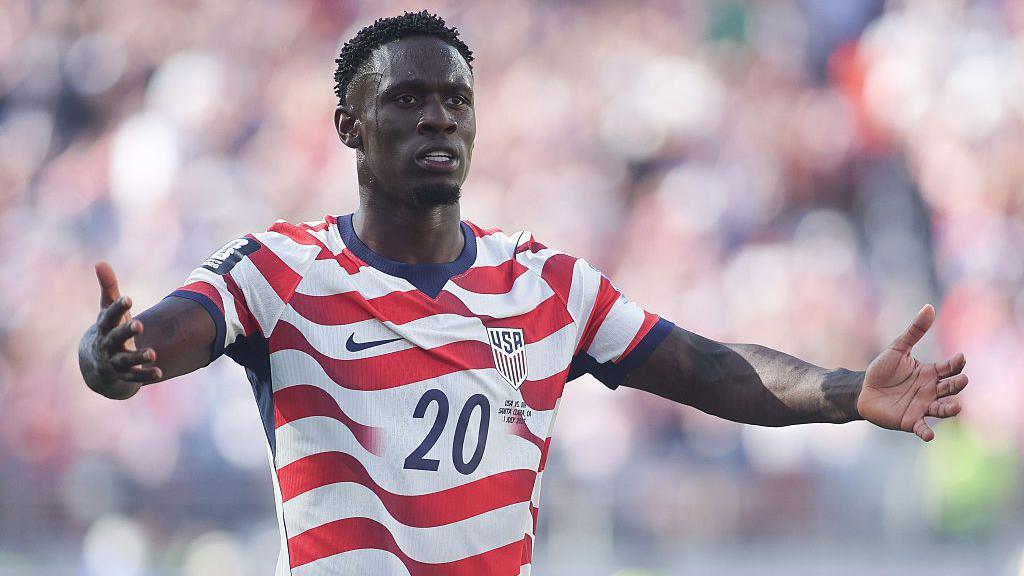
Enter Florian Balogun. The United States forward, dismissed during a gritty last-32 clash against Bosnia-Herzegovina, was staring down an automatic one-match ban. An open-and-shut case, or so the footballing world thought. After all, the competition’s rulebook, those weighty tomes few dare challenge, states that a player “will automatically be suspended from their team’s subsequent match.” Not this time, apparently. FIFA’s Disciplinary Committee, without so much as a polite ‘by your leave’, yanked the red card. Just like that, Balogun is set to grace the pitch against Belgium, leaving behind him a hurricane of furious protest and uncomfortable questions.
It’s a peculiar twist in an already theatrical tournament. There have been 189 red cards in World Cup history, yet official FIFA disciplinary committee records confirm that only Balogun and Garrincha have managed to escape their predetermined consequences. But Garrincha’s case predated automatic bans. Now, FIFA has effectively rewritten a foundational truth. Belgium’s head coach, Rudi Garcia, barely contained his exasperation, declaring, “I didn’t know that at the FIFA World Cup, July 5th is now April 1st, and that’s April Fool’s. We’re not defending the national team or the federation, we’re defending football.” It’s tough to argue with him.
FIFA’s official statement offered all the transparency of a lead curtain. It cited “Article 27 of the FIFA disciplinary code”—a catch-all provision allowing the governing body to ‘fully or partially suspend’ punishments. This clause, a veritable ‘get out of jail free’ card, has never once been invoked at a World Cup before now. Never. Not even for cases that genuinely stirred debate about perceived unfairness. They pointed to Cristiano Ronaldo’s suspended ban ahead of this tournament, a disciplinary measure from *qualifying* matches. It isn’t even in the same zip code, let alone the same ballpark. It seems a vacuum of information breeds one thing very reliably: speculation.
And boy, is there speculation. The Reuters, AFP, — and New York Times wire services have all reported claims of a direct intervention from Washington. President Donald Trump, it’s alleged, placed a call to FIFA President Gianni Infantino after the Bosnia match, reportedly requesting a review. This isn’t confirmed by everyone—BBC Sport, for instance, maintains its inability to corroborate the reports—but the optics are brutal. Especially after Trump took to Truth Social, thanking FIFA for “reversing a great injustice.” Secretary of State Marco Rubio had also weighed in days prior, stating bluntly that the US “got screwed with that red card” and that “there needs to be an appeal process.” Casual comments turn into direct action.
What This Means
📄 POLICY WIRE WHITEPAPER PUBLISHED: PAKISTAN'S NATIONAL SECURITY POLICY PRIORITIES
👉 READ BY CLICKING HEREThis decision, delivered from FIFA’s rather plush Zurich headquarters, carries far more weight than just Balogun’s availability for a single knockout game. It punches a gaping hole in FIFA’s claims of neutrality — and consistent rule application. For decades, the organization has grappled with its image, fighting allegations of everything from graft to influence-peddling. And here we’re again. Critics will, quite reasonably, suggest that when push comes to shove, sporting regulations are ultimately negotiable instruments, especially if the right powerful voice whispers in the ear of the right powerful administrator.
Economically, such perceived inconsistencies could subtly undermine the perceived value and integrity of FIFA’s own tournaments and brand. Fairness sells; apparent favoritism erodes trust, not just among competing nations but also potential sponsors and broadcasters who rely on a clean image. Politically, it strengthens the notion that global sporting bodies are susceptible to the machinations of geopolitical power. How would this play, one wonders, in capitals from Islamabad to Cairo, where the concept of fairness in international arenas is often viewed with deep skepticism, especially when Western powers are involved? It reinforces a narrative many have been told for years: rules are for some, not for others.
It sets a dangerous precedent for future tournaments, too. If Article 27 can be activated for a host nation’s star player, what’s to stop every major power from lobbying for similar ‘exceptional circumstances’ next time around? It’s not about Balogun’s guilt or innocence; it’s about the process. Or the shocking lack of one. When officials like Belgium’s Garcia speak of ‘defending football,’ they’re pointing to the sanctity of its rules, which are the game’s bedrock. But Washington’s shadow on Zurich’s decision feels long, and its implications ripple far beyond a single football match. For every player and coach adhering rigidly to the laws, this FIFA decision has introduced a chilling sense of ambiguity. What exactly are the rules now, — and who truly gets to bend them?