


Climate Crisis: Extreme Heat Threatens British Wildlife and Landscapes
POLICY WIRE — London, UK — The escalating impacts of extreme heat are poised to transform the British landscape, posing severe threats to both wildlife and agricultural sectors. Scientists warn that...

POLICY WIRE — London, UK — The escalating impacts of extreme heat are poised to transform the British landscape, posing severe threats to both wildlife and agricultural sectors. Scientists warn that unprecedented temperature rises will lead to significant ecological disruptions.
Urban and rural areas alike face the brunt of these changes. In cities, the urban heat island effect exacerbates temperature rises, while rural farmlands struggle with reduced crop yields and increased pest infestations. “We are witnessing a rapid transformation of our ecosystems,” said Dr. Emily Carter, a climate scientist at the University of Cambridge. “This is not just a future scenario; it is happening now.”
Wildlife is particularly vulnerable. Bird populations are declining as habitats become inhospitable. Species such as the European nightingale and the skylark are migrating northward in search of cooler climates. “Many bird species are facing existential threats due to habitat loss and changing food sources,” noted Dr. Alan Reed, an ornithologist with the Royal Society for the Protection of Birds.
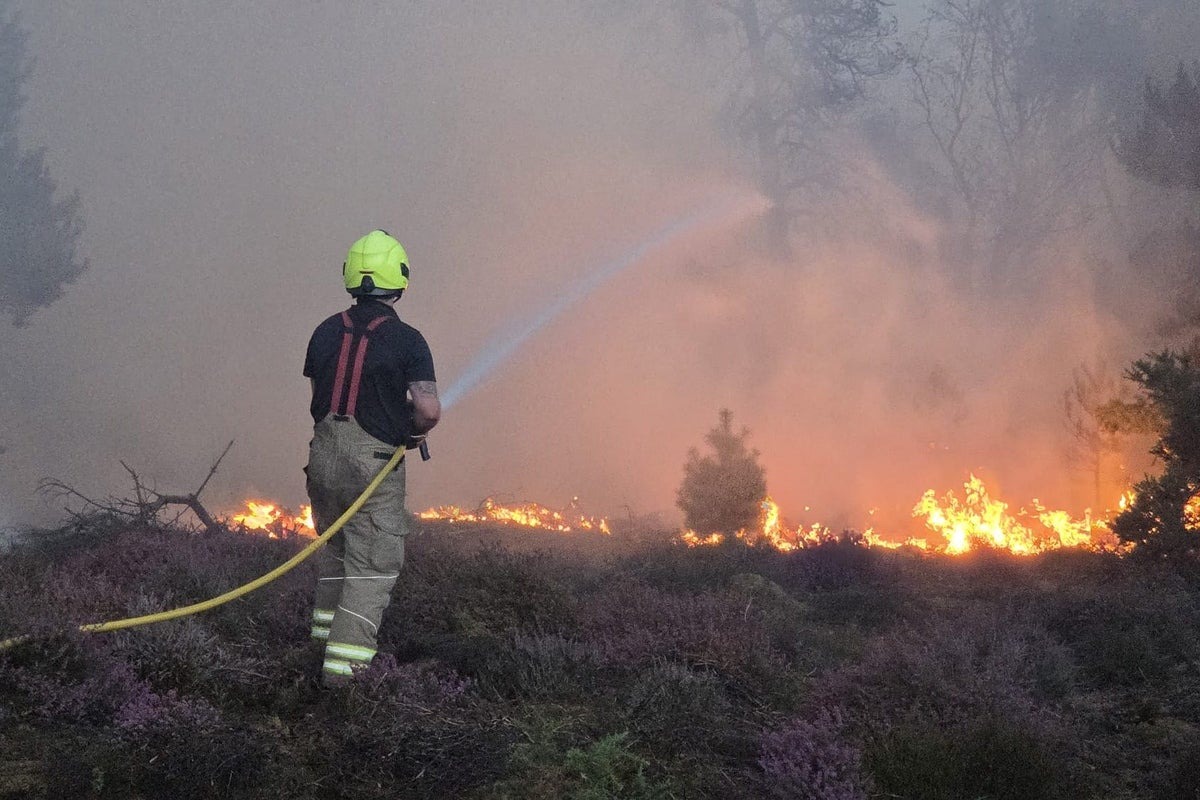
Forests are also suffering. The recent surge in wildfires, exemplified by the deployment of Gurkhas to South Wales to combat blazes, underscores the growing danger. Dead trees, a consequence of prolonged droughts and heat, provide ample fuel for these fires. “The frequency and intensity of wildfires are increasing, driven by higher temperatures and prolonged dry periods,” said Professor Laura Hughes, a forestry expert at the University of Edinburgh.
Agricultural sectors face dire predictions. Crop failures and reduced yields are expected to become more common, impacting food security. “Farmers are already reporting lower harvests and increased pest problems,” stated Dr. Michael Green, an agronomist with the National Farmers Union. “Adaptation strategies are urgently needed to mitigate these effects.”
Efforts to combat these changes are underway. Conservationists are working to create wildlife corridors to aid species migration. Farmers are exploring drought-resistant crop varieties and sustainable farming practices. Government initiatives, such as the recently announced £1 billion fund for climate resilience, aim to support these efforts.
However, the scale of the challenge remains daunting. “We need a coordinated national effort to address these issues,” emphasized Environment Secretary George Eustice. “Climate change is not a distant threat; it is a present reality that demands immediate action.”
Reporting by Policy-Wire (PW)