
Experts Focus on Maintenance and Human Error in Six Flags Goliath Fatal Incident Investigation
Experts examine maintenance, design, and human error in the fatal Six Flags Over Georgia roller coaster incident. Policy Wire investigates the details.

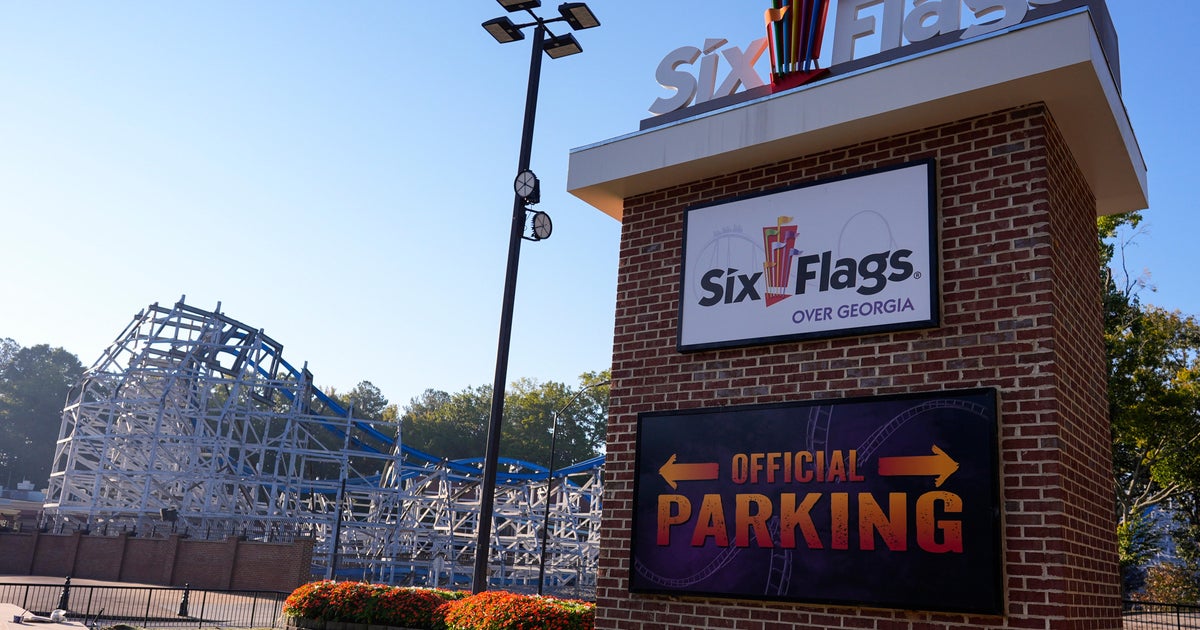
POLICY WIRE — Atlanta, United States — Ride inspection experts anticipate that the ongoing probe into the tragic death of a man who fell from a Georgia roller coaster will thoroughly evaluate whether mechanical maintenance issues, design flaws, or human error caused the incident. The Goliath attraction has remained shut down since 42-year-old Hassan Kariem lost his life after witnesses reported he was ejected from the moving ride.
Georgia Insurance and Safety Fire Commissioner John F. King, who is spearheading the investigation, emphasized that officials will avoid rushing to conclusions or leaving questions unresolved. His team has maintained a constant presence on the ground to ensure every critical detail receives thorough scrutiny. Meanwhile, a Six Flags spokesperson reiterated the company’s commitment to safety, noting that the organization is fully cooperating with state authorities and the ride manufacturer alongside ongoing internal reviews.
Commissioner King noted that a March inspection of the Goliath roller coaster identified zero violations or deficiencies. However, that specific inspection report contained a notation advising staff to replace bushings, a mechanical component that experts expect investigators to examine closely. Bushings function to absorb shock and minimize friction across various mechanical assemblies.
Manufactured by the Swiss-based firm Bolliger & Mabillard, the Goliath opened at the Georgia park in 2006. The massive structure features tracks rising 200 feet into the air and allows cars to accelerate up to 70 miles per hour. Over the past 25 years, Six Flags has debuted five distinct Goliath coasters across North America.
Roller coaster engineers and ride operators suggest that Kariem’s ejection could point to a mechanical failure, operator error—such as an operator neglecting to properly secure the safety restraint—or a combination of both factors. Standard protocol requires park maintenance crews to inspect rides and their restraints each morning before opening. A corporate representative emphasized that safety forms the core of park operations, highlighting daily documented inspections and multi-stage training programs for ride operators that combine classroom study, hands-on practice, and supervised on-the-job evaluation.
Passengers boarding the Goliath are secured into one of 36 seats via a padded clamshell lap bar, which is a U-shaped restraint designed to lock across the rider’s waist and thighs. Operators are required to verify that all restraints are locked prior to dispatching the train. Daniel, an operator at another Goliath coaster who spoke using his middle name to protect his employment, explained that staff manage the ride using a control screen and buttons. Operators utilize two orange buttons to open and close the car restraints, while two flashing green mushroom-shaped buttons at the bottom illuminate once sensors confirm every individual restraint is fully locked, signaling that the ride is ready for dispatch.
Despite passing its March safety check, the note regarding bushings has drawn significant attention from independent experts. Troy Richardson, founder and CEO of forensic consulting firm MIT Experts, explained that bushings maintain proper alignment for mechanical parts in chassis joints, wheel bogies, and restraints despite continuous friction and jarring impacts. Richardson warned that even a minor defect can cause significant complications, such as a pin failing to align or fit properly within a hole. He added that investigators will likely review whether staff adhered strictly to the maintenance and part replacement schedules provided in the manufacturer’s operation manual.
A source familiar with park operations clarified that the bushings flagged during the March inspection were situated on the bogie assemblies connecting the vehicle to the track rather than the restraint system itself, and that these parts were successfully replaced as recommended. Kathryn Woodcock, a professor at Toronto Metropolitan University and editor-in-chief of the Journal of Themed Experience and Attractions Studies, noted that forensic experts will focus on identifying precisely what deviated from expectations. Woodcock explained that a part disconnecting entirely presents a fundamentally different scenario than a catastrophic structural crack, and detailed how part replacement schedules often follow a bathtub curve where failure risks are highest during early usage, drop significantly for a prolonged period, and eventually rise again later in the lifecycle.
According to recent SEC filings, Six Flags operates nearly three dozen parks across North America, hosting over 47 million guests and employing 95,000 workers in 2025. Past incidents at other properties have occasionally brought scrutiny to park inspection protocols. Timothy Loranger, an attorney who previously represented the family of 22-year-old Christopher Hawley following his 2022 death on the X2 roller coaster at Six Flags Magic Mountain, noted that interviews with ride maintenance staff often revealed a lack of comprehensive training and technical comprehension. That California park ultimately settled a wrongful death lawsuit with the Hawley family and permanently closed the X2 ride in September following a series of lawsuits regarding rider brain injuries. Data compiled by the Doan Law Firm also points to two historical fatalities linked to Goliath rides, including a 2002 brain aneurysm at Six Flags Magic Mountain and a 2006 incident attributed to a likely heart aneurysm at the Georgia location. Loranger noted he would not be surprised if comparable operational challenges surfaced during the current Georgia investigation.
Inside the park, experiences and perspectives among staff vary. Jacobi Edwards, an 18-year-old who served as a ride operations lead at Six Flags Over Georgia last spring, described the location as exceptionally well-run and expressed pride in his contributions, though he deliberately chose to operate other rides due to the immense popularity and time constraints associated with the Goliath. Edwards noted that staff often felt pressured to maintain a brisk pace to beat the clock on the park’s most famous attraction, though he consistently prioritized guest safety over running higher cycle counts. Richardson stressed that park supervisors must empower frontline staff as safety ambassadors with the undisputed authority to halt operations whenever safety concerns arise.
Park President Richard Pretlow issued a statement following the incident emphasizing that team members undergo extensive training to safely operate and maintain attractions. However, former employees have raised concerns regarding the speed of staff preparation. Harper Henderson, an 18-year-old who began working at Six Flags Over Georgia at age 15 and was promoted to trainer at 17, recounted that the intense pressure to keep Goliath lines moving was mirrored by a rush to train new hires. Henderson stated that the entire training process could be condensed into roughly an hour, but high guest volumes and tight management demands often led trainers to simply supply test answers, allowing new operators to clear the training hurdle in as little as 15 minutes. Uncomfortable with these shortcuts and management’s push to operate rides with minimum staffing levels, Henderson ultimately resigned in July 2025.
Reporting by Policy-Wire (PW)