


China’s Ghost Particle Hunt: Deep Underground, a Race for Cosmic Primacy
POLICY WIRE — Chengdu, China — Not every global power flexes its muscles on a runway or a digital battlefield. Sometimes, the real contest plays out a mile below the Earth’s surface, in the...

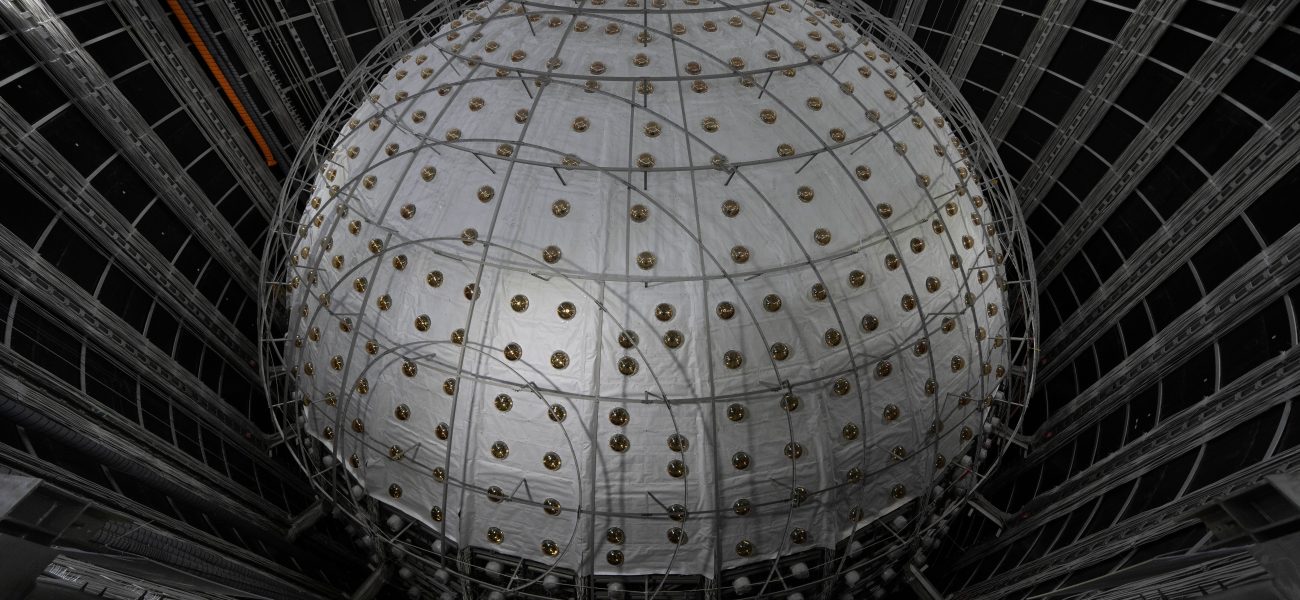
POLICY WIRE — Chengdu, China — Not every global power flexes its muscles on a runway or a digital battlefield. Sometimes, the real contest plays out a mile below the Earth’s surface, in the inky blackness of a defunct gold mine. That’s where China’s sprawling underground particle detector has begun whispering secrets about the universe’s most elusive entities. It’s less about a grand display, you see, and more about a methodical, almost geological grind towards scientific supremacy. The recent announcement isn’t just about obscure physics; it’s a tangible marker of Beijing’s unwavering resolve to dominate scientific frontiers, even those we can barely perceive.
For decades, Western nations held the perceived lead in big science. Their massive colliders, their deep-space telescopes—they defined the cutting edge. But China’s been quietly, rapidly closing that gap. Its latest triumph involves ghost particles—neutrinos, to be exact—tiny, nearly massless subatomic particles that zip through everything, including you and me, virtually unimpeded. Detecting them is like trying to catch mist in a sieve. It’s hard work. And the rewards aren’t immediately obvious in economic terms, at least not in a way that’d excite an investor looking for quarterly returns. [QUOTE_PLACEHOLDER]
But the nation has poured considerable resources into this subterranean quest. Reports indicate the National Natural Science Foundation of China alone allocated approximately 299 billion yuan (around $41 billion USD) to research and development in 2023, signaling a persistent, strategic investment in fundamental sciences. That’s not small potatoes, is it? It reflects a deep commitment. You don’t build a laboratory that stretches over 150 kilometers underground for trivial pursuits; this is about prestige, capability, and long-term vision. This gargantuan project, known as JUNO for Jiangmen Underground Neutrino Observatory (the former gold mine’s location), finally released its initial batch of data. And it seems they’ve gotten a solid handle on how these phantom particles oscillate.
It’s an important step, this business of understanding how neutrinos morph from one type to another. We’re talking about fundamental stuff here, like how the universe evolved. For years, scientists couldn’t quite agree on the exact process, or the sequence, of these changes. But this Chinese facility—it’s among the biggest, deepest, and most advanced neutrino observatories on the planet, by all accounts—is providing insights that could well settle decades-old debates in particle physics. And they’re not just confirming old theories; they’re refining them, pushing the boundaries.
Of course, such ambition doesn’t exist in a vacuum. It sits squarely within a larger geopolitical chessboard. This deep dive into quantum mechanics serves to validate China’s position as a serious player on the world scientific stage. It’s a testament to its technical prowess, its organizational capacity for mega-projects, — and its strategic thinking. We’ve seen similar strategic plays in space exploration, in AI development, — and now in particle physics. It’s a clear signal to Washington, to Brussels, to Tokyo: they’re not just manufacturing; they’re innovating, leading.
And these scientific leaps—they invariably translate into soft power and influence. It’s not just about what you invent; it’s about the reputation you build, the partnerships you forge. Think of the scientific ties China is building across Eurasia — and beyond. From the delicate dance of diplomacy with nations like North Korea to its massive infrastructure investments stretching into Central and South Asia, Beijing’s long game is evident. Its growing technological self-reliance, exemplified by achievements like JUNO, means less dependence on Western innovation and, crucially, a stronger bargaining chip in international negotiations.
📄 POLICY WIRE WHITEPAPER PUBLISHED: PAKISTAN'S NATIONAL SECURITY POLICY PRIORITIES
👉 READ BY CLICKING HEREJust consider Pakistan, a key Belt — and Road Initiative partner, for instance. While Pakistan’s immediate focus often leans towards infrastructure and energy needs—it’s grappling with its own pressing economic issues, after all—China’s scientific muscle contributes to the narrative of a robust, technologically advanced ally. It strengthens their strategic partnership, signaling that Beijing offers not just roads and ports, but also a future of scientific collaboration. You can see how that plays out politically. This sort of technological exhibition gives regional allies, even distant ones, a sense of shared progress, or at least a powerful neighbor to align with.
What This Means
This achievement, while esoteric on the surface, carries hefty implications for global power dynamics and scientific diplomacy. Politically, it cements China’s narrative as an emerging scientific superpower, not just a manufacturing hub. It means increasing competition for talent and resources in global science, and it might well redefine how international research collaborations are structured going forward. Expect other nations to scrutinize their own fundamental research spending, perhaps with renewed urgency. Economically, while ghost particles won’t instantly spin off new industries (no neutrino-powered iPhones yet, thank goodness), the sheer capacity to execute such a complex project speaks volumes about China’s engineering capabilities, its digital infrastructure, and its advanced materials science—all things with very tangible commercial applications. It positions China as an indispensable partner, or a formidable rival, in the next generation of high-tech industries. The race isn’t just to find new particles; it’s to stake a claim on the future.