


Pyongyang’s Overture: Behind Xi’s Calculated Hug for the Hermit Kingdom
POLICY WIRE — Washington, D.C. — Another ripple on the international stage, barely a splash for some, but a tidal warning for those watching the Pacific’s temperature. It wasn’t the booming headlines...

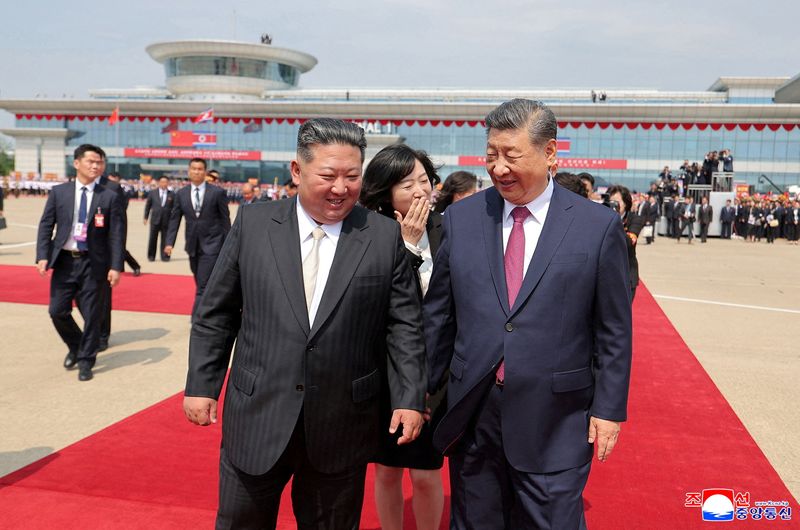
POLICY WIRE — Washington, D.C. — Another ripple on the international stage, barely a splash for some, but a tidal warning for those watching the Pacific’s temperature. It wasn’t the booming headlines of sanctions or missile tests, not this time. It was the quiet, almost ceremonial affirmation of ties that China’s leader, Xi Jinping, offered to North Korea’s Kim Jong Un during his recent, closely watched visit. A carefully orchestrated spectacle, perhaps, for internal consumption as much as external posturing, wrapped in a blanket of solidarity.
It’s a peculiar thing, this particular handshake across the Yalu River. But then, diplomacy has always had its strange bedfellows. The Korean Central News Agency (KCNA) reported, with predictable grandeur, that Xi and Kim had
Because let’s be real, North Korea isn’t exactly drowning in friends. When even Moscow’s embrace has its limits, Beijing remains the primary enabler—the economic muscle, the trade conduit. Don’t forget, for years, trade with China accounted for over 90% of North Korea’s total external commerce, according to data compiled by the Peterson Institute for International Economics. So when Beijing talks ‘consensus,’ they’re talking survival, plain — and simple.
The KCNA dispatch didn’t bother with messy specifics. Instead, it focused on the bromides of renewed friendship — and mutual respect. Xi was quoted as saying he would
It wasn’t just a simple meet-and-greet either. There were substantive discussions on international and regional issues, including—you guessed it—the perennial topic of denuclearization on the Korean peninsula. Both leaders apparently shared a
And it’s a model that China’s been pretty successful with in other spheres, too. Look at how India’s tariff hikes impacted regional dynamics, or Beijing’s expanding Belt and Road Initiative that has reshaped landscapes, sometimes for better, sometimes for worse, across Asia and beyond. This kind of state-to-state support, often characterized by economic lifelines traded for political alignment, is a practiced art.
📄 POLICY WIRE WHITEPAPER PUBLISHED: PAKISTAN'S NATIONAL SECURITY POLICY PRIORITIES
👉 READ BY CLICKING HEREThis dynamic resonates, perhaps uncomfortably, across South Asia, particularly in nations like Pakistan. Beijing has, for decades, offered robust diplomatic — and economic patronage to Islamabad. The China-Pakistan Economic Corridor (CPEC), a flagship project of the BRI, represents billions in investment—and an undeniable geopolitical embrace. For Pakistan, struggling with its own economic and internal stability, this relationship offers a parallel sense of a powerful patron, someone to lean on amidst external pressures. The nature of these alignments, whether in Pyongyang or Islamabad, points to a broader trend: how global powers cultivate loyalty and secure strategic interests, often by offering a shield to states deemed pariahs by the West. It’s an inconvenient truth, this web of interwoven destinies.
What This Means
The Xi-Kim meeting isn’t just about North Korea or China; it’s a stark reminder of shifting geopolitical sands. Economically, Beijing is reaffirming its role as Pyongyang’s primary patron. It means continued, if circumscribed, trade flows and humanitarian aid, providing essential stability that blunts the full impact of international sanctions. For Washington, it’s a bitter pill: the visit undercuts efforts to isolate North Korea and complicate denuclearization talks. It suggests China views a stable (if nuclear-armed) North Korea, rather than a potentially collapsed one, as preferable for its own border security and regional influence. Politically, this move cements Beijing’s regional authority. It sends a message that China dictates terms on its periphery — and won’t be bullied by Western diplomatic pressure.
But the ramifications extend beyond. For other nations, especially those navigating delicate relationships with both China and the West, this move by Beijing sets a precedent. It showcases a readiness to stand by allies, even controversial ones, if it serves its strategic goals. And you’d better believe Islamabad—a recipient of substantial Chinese support and itself sometimes seen with a wary eye by the West—was taking notes. It’s an example, an operational blueprint, for how to leverage asymmetric power and strategic necessity to gain long-term allies and maintain regional equilibrium. No doubt the folks studying kinetic escalation scenarios were taking a moment to assess how this kind of stability-by-patronage factors into the bigger picture. In short, it’s not just a handshake; it’s a reset button for regional power dynamics, and we haven’t seen the end of its ripple effect.