
Shadow Games in Moscow: Lone Bombing Echoes Global Undercurrents
POLICY WIRE — Moscow, Russia — The chilling symmetry of violence, often masked by grand narratives, sometimes presents itself in stark, undeniable fragments. A lone explosion, a torched vehicle, and...

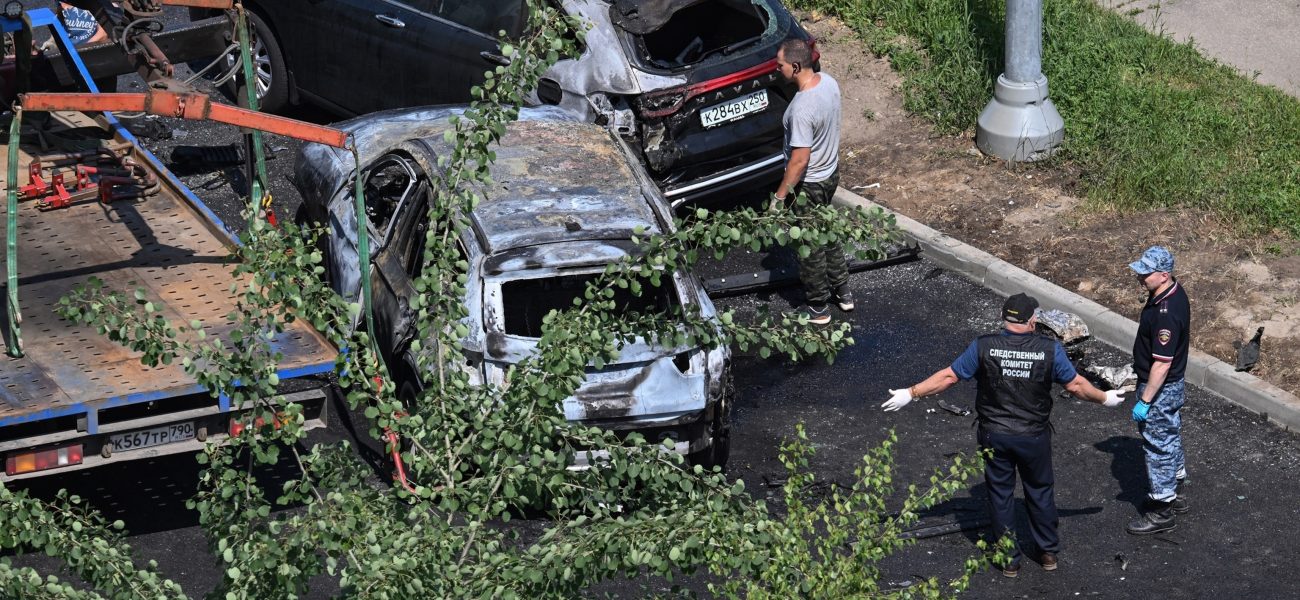
POLICY WIRE — Moscow, Russia — The chilling symmetry of violence, often masked by grand narratives, sometimes presents itself in stark, undeniable fragments. A lone explosion, a torched vehicle, and an unidentified casualty on the streets of Moscow; it’s an isolated incident by the Kremlin’s account, yet one that seems to hum with the dissonant hum of much larger, more volatile machinations. Such episodes, while confined to a particular locale, never truly stay local.
Early reports painted a grim picture, devoid of detail beyond the grim mechanics: a car bombing that killed one person. Investigators, we’re told, quickly arrived on the scene, sifting through the charred remains. But, the story wasn’t just about the blast itself. It’s about what it signifies—or, more accurately, what the lack of immediate clear answers amplifies in a world already on edge. Who was the victim? What was their story? The answers, initially at least, were conspicuously absent. [QUOTE_PLACEHOLDER]
Authorities, of course, moved in swiftly. But it’s tricky, this business of control when information is scarce and speculation — as always — runs wild. When even the identity of the deceased remains a mystery, the space for conjecture fills like a vacuum. It forces you to wonder what official lines will eventually emerge and, crucially, what they might be obscuring. The investigators have indicated that a victim was killed. They haven’t provided names, mind you. Just the cold, hard fact of a death in an unexpected blaze of urban violence. They indicated that the victim is yet to be identified.
It’s a peculiar kind of event, this — a car bomb in a capital city, especially one like Moscow, tends to carry a particular heft. It speaks of targeted acts, of messages, of grim signals exchanged in a brutal, hidden language. This isn’t just random street crime, you see. Such incidents often leave trails leading back to state actors, criminal syndicates with political ties, or extremist cells whose reach extends far beyond any single national boundary. But to know which, we’re left waiting. And in the geopolitical theater, waiting usually means something is cooking behind the scenes.
Consider the broader landscape for a moment. This single event, even with its murky origins, doesn’t happen in a vacuum. Russia remains deeply embroiled in various international entanglements, not least its ongoing conflict with Ukraine and its nuanced relationships across the Middle East. Moscow has, for years, positioned itself as a power broker in the Levant, maintained ties with nations like Iran, and engaged in proxy conflicts that span continents. Its security apparatus is expansive, but never impenetrable. And, occasionally, even the most formidable walls show cracks.
From a South Asian perspective, particularly in a nation like Pakistan, these echoes are distinctly familiar. The region, too, grapples with the persistent shadow of covert operations, sectarian violence, and state-sponsored or tolerated extremism that often employs similar tactics. A report from the National Consortium for the Study of Terrorism and Responses to Terrorism (START) at the University of Maryland notes that, between 2000 and 2020, over 1,300 vehicular bombings occurred globally outside of declared war zones—a stark reminder that such lethal methods aren’t unique to any one flashpoint. The fear isn’t just about bombs, it’s about the pervasive sense that the rules of engagement are eroding, everywhere.
📄 POLICY WIRE WHITEPAPER PUBLISHED: PAKISTAN'S NATIONAL SECURITY POLICY PRIORITIES
👉 READ BY CLICKING HEREAnd that erosion doesn’t just stop at one country’s borders. These days, with intelligence networks so entangled and ideological battles playing out across global stages, an explosion in one capital can very much be connected to tensions simmering thousands of miles away. It’s a complicated web, frankly. You’ve got to watch these seemingly minor incidents, because they often foreshadow bigger trouble.
What This Means
The car bomb in Moscow, despite its localized impact, is likely far from an isolated criminal act. Its very ambiguity weaponizes uncertainty. Politically, this event—particularly if a high-profile target is eventually identified—could serve as a pretext for escalated domestic security measures or, more dramatically, retaliatory actions abroad. If the victim is eventually linked to dissident groups, it suggests a tightening grip by the state; if to foreign intelligence, it flags an escalation of the ongoing shadow war. But it’s not just a Russian problem. For other nations, especially those navigating their own complex security landscapes like Pakistan, such an event reinforces the inherent vulnerability of even the most fortified states to asymmetric threats.
Economically, persistent, unpredictable violence in major capitals erodes investor confidence and injects a measurable dose of risk into long-term strategic planning. Markets are skittish beasts, — and acts of political violence make them even more so. the lack of transparency surrounding the incident itself, or any eventual obfuscation, plays into the broader narrative of opacity and distrust that dogs international relations. It doesn’t inspire confidence when official lines seem evasive. It doesn’t. We’ve seen how internal stability—or the perceived lack thereof—in countries like Afghanistan or Pakistan can ripple through global trade routes and investment strategies; Moscow’s current incident, though different in scale, functions as a chilling reminder of these cross-border tremors. For the discerning eye, this singular event isn’t just a headline—it’s a critical barometer, offering a glimpse into the raw underbelly of modern geopolitics. It simply adds to the pile of questions regarding who, exactly, holds true power in these tumultuous times and what costs they’re willing to exact in its pursuit. It’s messy, dangerous, — and it ain’t stopping anytime soon. In a world full of ‘signals,’ this one screams loudest by what it leaves unsaid—a profound unsettling quiet that hints at storms to come. Because sometimes, the biggest impact comes from the smallest bang, when it leaves behind the largest question mark, haunting official narratives and igniting widespread concern, as seen in global reactions to the complex diplomatic dances between powerful nations.