


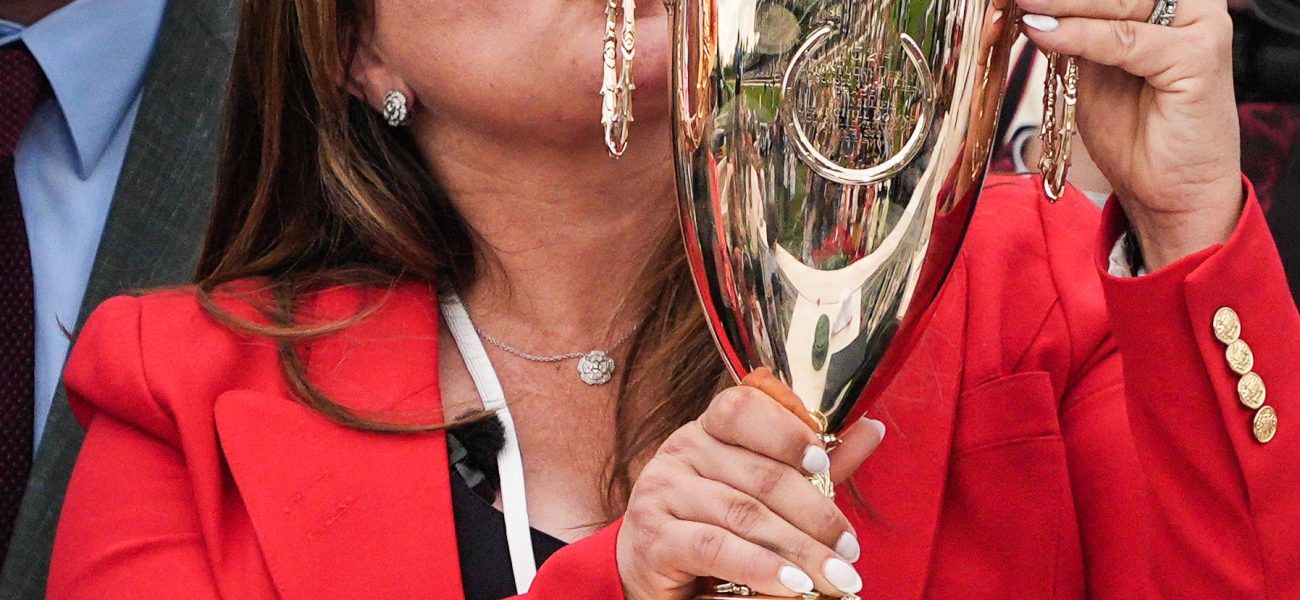
Cherie DeVaux’s Gallop to Global Influence: Beyond the Track’s Dusty Glamour
POLICY WIRE — New York, USA — It wasn’t the flashing bulbs, or the victor’s garland, or even the immediate roar of the crowd that first captured the essence of Cherie DeVaux’s monumental...

POLICY WIRE — New York, USA — It wasn’t the flashing bulbs, or the victor’s garland, or even the immediate roar of the crowd that first captured the essence of Cherie DeVaux’s monumental ascent. Instead, it was the quiet, almost overlooked, fact of a meticulously chosen resting period—a deliberate pause for Golden Tempo, the horse that had just etched its trainer’s name into history. She opted to sideline her star, skipping the Preakness Stakes, prioritizing equine well-being over the tantalizing siren call of the Triple Crown’s immediate pursuit. That’s not just a training decision; it’s a statement in an industry often driven by relentless ambition and market pressures.
Because that moment, devoid of sensationalism but brimming with clear-headed strategy, is perhaps more indicative of true influence than the dramatic finish line lunge itself. The decision ultimately paid off, Golden Tempo roared back to seize the Belmont at Saratoga, clinching a 1¼-length victory with a time of 2:03.49. This double triumph – a first for a female trainer at the Kentucky Derby, and only the second ever at Belmont – didn’t just shatter long-standing gender barriers; it redefined the calculus of victory itself. And now, she’s not just a trainer; Time Magazine has named her one of [QUOTE_PLACEHOLDER] peering forward to recognize an impact still unfolding.
It’s a peculiar honor, isn’t it, to be recognized for influence years in advance? It speaks to a future-casting confidence by Time, acknowledging that her ripple effect will extend far beyond the muddy oval. This isn’t simply about breaking a glass ceiling—though she absolutely did, becoming the first female trainer in history to win the Kentucky Derby. It’s about doing it with a horse that faced incredible odds, initially falling to dead last before staging one of the best comebacks in Derby history. Think about it: a 23-1 longshot turns champion. That narrative isn’t just compelling; it’s practically mythic, resonating with anyone who’s ever faced an uphill battle. [QUOTE_PLACEHOLDER] she shared with the press, a succinct declaration that speaks volumes. “We can do anything we set our minds to.” It’s a bold statement, but it feels earned.
Her path wasn’t a casual stroll. The world of horse racing, steeped in tradition and often dominated by male figures, hasn’t historically been the easiest place for women to ascend to its highest echelons. For every visible female jockey or owner, there’s a myriad of unsung women working diligently in barns and behind the scenes, battling for recognition and equal opportunity. DeVaux’s presence on such a prestigious list doesn’t just celebrate her individual success; it legitimizes the hard graft of countless others, paving a clearer path for ambition to thrive without gender acting as an arbitrary inhibitor.
But the reverberations extend globally. While the glitz of Kentucky Derby isn’t a regular feature in, say, Rawalpindi, the struggle for women in competitive arenas echoes across continents. DeVaux’s recognition, as a standard-bearer for perseverance against entrenched norms, carries particular resonance in parts of the world where female athletic achievements remain underfunded or underreported. Consider the often-unseen battles fought by women athletes in Pakistan or other nations in South Asia—sometimes against societal conservatism, other times against systemic underinvestment. The symbolism of a woman in charge of a powerful racing stable, earning this sort of high-level validation, contributes to a global dialogue about women’s capability and leadership, even if the direct mechanisms are localized.
It’s not just a Western phenomenon. Just recently, women’s squash teams in Pakistan have made international strides, proving that with resources and encouragement, formidable talent emerges. It’s a reminder that these seemingly disparate stories of achievement are interconnected, each victory—whether on a Kentucky track or a Karachi court—building a collective momentum towards greater inclusion and recognition for women in sports, everywhere.
📄 POLICY WIRE WHITEPAPER PUBLISHED: PAKISTAN'S NATIONAL SECURITY POLICY PRIORITIES
👉 READ BY CLICKING HEREAnd yes, the visual was memorable. As Golden Tempo bolted across the finish line, DeVaux could be seen kicking her feet and jumping up and down—an unbridled display of raw, unfiltered joy. A veteran journalist might wryly note such exuberance, especially in a sport renowned for its steely, almost patrician demeanor. But sometimes, just sometimes, a genuine eruption of human emotion is the most honest indicator of profound accomplishment. Her joy was an authentic punctuation mark on years of relentless, largely anonymous work.
What This Means
Cherie DeVaux’s placement on Time’s coveted list transcends mere sporting acclaim; it’s a pointed acknowledgement of shifting political and economic currents within the broader landscape of influence. Economically, this sort of high-profile recognition often translates into amplified sponsorship opportunities, not just for DeVaux but potentially for the wider industry of women in horse racing. It legitimizes investment into a segment previously seen as niche or underperforming relative to its male counterparts. The optics of a prominent media platform spotlighting a woman who not only competes but excels at the highest levels can spur investment in female-led ventures, moving beyond tokenism to genuine capital infusion.
Politically, the story feeds into broader narratives around gender equality — and representation. It’s a win for advocacy groups pushing for more equitable environments in professional sports. For nations like Pakistan, where women often navigate complex socio-cultural barriers to participate in and lead sporting initiatives, DeVaux’s story acts as a distant yet resonant beacon. Her achievements, celebrated on a global stage, reinforce the argument for greater institutional support and policy shifts that remove obstacles for women in male-dominated fields. It suggests that leadership and competence know no gender, providing a template for aspirational women not just in sport, but across sectors.
Influence, after all, isn’t simply about power. It’s about the subtle, cumulative effect of one person’s actions inspiring others, reshaping perceptions, and incrementally nudging an entire industry towards a more inclusive future. DeVaux’s narrative will undoubtedly be utilized in discussions surrounding the economics of elite athletics, illustrating how diversity in leadership can drive both commercial success and societal change. It points to a future where merit, not tradition, is the ultimate gatekeeper, slowly dismantling barriers that once seemed insurmountable.