

Caracas Tremors Unearth Deeper Cracks: Venezuela’s Seismic Shock Waves Ripple Beyond Tectonics
POLICY WIRE — Caracas, Venezuela — The ground shifted. But not just beneath Venezuela’s brittle infrastructure. The powerful jolt that rocked the nation yesterday, registered at a substantial...

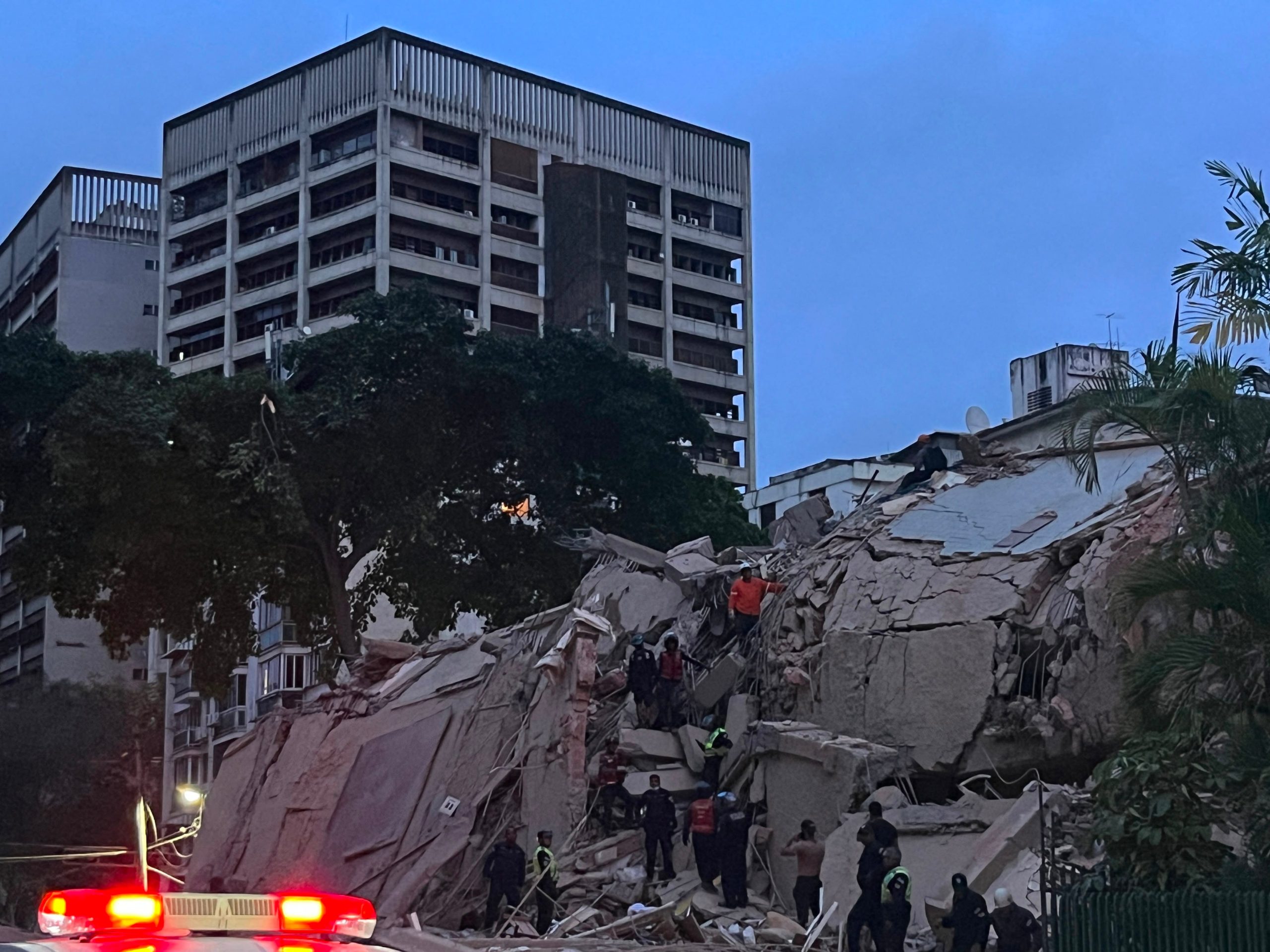
POLICY WIRE — Caracas, Venezuela — The ground shifted. But not just beneath Venezuela’s brittle infrastructure. The powerful jolt that rocked the nation yesterday, registered at a substantial 7.5 magnitude, ripped through a country already teetering on the edge of what’s best described as organized chaos. This wasn’t just tectonic plates rubbing wrong; it felt like another shoe dropping, an existential tremor in an already seismic political landscape.
Early reports, patchy as they always are in the aftermath of such widespread disorienting events—and particularly in a nation where information moves at a crawl—indicated widespread panic, buildings swaying dramatically, and communication lines stuttering into silence. But here’s the thing: many felt it hundreds of miles away, in bustling regional capitals across the Caribbean, even as far afield as Bogotá, Colombia. That’s some serious cosmic muscle flexing, signaling trouble far beyond mere geographical coordinates. The United States Geological Survey initially pinpointed the epicenter roughly 19 kilometers (12 miles) northwest of Yaguaraparo, Sucre state, at a depth of 123.2 kilometers. That depth likely spared the most densely populated areas from more devastating surface-level destruction, a sliver of fortune in an otherwise grim scenario. [QUOTE_PLACEHOLDER]
It’s a tough break, isn’t it? Venezuela, already facing international sanctions, hyperinflation, and a collapsing social safety net, now adds seismic activity to its daily list of challenges. Citizens are used to queuing for basics—now they’re dusting off shelves, picking through debris. We’re told stories, apocryphal or not, of people simply standing stunned in the streets, looking up, wondering if the sky was literally falling this time. It really does make you wonder how much more a nation can take.
And let’s not forget the sheer scale. Tremors extended across South America, prompting initial tsunami warnings for nearby islands like Trinidad and Tobago, though those were swiftly lifted. Such widespread impacts often complicate initial emergency responses. But the real story for Venezuela won’t be in the immediate physical damage alone—it’s always deeper here. Think about this: estimates suggest over 60% of Venezuela’s buildings constructed before 2000 lack modern earthquake-resistant designs, according to a recent structural analysis by the Simón Bolívar University. That’s a huge problem. That’s not just a statistic; that’s a whole lotta folks living and working in potential rubble, even if yesterday was a near miss for widespread collapse.
Because every shake of the ground in Caracas echoes in regional capitals, — and further afield. When natural disasters strike, nations in stable times typically rally, offering aid. Here, that’s not a given. The international community, already divided over President Nicolas Maduro’s legitimacy, faces a fresh diplomatic headache. Does humanitarian aid go directly to the government, potentially funneled elsewhere, or does it bypass official channels entirely, risking accusations of intervention? It’s a real political quagmire.
This situation also reminds us of past global responses to calamities. Consider the Kashmir earthquake of 2005, which devastated Pakistan — and India. The scale of the human suffering there, in mountainous terrain and already politically sensitive regions, highlighted the complex interplay of geopolitics and humanitarian response. Donors and international organizations poured in, sometimes with their own agendas, but ultimately providing relief where central governments struggled. Pakistan’s government, despite its own internal fragilities, worked with an array of international partners. One hopes for a similar spirit here, but the political obstacles are a good deal higher in Caracas. The immediate aftermath has seen state media downplaying the incident, offering soothing pronouncements but little substantive update on damage assessments or planned reconstruction, creating a vacuum that fuels public anxiety.
It’s not just a physical tremor. It’s a psychological one too. They’ve already got so much going on, — and now this. A whole population already under immense stress has just been pushed a little further.
What This Means
The 7.5 magnitude earthquake, though perhaps less immediately catastrophic than its raw power suggested due to its depth, serves as a harsh political and economic stress test for a Venezuela already on its knees. The Maduro regime’s response, or perceived lack thereof, could further erode its already precarious public support, especially if relief efforts are seen as inefficient or politicized. This is where you see the real cracks: not just in the plaster of a building, but in the foundation of governance.
Economically, any significant infrastructure damage—and detailed assessments are pending—would impose fresh, unbearable costs on an economy that barely functions. We’re talking about reconstruction materials, logistical nightmares, and a diversion of scarce resources that Venezuela simply doesn’t have. For a country with limited access to international credit and aid, funding recovery efforts could quickly become an impossible task. It’s hard to rebuild when your currency is in freefall — and the national budget is essentially nonexistent.
This event might also become a new point of leverage in the ongoing geopolitical tug-of-war surrounding Venezuela. Opposition figures and international bodies could intensify calls for broader humanitarian intervention or at least better oversight of aid distribution. The potential for further displacement of people, exacerbating the regional migrant crisis—tens of thousands already seek refuge in neighboring countries like Colombia—is very real. For instance, countries in the region, particularly those that host large numbers of Venezuelan migrants, will now be watching with bated breath, wondering what further instability means for their own borders and social services.
The event also forces a moment of reflection: how prepared is any nation, particularly one gripped by such profound internal strife, to manage an unavoidable natural disaster? The answer, in Venezuela’s case, is likely unsettling. The long-term implications, often overshadowed by the initial shock, include everything from psychological trauma within the population to increased pressure on an already dilapidated healthcare system. It’s not just about what shook yesterday; it’s about what finally gives way in the months — and years to come.