


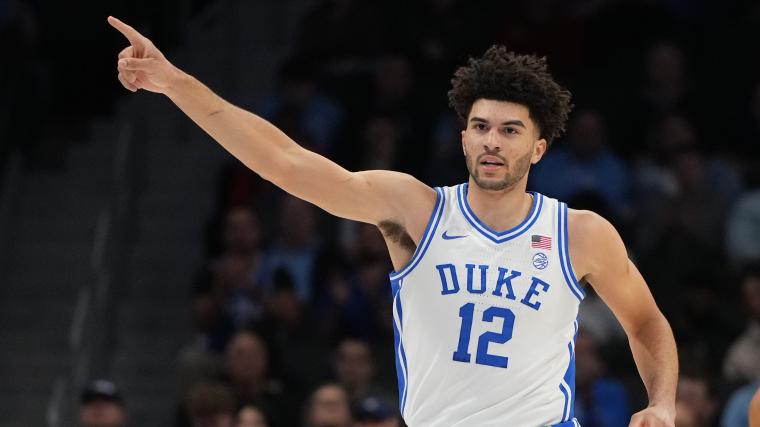
Duke’s Young Guns Take on the NBA Grind: Millions, Meltdown, and the Global Game
POLICY WIRE — New York, USA — It wasn’t just a draft. No, it wasn’t. It was an extravagant, calculated gamble dressed in expensive suits and dazzling jewelry, a primal scream from the depths of...

POLICY WIRE — New York, USA — It wasn’t just a draft. No, it wasn’t. It was an extravagant, calculated gamble dressed in expensive suits and dazzling jewelry, a primal scream from the depths of athletic potential, all unfolding under the bright lights of the Barclays Center. The annual NBA talent carnival, now a global spectacle, once again chewed up young men and spat them out as instant millionaires—or statistical footnotes. This year, Duke University’s factory of hoops dreams churned out its latest batch, proving the blue blood program still holds an unyielding grip on the league’s pipeline, albeit with familiar anxieties trailing behind each selection.
Cameron Boozer, the hulking power forward everyone pegged for greatness since his pre-pubescent days, heard his name called early, third overall by the Memphis Grizzlies. Three words: instant cash flow. And then there’s Isaiah Evans, picked by Minnesota at 33rd, who apparently accessorized with a reported $3 million brooch and a $1 million wallet chain. One can’t help but wonder if that much bling truly signals future dominance or merely an accountant’s headache in the making. Such expenditures on debut night tell you plenty about the kind of money now sloshing around these youngsters.
It’s this blend of raw athletic promise and dizzying fiscal reality that veteran players watch with a mix of awe and a wry shake of the head. Draymond Green, the unflappable Golden State Warriors forward, weighed in with characteristic bluntness on his podcast, likening Boozer to a quiet legend. “Tim Duncan never had to blow you through the roof. Yet he was so great. He’s one of the greatest players we’ve ever seen,” Green remarked. It’s an astute observation, certainly a nod to substance over flash, suggesting some things never change in basketball, even as everything around it spins into a vortex of endorsements and digital branding.
But the draft isn’t just about surefire hits. It’s littered with cautionary tales, whispers of potential gone awry. Darryn Peterson, the Kansas guard, notably slid further than some anticipated, shadowed by concerns over his physical durability. “Availability is your best ability,” declared ESPN analyst Fran Farnham on ‘First Take.’ “There’s nothing that I looked at over the course of the season at Kansas that would say, ‘Okay, I believe he can make it through 82 games.’ If he can’t play 30, how can he play 82? I think that’s the concern for Darryn Peterson.” And just like that, the high-flying highlight reels get measured against the grinding reality of an NBA schedule—a reality far removed from collegiate heroics.
The business of basketball is undeniably global. We often fixate on the American talent pools, but the NBA’s outreach into regions previously overlooked continues. Just this week, scouts from various franchises were reportedly in Pakistan, assessing local talent, seeking raw athleticism that might one day, after years of development, translate into professional play. It’s a painstaking process, often yielding marginal returns, yet a persistent endeavor that showcases the league’s economic and cultural ambitions beyond its traditional North American market. Much like defense manufacturers navigating global supply chains, the NBA navigates a complex world talent economy, hoping to find diamonds in unlikely roughs. This kind of international scouting reflects an understanding that growth comes not just from the usual suspects, but from cultivating new fan bases and, crucially, new talent pools worldwide. It’s about building brand equity in places where basketball was once an afterthought. The league, by its own reckoning, has seen a 15% increase in international viewership for its draft telecasts over the past five years, underscoring this widening global embrace.
What This Means
The NBA Draft, for all its flash — and spectacle, functions as a high-stakes commodities market. These young players, still essentially prospects, are instantly valued assets—their future earnings, and by extension, their teams’ economic fates, are now tied to their bodies and burgeoning skills. The immediate multi-million dollar contracts, particularly for top picks like Boozer (whose rookie deal is estimated north of $10 million for his first year alone), represent massive investments. It’s a system that, while showering riches on a select few, also creates immense psychological pressure, a human-capital experiment playing out live on national television. the league’s intensifying global push—evident in its outreach to developing basketball markets and international viewership spikes—isn’t merely about spreading the game; it’s a shrewd business strategy designed to expand market share and fan engagement in an increasingly interconnected, digital world. It’s about selling dreams, jerseys, and a particular American cultural export to a global audience, making sports diplomacy and economic soft power intertwined.