
Caracas’ Latest Tremor: Beyond the Rubble, a Nation’s Wobbly Resolve Tested
POLICY WIRE — Caracas, Venezuela — The ground in Venezuela’s capital has always felt a bit precarious, though typically it’s the political variety that sends shivers down spines, not the tectonic...

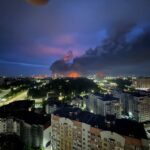
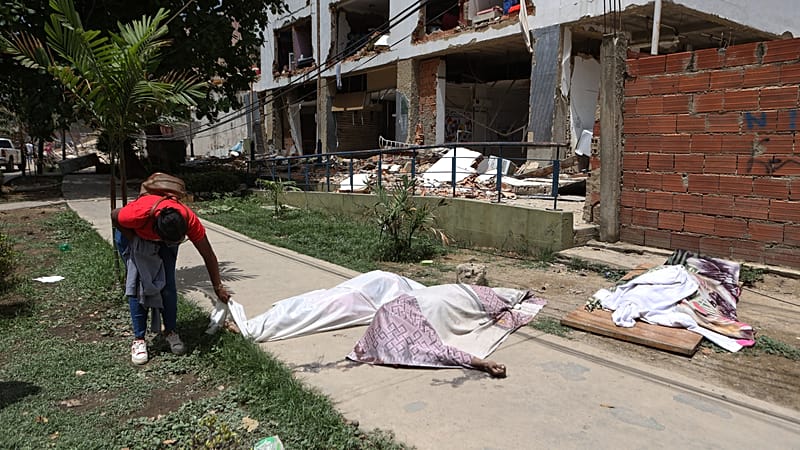
POLICY WIRE — Caracas, Venezuela — The ground in Venezuela’s capital has always felt a bit precarious, though typically it’s the political variety that sends shivers down spines, not the tectonic plates. But when the earth itself decided to rumble beneath La Guaira, kicking off a series of unsettling aftershocks across the Caribbean coast, it merely highlighted a country already accustomed to living on borrowed time and shaky foundations. Rescue crews are digging—slowly, painfully—through the crumbled concrete and twisted rebar, searching for more than just survivors, they’re sifting through the layers of a national crisis.
It’s a cruel twist of fate for a nation where every commodity, every ounce of aid, feels like a battle fought on uneven terrain. This recent geophysical tantrum near Caracas, which officials say registered a significant magnitude (exact figures are, predictably, fluid)—and for which the true death toll remains, well, murky—serves as a brutal mirror. You see a society long since stripped bare, left to cope with disaster on its own meager terms, far from the international limelight usually afforded such catastrophes. And because the existing infrastructure was already holding on by a thread—years of neglect, underinvestment, and crippling sanctions have seen to that—every crack isn’t just cosmetic. It’s structural. It’s systemic. Reports from regional seismic institutes indicate that La Guaira experiences, on average, over 30 measurable tremors annually, many too weak to register outside local seismographs. This time, it hit hard.
The state media, predictably, has been broadcasting images of determined rescue workers and government officials, all projecting an image of swift, capable response. Vice President Delcy Rodríguez, ever the administration’s stoic voice, was quoted saying, “We’re not just moving rubble; we’re rebuilding hope for a people that has weathered every storm, every sanction, with unbreakable spirit.” It’s a message tailor-made for domestic consumption, aimed squarely at showing a government in control—or, at least, trying very hard to look like it. But anyone who’s spent more than a week here knows the cracks run deeper than just these fresh ones on the walls of hastily built apartments.
Local response, however, often transcends the official narrative. Governor Jorge Luis García Carneiro, his voice raw from days without sleep, shared a different kind of resolve. “My people, they’re tired, truly tired,” he admitted, gesturing vaguely at the devastation. “But they’re not broken. We’ve seen worse, and we’ll rise again. This ain’t our first rodeo with adversity, or the world turning a blind eye, is it?” That sort of raw, unvarnished sentiment – that’s the real pulse of La Guaira, often drowned out by the bigger, louder global dramas.
For countries across the Global South, from Pakistan after the devastating Kashmir earthquake to Bangladesh grappling with recurrent floods, the sight of Venezuela struggling isn’t just an item on the evening news. It’s a sobering reminder of how natural disasters hit hardest where the social safety nets are thinnest, where state capacity is already stretched, and where geopolitical squabbles can stifle immediate relief. The dynamics of aid in a sanctions-heavy environment, after all, complicate every single humanitarian gesture. Many Muslim world charities, traditionally swift to mobilize for disasters, also navigate the complexities of delivering assistance to a nation under heavy international scrutiny. It’s a delicate dance, always.
What This Means
This latest geological jolt isn’t simply another line item on Venezuela’s already lengthy list of woes. It exposes, starkly, the fragility of a system already teetering on the edge. Economically, even localized damage represents a significant setback for communities barely clinging on. The displacement, the loss of livelihoods, the strain on emergency services—it’s all coming out of an empty purse. Politically, while President Maduro’s administration is keen to demonstrate command, this incident will likely put further pressure on already strained domestic resources and public trust. Every day the recovery efforts flounder, or the aid pipeline stalls—whether from internal dysfunction or external roadblocks—it erodes the last vestiges of state legitimacy.
And then there’s the international dimension. As covered by Policy Wire’s piece, “Caracas Aftershocks: Global Diplomacy’s Uneven Tremor in Venezuela,” such crises frequently become proxies for broader geopolitical struggles. Will this humanitarian emergency finally prompt a softening of diplomatic postures, or will it simply add another layer of justification for existing foreign policy stances? The global response—or lack thereof—will speak volumes about international priorities, especially when crises in other parts of the world, like Ukraine or Gaza, command most of the headlines. It’s a tragic reality that some earthquakes get more global attention than others, but Caracas—a perpetual site of economic and political tremor—struggles on, literally rebuilding its own fate, one rubble-strewn street at a time. They’ve got to.