


Caracas Jolted: Seismic Shift Exposes Venezuela’s Already Fractured Ground
POLICY WIRE — Caracas, Venezuela — For a nation already accustomed to ground shifting beneath its feet—be it economic, political, or social—the literal shaking delivered by a powerful 7.5 magnitude...

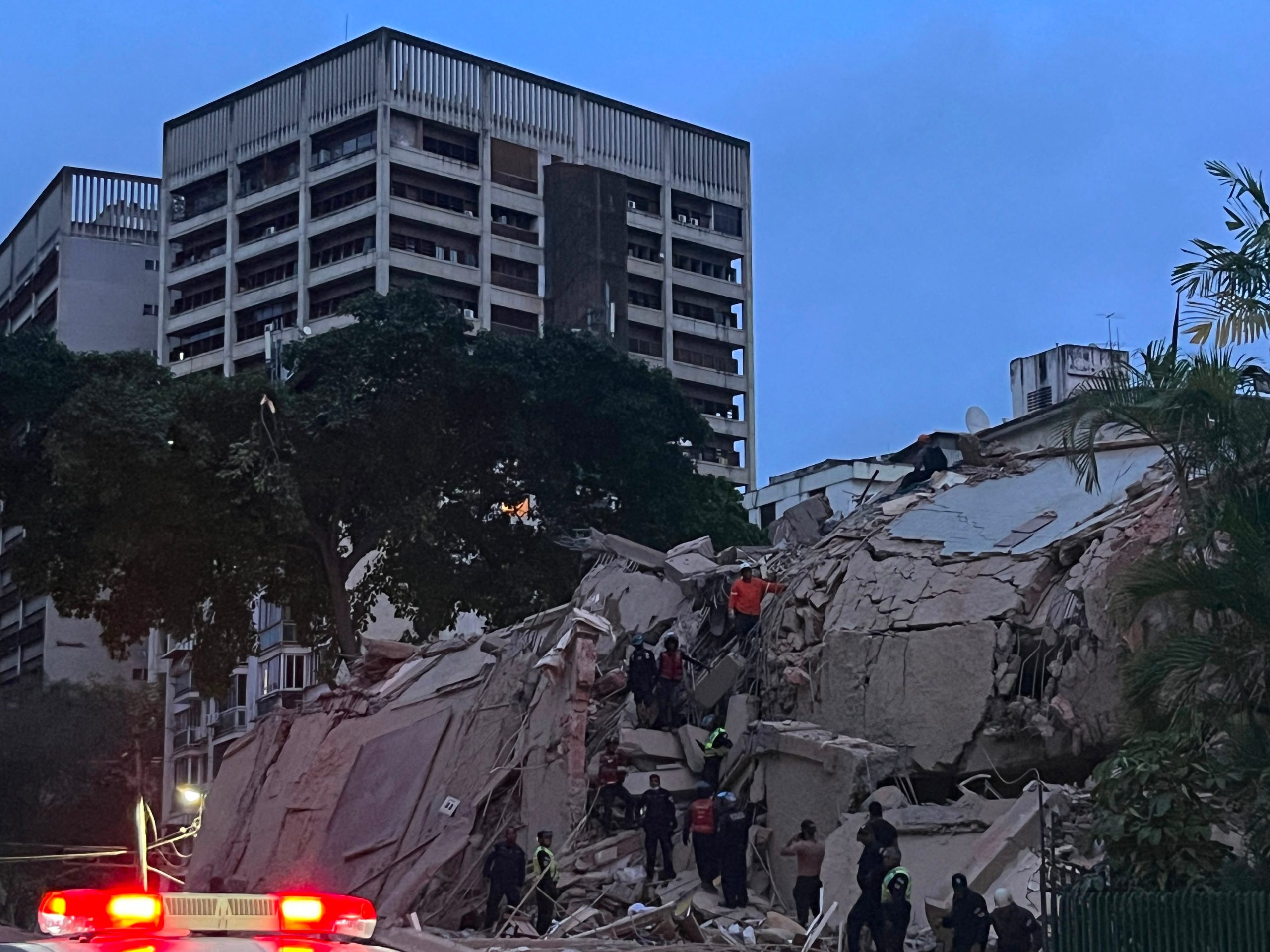
POLICY WIRE — Caracas, Venezuela — For a nation already accustomed to ground shifting beneath its feet—be it economic, political, or social—the literal shaking delivered by a powerful 7.5 magnitude earthquake was less a jolt from the blue and more an unmasking. The tremor, centered off its northern coast near the Caribbean island nation of Trinidad and Tobago, didn’t just rattle buildings; it rattled the precarious veneer of stability a socialist government has struggled to maintain, particularly when it comes to infrastructure.
Nobody expected this kind of theatrical punctuation to Venezuela’s already dramatic narrative. But there it was, mid-afternoon, sending high-rises swaying across Caracas and even causing noticeable tremors hundreds of miles away in neighboring Colombia. The initial reports trickled in with an eerie lack of immediate catastrophe. Power flickered. Goods toppled from shelves in shops already sparsely stocked. Walls cracked. And people, understandably, spilled into the streets, faces etched with a cocktail of fear and—for many—a grim acceptance that another layer of misfortune had been peeled back. They’re used to this kind of thing, just not the tectonic plate version.
President Nicolás Maduro, ever the showman in crisis, took to state television with commendable haste, asserting that damage assessment teams were immediately deployed. “Our state is on full alert. We’re facing this with the fortitude of a people who have overcome much,” he declared, his voice firm, if a touch too practiced. “The unity of our people is our greatest strength now.” You’ve gotta hand it to him for trying to keep things calm. But the truth is, a nation struggling to put food on tables finds structural integrity a luxury item.
Meanwhile, opposition figures, already prone to lamenting the country’s decaying infrastructure, saw the quake as less an act of God and more an act of official negligence waiting for a trigger. “This tremor should remind everyone what decades of corruption and mismanagement have wrought upon our foundations—physical and social,” retorted a prominent, albeit unnamed, opposition leader during a hushed interview, careful with his words. “Our hospitals can barely handle a flu outbreak; what happens when a real crisis hits?” He wasn’t wrong. Decades of underinvestment and economic freefall mean that buildings aren’t always up to code—not in any meaningful sense anyway.
The tremor, which the U.S. Geological Survey (USGS) placed at a depth of around 87 miles—deep enough to cause widespread shaking but potentially mitigate surface destruction in immediate areas—highlighted Venezuela’s geopolitical conundrum. International aid, the usual go-to in such circumstances, is complicated here. The nation remains largely ostracized by Western powers, crippled by sanctions, and distrustful of external interventions. It’s a real pickle, isn’t it?
This dynamic offers a stark parallel to countries like Pakistan, a nation highly vulnerable to seismic activity. Remember the devastating 2005 Kashmir earthquake, which killed over 80,000? Pakistan, despite its own domestic challenges, still benefits from broader, albeit complex, international engagement that, generally speaking, allows for more unimpeded channels for humanitarian assistance. When Balochistan—a region facing internal strife and human rights concerns—gets hit by floods or quakes, the international response, though perhaps politically fraught, operates on different parameters. Venezuela doesn’t enjoy that same level of operational flexibility; it’s practically an island, geopolitically speaking.
Venezuelan public services were already hanging by a thread. The National Electrical System has reportedly seen more than 50,000 outages in the last year alone, as per independent monitoring groups. Hospitals, long suffering from critical shortages of medicine and equipment, wouldn’t have been prepared for mass casualties—a fortunate miss this time around. And while the country has been spared a major death toll this instance, it’s really just a reprieve. The nation’s resilience isn’t infinite. It’s finite, very much so, like a worn-out rubber band.
What This Means
This earthquake, while not immediately catastrophic in terms of lives lost, carries heavy symbolic and practical weight for Venezuela. Politically, it presents a delicate balancing act for the Maduro government. A successful, transparent disaster response could—theoretically—garner a modicum of internal goodwill and demonstrate competence. But it’s far more likely to expose the chronic deficiencies in state capacity, from civil defense to public health. How do you efficiently coordinate relief when your logistics networks are broken, and international partners are viewed with suspicion?
Economically, any reconstruction effort would be monumental. Venezuela is already contending with hyperinflation that’s decimated the purchasing power of its currency, the Bolívar, alongside pervasive fuel and basic goods shortages. The cost of materials, transportation, and skilled labor—much of which has fled the country—would be astronomical, even if the government could access funding from an increasingly isolated treasury. And this simply exacerbates the country’s humanitarian crisis. It’s another pressure point in a nation with too many.
But there’s also the international dimension. The quake briefly opens a tiny, begrudging window for humanitarian diplomacy. Neighboring nations might offer assistance. However, don’t hold your breath for a grand gesture from Washington or European capitals without significant political concessions from Caracas regarding democratic processes or human rights. The U.S. and its allies see aid as leverage. For Venezuela, it’s often viewed as an infringement on sovereignty. It’s a game of chicken, played with human lives, unfortunately. So, while the ground might have stopped shaking, the tremors politically and economically will persist for a long, long while.