


Canada’s Post-Industrial Metamorphosis: Spheres of Policy and Public Will
POLICY WIRE — Toronto, Canada — For generations, the land lay dormant, a testament to what we tear from the earth. A deep gash, a former limestone quarry in the Canadian heartland—you wouldn’t...

POLICY WIRE — Toronto, Canada — For generations, the land lay dormant, a testament to what we tear from the earth. A deep gash, a former limestone quarry in the Canadian heartland—you wouldn’t have given it a second glance. It was an industrial wound, the kind that whispers grim tales of resource extraction — and discarded landscapes. But in a move that feels less like urban planning and more like alchemy, this inert scar has become something startlingly vibrant, a testament to the persistent—and sometimes peculiar—march of public policy toward regeneration.
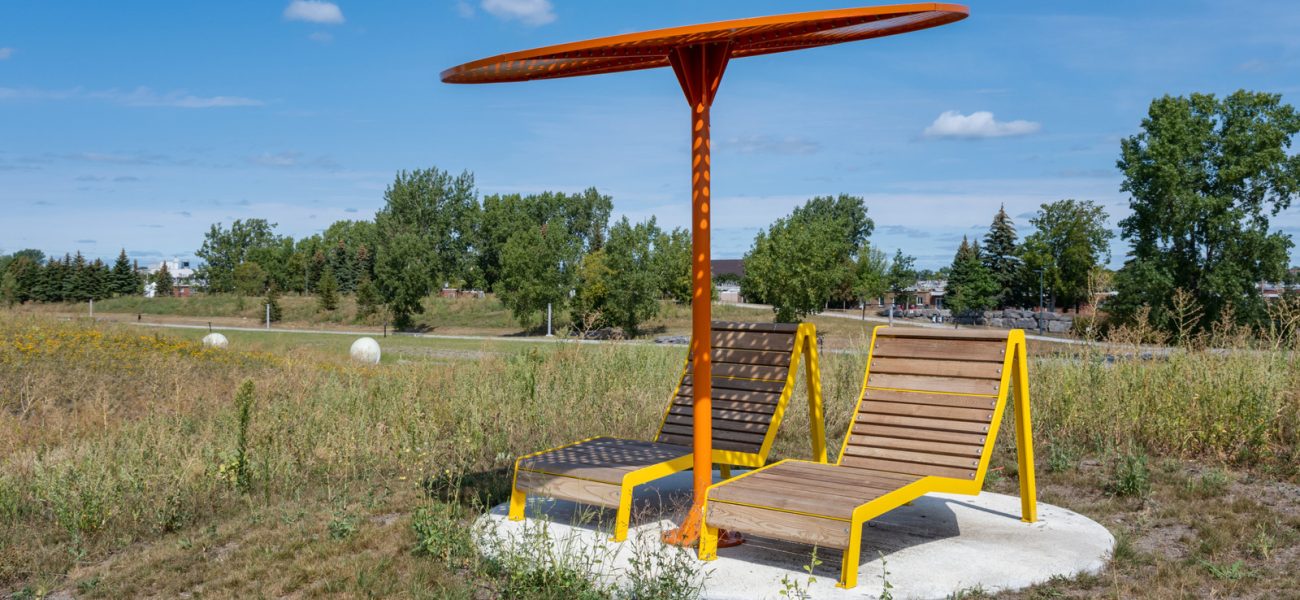
It’s not just a park; it’s a statement. And it isn’t simply about planting a few trees where machines once gouged stone. This erstwhile pit, a silent echo of Canada’s industrial past, now houses architectural oddities—giant, ethereal spheres suspended in a reclaimed wilderness—that have turned it into an unexpected magnet. Folks flock there, gawking, debating. What was once purely utilitarian, a source of raw material, now offers something far more elusive: wonder. And that’s no accident, not when governments—federal, provincial, and municipal—start whispering about “sustainable repurposing” and “eco-tourism.”
The transformation didn’t just happen overnight with a snap of a bureaucrat’s fingers. Oh no. These sorts of projects, they fester, they ferment. They start as ideas sketched on cocktail napkins, then get debated in sterile boardrooms for years, if not decades. “We understood the intrinsic value of what was essentially a blighted landscape,” noted Canadian Minister for Environment and Climate Change, Steven Guilbeault, in a recent address. “Turning it into a destination, complete with innovative design elements, showcases our commitment not just to ecological repair but to imaginative public spaces.” He’s right, you know. They didn’t just greenwash it; they reimagined it entirely.
Because that’s what happens when politicians see a vote, or a photo op, or—dare we suggest—actual environmental benefit. This initiative, with its decidedly futuristic vibe, speaks to a broader, global ambition. It’s an ambition to reconcile human activity with the land, an ambition often talked about but rarely executed with such bold strokes. But you know how these things go; the conceptual leaps are always easier than the budgetary ones. And finding the sweet spot between preservation — and economic viability, that’s where the real headache starts.
“Funding these kinds of long-term projects—especially in communities grappling with dwindling resource sectors—requires political fortitude and robust public-private partnerships,” remarked Mayor Eleanor Vance, whose municipality now enjoys the economic spillover from the revamped site. “We weren’t just creating a park; we were creating new economic avenues.” She added, quite plainly, that getting everyone on board wasn’t easy. And that’s saying something, because local politics can be a viper’s nest even when you’re talking about fixing a pothole, let alone an entire former quarry.
📄 POLICY WIRE WHITEPAPER PUBLISHED: PAKISTAN'S NATIONAL SECURITY POLICY PRIORITIES
👉 READ BY CLICKING HEREBut the audacity of the plan is, in itself, a draw. It stands as a physical rebuttal to the notion that industrial degradation is irreversible, that scars are permanent. This isn’t just about Canada, either. Around the globe, nations grapple with the leftovers of heavy industry, the concrete skeletons of once-thriving mines, factories, and quarries. In South Asia, for instance, rapid urbanization often means former industrial sites are simply consumed by sprawl, or worse, become informal dumping grounds, rather than carefully cultivated green assets. Pakistan, with its burgeoning cities and historical industrial hubs, could look to such initiatives as a blueprint for transforming its own landscapes scarred by development, where urban planning faces immense pressure from population growth and inadequate infrastructure. It’s a matter of policy, — and where the political will decides to place its resources.
Data tells a compelling story, too. According to a 2021 report by the Global Land Restoration Initiative, approximately 20% of former mining sites worldwide could be economically viable for ecological restoration or repurposing into recreational facilities. That’s a lot of land waiting for a second act. And projects like this Canadian marvel certainly give some hope to those numbers, to all that acreage.
What This Means
This particular transformation goes beyond local aesthetics; it speaks volumes about an evolving policy paradigm. Economically, the shift from extractive industry to experiential tourism creates a different kind of value proposition. It’s less about tons of rock moved and more about thousands of visitors drawn, jobs generated in the service sector, and enhanced property values in surrounding areas. Politically, such projects become symbols. They’re potent illustrations of a government’s commitment to green initiatives and its willingness to invest in public good over short-term industrial gains. It’s a bet on legacy, a gamble that environmental stewardship and imaginative design can yield tangible benefits far into the future, and perhaps even temper the cyclical instability that can affect federal politics. Why Prime Ministers Tumble: The Stark Divergence in UK and Canadian Political Stability sometimes comes down to these sorts of strategic, long-term investments. From an international perspective, it sets a precedent. It subtly challenges developing nations, particularly those grappling with extensive industrial fallout and burgeoning populations, to consider that land reclamation isn’t just an environmental cost but a significant, long-term economic and social asset. It’s a tough ask, granted, but then again, that’s where the best policy debates usually begin.