

The Weight of a Moment: When Bystanders Become Policy in Motion
POLICY WIRE — Oakwood, CA — One minute, you’re just another cog in the urban grind; the next, you’re heaving against thousands of pounds of cold steel, trying to snatch a life from the...

POLICY WIRE — Oakwood, CA — One minute, you’re just another cog in the urban grind; the next, you’re heaving against thousands of pounds of cold steel, trying to snatch a life from the asphalt’s indifferent grip. It wasn’t a coordinated rescue effort—there wasn’t even a discernible chain of command. But when a motorcycle went down hard, pinning its rider beneath a sedan in Oakwood last week, the emergency services weren’t the first responders. A cluster of ordinary people were. Call it sheer human impulse. Call it civic duty. But don’t call it ‘business as usual.’
The incident itself was brutally abrupt. Motorcyclist Joe Harding, just doing his commute, collided with a car, sending him airborne before the sedan rolled, coming to rest squarely on his lower body. Harding—lucky to be conscious, but screaming—was trapped. The standard procedure? Wait for trained personnel. The reality on the ground? A spontaneous, chaotic, yet perfectly orchestrated collective heave. Around a dozen people—construction workers, delivery drivers, a few folks on their lunch break—swarmed the scene. No one called out orders. They just leaned in, muscles straining, faces red with effort, and somehow, together, lifted a roughly 3,300-pound vehicle just enough for Harding to be dragged clear.
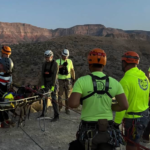
And now, days later, as Harding recovers in what doctors optimistically call ‘stable condition’ (meaning he’s alive, but won’t be tap-dancing anytime soon), he’s met with these accidental heroes. The press, naturally, swarmed the reunion. The human-interest angle, you see, sells papers. But the real story here isn’t just about good Samaritans; it’s about what happens when informal networks outperform, or at least precede, formalized structures. What if those few critical moments, where life hangs by a thread, depended entirely on state-sanctioned responders?
But there’s a subtle policy challenge baked into this seemingly heartwarming tale. It’s great when ordinary people step up, isn’t it? Wonderful PR for ‘community spirit.’ Yet, the fact that an organized, rapid public response often rests on the altruism of strangers rather than guaranteed systemic readiness is, well, it’s a bit uncomfortable for those drafting emergency plans. This wasn’t a drill. No one was timing response windows or deploying specialized equipment. It was raw, unplanned human solidarity, — and it saved a man’s life where seconds genuinely counted.
“This wasn’t an emergency protocol; it was neighbor helping neighbor,” commented Mayor Eleanor Vance, during an admittedly carefully worded statement to a local affiliate. “You can’t budget for that kind of spontaneous heroism, but you certainly can’t replace it either.” Her remarks, delivered with that practiced smile politicians reserve for non-controversial feel-good stories, sidestepped any deeper implications about what such reliance on public benevolence might suggest about the strain on municipal services. Because, let’s be honest, those services aren’t always there the moment you need them most, are they? Budget cuts, resource allocation battles—they quietly erode response times and capacities, leaving gaps only desperate people, fueled by adrenaline, can fill.
📄 POLICY WIRE WHITEPAPER PUBLISHED: PAKISTAN'S NATIONAL SECURITY POLICY PRIORITIES
👉 READ BY CLICKING HEREDr. Arifa Khan, a sociologist specializing in urban dynamics, didn’t mince words quite as carefully. “We often discuss the ‘bystander effect’ in a negative light, don’t we? Passive crowds failing to act. But moments like this—they remind us there’s an instinct for collective good that occasionally breaks through the noise, often when institutions are lagging.” She paused, adjusting her glasses. “The sheer number of vehicle crashes where the average driver is exposed to such trauma daily means we’re constantly on the precipice of these scenarios.”
And for those watching from abroad, particularly in regions where public services face even greater constraints, this incident would scarcely raise an eyebrow as extraordinary. It’s a scene you’d often attribute to bustling thoroughfares in Lahore or Karachi, where communal vigilance sometimes substitutes for centralized services, isn’t it? Where the local mosque committee or a passing rickshaw driver often becomes the immediate point of contact in a crisis. This isn’t to say Oakwood is Pakistan; it’s to highlight that communal solutions to immediate problems aren’t a novelty, but rather a universal reaction to necessity. The expectation of ‘professional help’ is often a luxury, not a given. And when that luxury is delayed, or non-existent, the innate human drive to assist tends to surge to the forefront. This wasn’t just good people acting; it was an exposed nerve in the system.
What This Means
This event, while an uplifting personal story, carries significant undertones for public policy and resource allocation. It offers a stark, if anecdotal, lesson on the elasticity of community response in the face of institutional limitations. Politically, leaders love to tout ‘community spirit,’ but this kind of spontaneous mass action implicitly asks harder questions about preparedness and funding. Is the public being quietly trained to fill in the gaps? Economically, the cost of an accident isn’t just measured in emergency services deployment and medical bills; it’s also the hidden cost of collective anxiety, mitigated only by extraordinary, often unrecompensed, citizen action. in an era where societal divisions seem to grab all the headlines, a spontaneous, unified action like this might suggest a latent capacity for cooperation that policymakers consistently underestimate—or perhaps, conveniently rely upon. It’s an unspoken covenant: ‘we’ll save each other if we have to,’ a testament not to a perfect system, but to persistent, imperfect humanity. We aren’t building a state-of-the-art rescue service on every corner, after all, are we? We’re counting on our fellow citizens. Maybe it’s a mirror for the collective human spirit when formal structures reveal their geographic blindspots or logistical limitations. A grim silver lining, if you will.