


Canada Retaliates with Tariffs Against US Amid Escalating Trade War
POLICY WIRE — Toronto, Canada — Canada retaliated against the United States on Tuesday by imposing tariffs on approximately $20 billion worth of American goods, including steel, dairy products,...

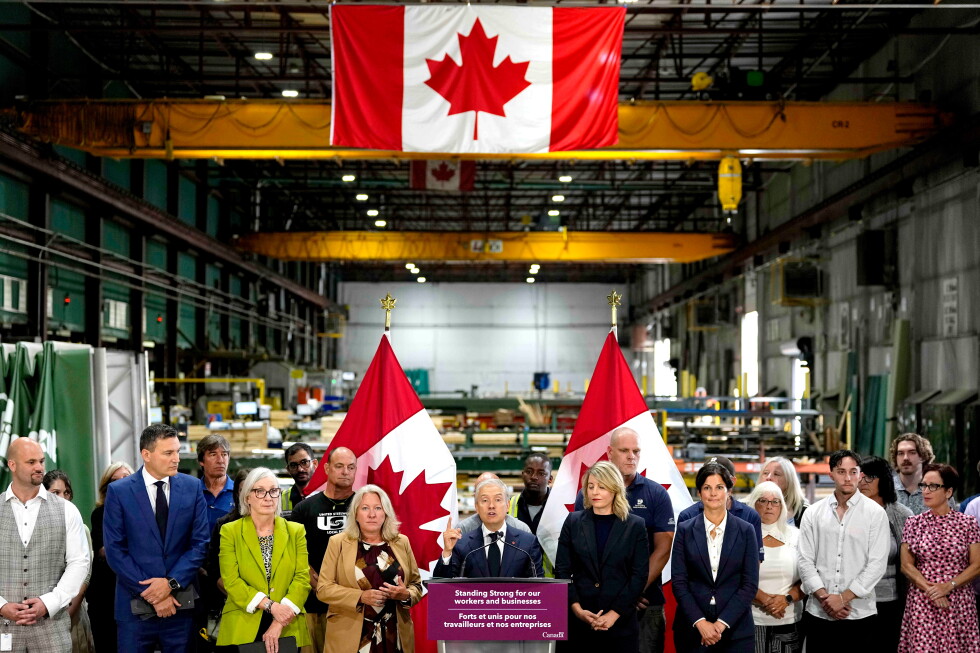
POLICY WIRE — Toronto, Canada — Canada retaliated against the United States on Tuesday by imposing tariffs on approximately $20 billion worth of American goods, including steel, dairy products, appliances, and farm equipment, as the trade war between the two countries intensified.
The escalating confrontation threatens one of the world’s largest trading relationships and further strains ties between the United States and Canada, a long-standing ally. A prolonged dispute could increase costs for American businesses and consumers, especially with the midterm elections approaching.
The new tariffs extend beyond industrial goods, affecting everyday items such as seafood, cheese, clothing, cosmetics, and toilet paper, with some facing duties as high as 50%.
Finance Minister François-Philippe Champagne stated that Canada did not choose this conflict but must stand up when its economic integration is used as a weapon. He described the situation as an unprecedented challenge imposed on Canada.
Industry Minister Mélanie Joly encouraged Canadians to buy domestic goods to protect jobs and launch a movement of resistance. She noted that the tariffs would exert pressure on specific U.S. states.
A senior Canadian official clarified that the new measures were not designed around the U.S. electoral map, unlike previous retaliatory tariffs that targeted politically sensitive products.
Canada’s retaliation followed the Trump administration’s imposition of 50% tariffs on Canadian goods after trade negotiations collapsed. Prime Minister Mark Carney accused Washington of attempting to subordinate Canada, stating that U.S. demands during the failed talks aimed to destroy major Canadian industries.
President Trump intensified the confrontation by threatening new 50% tariffs on Canadian vehicles, auto parts, and steel, and even suggested renaming Lake Ontario to Lake America.
The tariffs will take effect on September 8 at rates of 15%, 25%, and 50%, with Canada matching the corresponding U.S. tariff rate on over 700 products. The goal is to protect Canadian companies and reduce U.S. imports, not to raise revenue.
Canada also announced a $7.5 billion support package for affected workers and businesses. Officials acknowledged that the countertariffs will raise costs for some businesses and consumers but expect the economic effects to be moderate.
British Columbia Premier David Eby supported Carney, arguing that any agreement with Trump would have been unstable. He hoped that other countries, like Mexico, would join Canada in opposing the tariffs.
The deeply integrated supply chains between Canada and the United States across various industries mean that a prolonged trade fight could be costly for businesses and workers on both sides.
Michael Howard II, owner of a Michigan furniture business, expressed concern that the tariffs would affect his ability to support his family and community.
Carney rejected U.S. objections to French-language content and labeling rules, emphasizing that these are rights in Canada, not irritants.
Trump denied interfering with Canadians speaking French, calling the accusation a lie made up by a weak Prime Minister to gain political support.
Reporting by Policy-Wire (PW)