


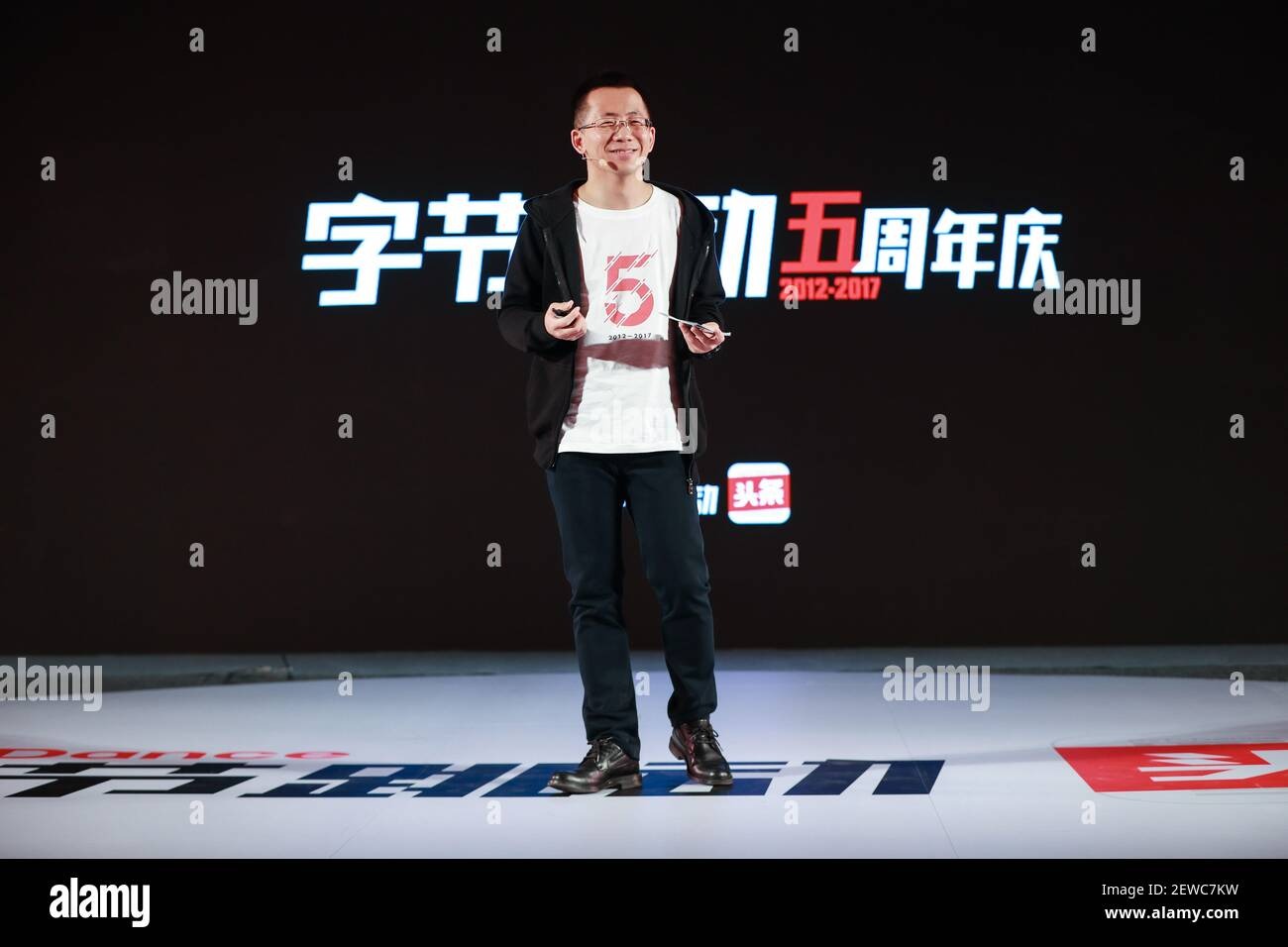
ByteDance Founder Zhang Yiming Reclaims Title of China’s Richest Person Amid AI Boom
ByteDance founder Zhang Yiming tops China's wealth rankings as AI investments drive growth, while traditional sectors like real estate face decline.

POLICY WIRE — Beijing, China — Zhang Yiming, the founder of ByteDance, has ascended to the top of China’s wealth rankings. His return to the number one spot is largely attributed to his company’s aggressive expansion into artificial intelligence.
Data released Tuesday by The Hurun Research Institute highlights a growing divide in the Chinese economy. While high-tech sectors are experiencing rapid growth, traditional industries such as real estate and consumer goods continue to struggle under significant pressure.
The institute, which has tracked these figures annually since 1999, identified a record 1,529 individuals with a net worth exceeding 5 billion yuan, or approximately $750 million. This represents a 6.6% increase compared to the previous year.
The number of individuals with a net worth of at least $1 billion reached 1,176, an increase of 155 people. This figure remains slightly lower than the 1,185 billionaires recorded in 2021, though it still places China 176 people ahead of the United States.
Rupert Hoogewerf, chairman of the Hurun Report, stated that Zhang reached a record high of $100 billion, a 43% increase, noting that almost all of it is on the back of AI. Hoogewerf further highlighted that Doubao, a product of ByteDance, has become the most utilized AI assistant in China.
Artificial intelligence has emerged as the primary driver of wealth on the list, with one in ten individuals—totaling 160 people—deriving their fortune from the sector. ByteDance serves as the parent organization for the widely popular short-video platforms TikTok and Douyin.
Regarding TikTok’s U.S. operations, the company shifted to a new joint venture in January composed primarily of American investors following years of national security concerns. ByteDance maintains a minority stake in the U.S. arm of the platform.
Zhong Shanshan, known for his bottled water business, dropped to second place with $61 billion, marking a 23% decline. Robin Zeng, who leads the electric vehicle battery manufacturer CATL, secured the third position.
The list also features new entrants from the tech sector, including DeepSeek founder Liang Wenfeng at seventh place and Cambricon chair Chen Tianshi at tenth. Hurun compiled these rankings by cross-referencing data with regulators, industry experts, and entrepreneurs.
Hoogewerf described the current landscape as a two-speed economy, noting that this year’s gains were polarised. While entrepreneurs in robotics, semiconductors, and AI surged ahead, those in traditional manufacturing, real estate, and consumer sectors saw their wealth shrink.
Official data from last week indicates that China’s economy grew 4.5% in the July-September quarter compared to the previous year, supported by strong exports. This puts the nation on track to meet its annual growth target of 4.5% to 5% for 2026.
Despite growth in tech, small business owners face challenges as consumer spending remains constrained. This trend is exacerbated by a long-standing downturn in the property market, which is reflected in the Hurun list.
Xiaomi chairman Lei Jun was identified as the biggest faller, with his wealth dropping by half to $25.1 billion. Furthermore, for the first time in the history of the list, not a single mainland property developer remains in the Top 100, leaving only Hong Kong landlord families among the top property names.
Reporting by Policy-Wire (PW)