

Burning Man Co-Founder Laments Festival’s Transformation into Elite Playground
POLICY WIRE — San Francisco, USA — A co-founder of Burning Man has expressed deep concern over the festival’s shift from its anarchist roots to a lavish event for the wealthy. John Law, who...

POLICY WIRE — San Francisco, USA — A co-founder of Burning Man has expressed deep concern over the festival’s shift from its anarchist roots to a lavish event for the wealthy. John Law, who played a pivotal role in relocating the festival to Nevada’s Black Rock Desert in 1990, asserts that the event is now almost unrecognizable compared to its early days.
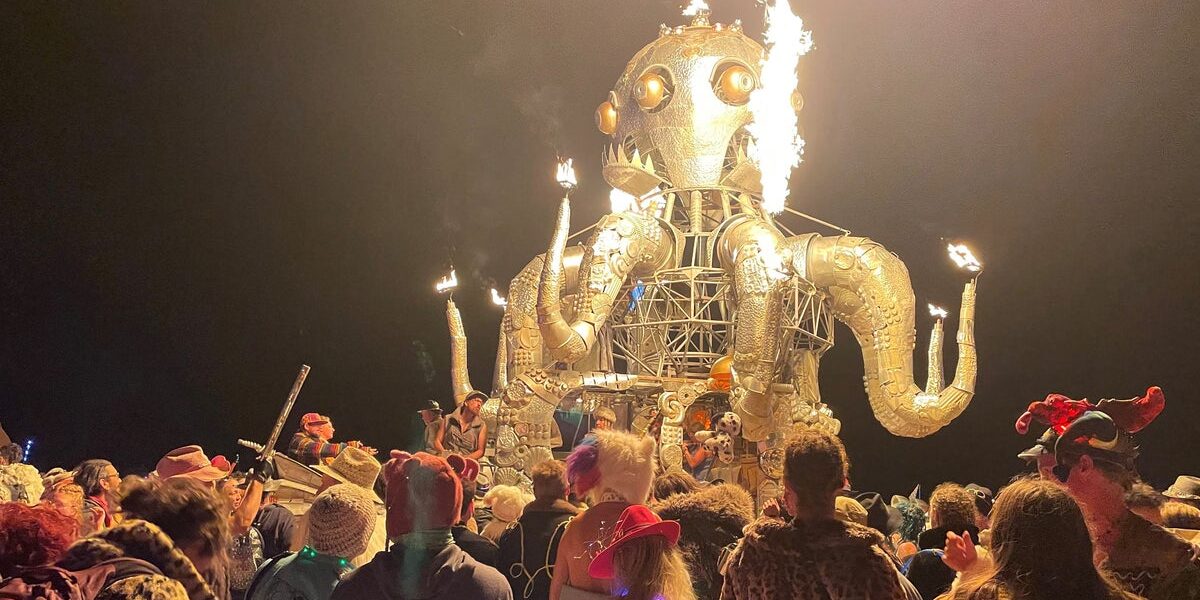
In a recent essay for the San Francisco Standard, Law shared his disappointment, stating that the festival now evokes a sense of sadness in him. He described the current event as a grand, sensory-overloading spectacle tailored for Western elites and the middle-class creatives who cater to them.
Law highlighted the stark contrast between the festival’s humble beginnings as a collaborative, anarchistic gathering and its current status as a commercialized escape for the affluent. He noted the presence of luxury camps with private chefs and attendees arriving via private jets.
The festival’s evolution is attributed to the rise of the internet and the influence of Silicon Valley’s elite. Law recalled how companies like Google began promoting Burning Man as a perk for their employees, further commercializing the event.
Attendance at Burning Man has seen a significant increase, from about 70 people in 1990 to nearly 80,000 in 2019. Ticket prices have also risen, ranging from $550 to $3,000 for this year’s event, with only a few tickets available at the lower price.
📄 POLICY WIRE WHITEPAPER PUBLISHED: PAKISTAN’S NATIONAL SECURITY POLICY PRIORITIES
Despite his criticisms, Law acknowledged that Burning Man remains a remarkable event, though it no longer embodies the spirit of its origins. The festival’s recent challenges, including the 2023 incident where severe weather conditions turned the Black Rock Desert into a hazardous area, have further highlighted the disconnect between the festival’s current state and its original ethos.
Reporting by Policy-Wire (PW)