


Jericho’s Shadow: Ancient Plaster Rewrites Humanity’s Early Innovation Story
POLICY WIRE — Jerusalem — Forget everything you thought you knew about foundational human engineering. Seriously, scratch it. For generations, academic tomes and grade-school history books alike have...

POLICY WIRE — Jerusalem — Forget everything you thought you knew about foundational human engineering. Seriously, scratch it. For generations, academic tomes and grade-school history books alike have lauded Roman engineers for their pioneering use of plaster, particularly its hydraulic variety, allowing them to construct everything from aqueducts to monumental civic structures with unparalleled durability. Turns out, our Roman heroes might’ve just been latecomers to a very old party.
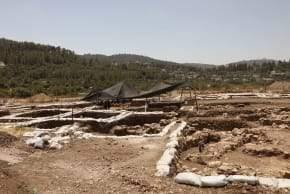
Recent archaeological bombshells from the dusty outskirts of Motza, just west of modern-day Jerusalem, suggest humans were mastering complex plaster-making techniques, including one surprisingly similar to that lauded Roman method, not two millennia ago, but nearly ten. We’re talking 8,000 years earlier. It’s a bit like discovering the Wright brothers weren’t the first to fly; merely the first to do it while wearing togas. The mind boggles, doesn’t it?
Excavators at Motza have unearthed structures, now dated to the Neolithic period, showcasing a remarkable understanding of calcitic-earth plaster. This wasn’t just slapping mud on a wall. It involved calcining (heating) limestone at specific temperatures, crushing it, and then mixing it with aggregates to create a robust, water-resistant material. A proper industrial process, you could say. And they were doing it back when woolly mammoths were barely a fading memory in some parts of the world, and civilization as we largely define it—cities, states, organized governance—was a long, long way off.
“We’ve systematically underestimated the cognitive — and technological prowess of early human societies,” stated Dr. Hagar Ben-Mordechai, a lead archaeologist on the Motza dig, in a rare interview, her voice barely concealing a professional delight mixed with exasperation. “This isn’t just an isolated incident; it’s part of a growing body of evidence indicating advanced practices from the very dawn of settled communities. People weren’t just hunting and gathering; they were experimenting, innovating, and, frankly, building sophisticated stuff.”
But the real kick in the pants for traditional narratives? This wasn’t some isolated, primitive application. The evidence points to widespread use across multiple Neolithic settlements in the Levant. This was standard practice, a widely understood technology, long before anyone in Rome ever even dreamt of a gladiator, let alone an arch. The discovery has effectively rewritten the first chapter of structural engineering history. It asks us to look again at what early peoples were truly capable of, without the condescension of hindsight.
And it’s a paradigm shift that echoes across disciplines. Historians of technology will have to redraw their timelines. Archaeologists across the Near East are likely — or should be — re-examining their own sites with fresh eyes, looking for signs of similarly overlooked genius. Because if Motza reveals this, who knows what’s lurking beneath the next dune?
The broader Middle East, particularly the Levant, often gets framed by current geopolitical tensions. But its ancient roots consistently remind us of its foundational role in human innovation. For instance, the region also lays claim to some of the earliest forms of settled agriculture — and ceramic production. This new plaster revelation only solidifies its standing as a crucible of human development, challenging West-centric views of technological progress. Rewriting antiquity often means rewriting our perceptions of ourselves.
Consider the region of South Asia, specifically the Indus Valley Civilization, which boasts urban planning and hydraulic engineering from the Bronze Age. If settlements in the Levant were this advanced thousands of years earlier, it invites intriguing cross-cultural comparisons. Were there earlier, unrecognized transmissions of knowledge? Or perhaps parallel, independent advancements emerging from equally sophisticated societies across the then-connected Asian continent?
The find serves as a timely reminder, too, for ongoing research in countries like Pakistan, where rich archaeological heritage, from Mohenjo-Daro to Gandhara, awaits more thorough investigation and, crucially, funding. UNESCO estimates that roughly 70% of identified archaeological sites in the broader Middle East and North Africa region remain unexcavated, leaving immense potential for further paradigm shifts like the one unfolding at Motza. What hidden secrets — and paradigm-shifting innovations — might lie there, too?
“We need to invest more in unearthing these lost narratives,” commented Dr. Amina Sharif, Director-General of the Antiquities Department of Jordan, a nearby nation whose own history stretches back into the Neolithic. “It’s not just about artifacts; it’s about understanding the deep history of human ingenuity, something that can inspire — and humble — us today. These are shared heritage, truly.”
What This Means
Politically, this kind of discovery, while ostensibly academic, has quiet reverberations. It shifts national narratives, enhancing the pride of populations in a region too often associated with conflict. For governments, particularly in nations like Israel, Jordan, and potentially even Pakistan if their own ancient sites yield similar surprises, it presents a compelling case for increased investment in archaeological infrastructure and preservation. It bolsters claims of a deep, rich cultural lineage that predates modern geopolitical fault lines. Economically, well-preserved and newly interpreted archaeological sites are magnets for heritage tourism, an often-underutilized revenue stream that benefits local communities directly. It doesn’t build highways overnight, but it certainly lays another intellectual and cultural groundwork for future stability and collective identity, reminding everyone that this wasn’t always a fractured landscape. This isn’t just about old plaster; it’s about a fresh perspective on the earliest chapters of humanity’s story—a narrative that we’re still, it seems, just beginning to fully appreciate.