
Brian May Recalls Neil Armstrong’s Shocking Endorsement Amid Billionaire Space Critique
Sir Brian May reveals Neil Armstrong backed his 2011 speech criticizing space exploration while Earth suffers, contrasting public good with billionaire greed.

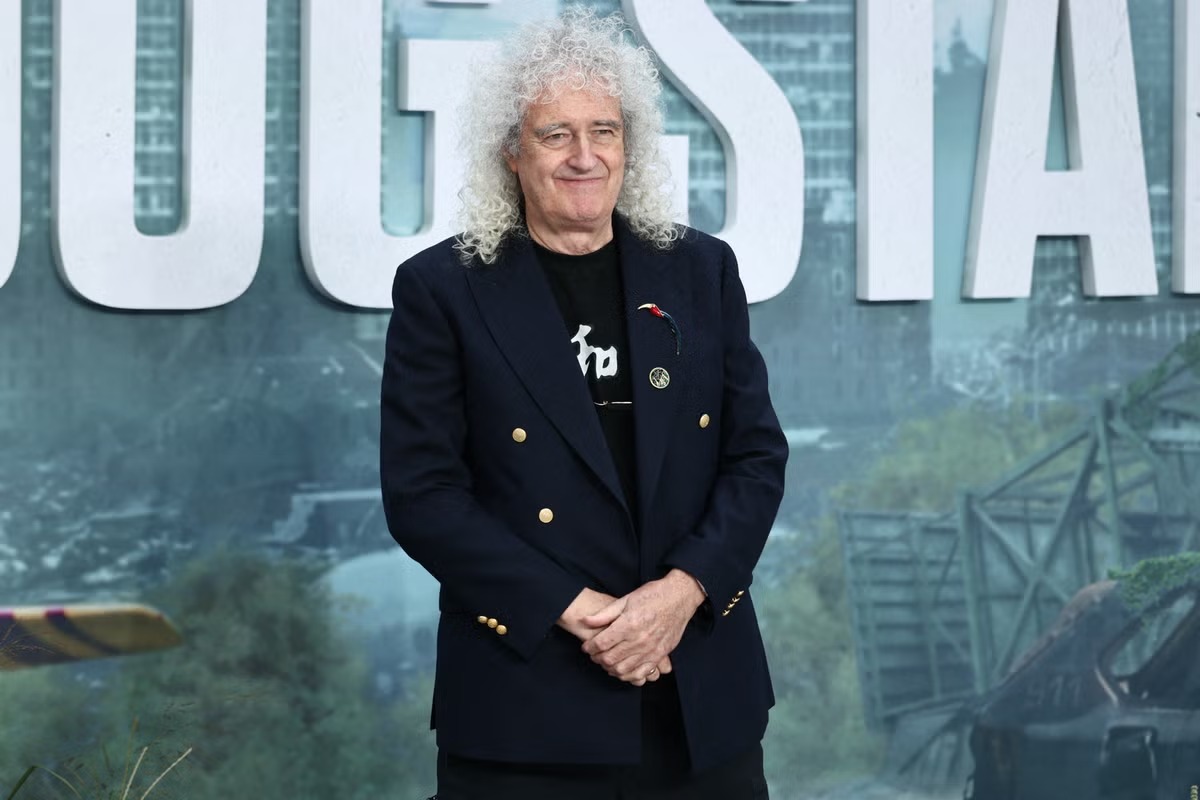
POLICY WIRE — Canary Islands, Spain — Sir Brian May, the Queen guitarist and astrophysicist, has shared a powerful memory of receiving validation from the late Apollo 11 commander regarding his concerns about humanity’s approach to space travel.
During the 2011 Starmus festival, May addressed a question that weighed heavily on his conscience: whether humanity should venture beyond Earth given the state of the planet.
The audience included six Apollo moonwalkers, among them Neil Armstrong and Buzz Aldrin, the first men to walk on the moon, as well as Charlie Duke and Harrison Schmitt from later missions.
May, now 79, admitted he was “petrified, terrified” before delivering his remarks, fearing he would offend the pioneers by suggesting a pause in exploration.
He questioned the confidence of sending human seeds into the cosmos when, in his words, we’ve made such a mess of our own planet.
To his immense relief, Armstrong approached him after the speech ended, reportedly stating, “You said the right thing.”
This historical moment contrasts sharply with May’s contemporary frustration over the current state of space exploration, which he describes as driven by self-interest rather than collective benefit.Speaking to EL PAÍS at the Starmus festival in Spain’s Canary Islands, May lamented that billionaires appear to be pursuing only their own agendas while the world deteriorates.
He stated, “I wish I could find a billionaire who was a decent human being,” noting that many are destroying the planet while others suffer.
May argued that addressing these earthly crises is far more important than the pursuit of space.
The narrative shift in space exploration has moved from national and scientific endeavors to private ventures led by controversial figures like Jeff Bezos and Elon Musk.
This transition recently made headlines when Russian President Vladimir Putin praised Musk as a “real genius” during the Russia-Africa summit in Moscow.
Putin emphasized the need for communication to prevent interference between Russia’s Rassvet satellite project and SpaceX’s Starlink in orbit.
These diplomatic comments followed Ukraine’s complaints that speed restrictions on its military version of Starlink, Starshield, hampered its ability to intercept Russian drones.
Neither Musk nor the US government has formally taken responsibility for these alleged speed curbs.
Meanwhile, Bezos faced backlash last year for the Blue Origin NS-31 mission, a highly publicized 11-minute flight crewed by six women, including pop star Katy Perry and his wife, Lauren Sanchez.
While marketed as a feminist milestone, the mission was criticized by many as a marketing stunt for Bezos’s space tourism business and for its environmental impact.
Sources later indicated that Perry regretted creating a “public spectacle” by kissing the ground after the rocket’s landing.
Beyond his music career, May earned a PhD in astrophysics from Imperial College London in 2007, three decades after pausing his studies to focus on Queen.
Recently, he suggested that Queen might end its touring era after 50 years, allowing him to dedicate more time to his family and scientific work.
Reporting by Policy-Wire (PW)