


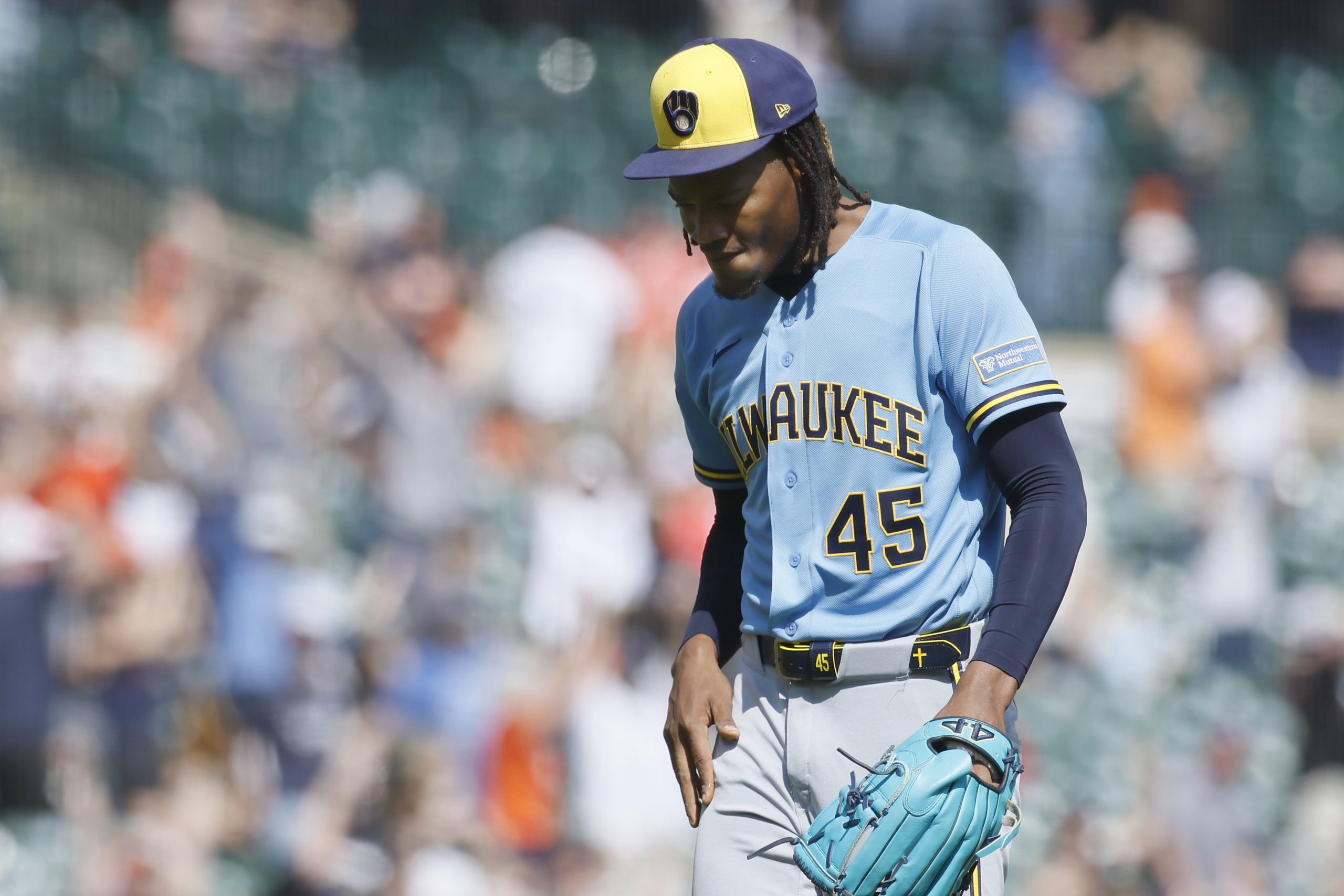
Brewers’ Late Collapse Fuels Tigers’ Walk-Off Triumph in Detroit
POLICY WIRE — Detroit, Michigan — Few things in sports sting quite like a walk-off loss, particularly one that felt utterly preventable just moments prior. For the Milwaukee Brewers, Thursday’s...

POLICY WIRE — Detroit, Michigan — Few things in sports sting quite like a walk-off loss, particularly one that felt utterly preventable just moments prior.
For the Milwaukee Brewers, Thursday’s 5-4 defeat to the Detroit Tigers wasn’t merely another notch in the loss column; it was a gut punch delivered with a single swing—a truly agonizing blow that erased a gritty comeback and left the club flailing to reclaim its equilibrium as the season progresses. The final act, a towering drive from Spencer Torkelson, cemented a topsy-turvy turn of events, casting a long shadow over what’d, for a brief period, looked like a hard-earned road victory. Their season, a carefully constructed Jenga tower, felt a little wobbly.
Remember that feeling of impending doom when a star pitcher dominates? That’s precisely what the Brewers faced. Tigers ace Tarik Skubal decimated Milwaukee’s lineup for much of the afternoon (a masterclass in pitching, really), allowing only one run through six innings, starkly illustrating why he’s considered among baseball’s elite.
But baseball. Bless its heart. It often defies expectation. Milwaukee’s rookie starter, Brandon Sproat, weathered a turbulent opening frame, surrendering a two-run homer to Riley Greene after a leadoff double. Yet, Sproat settled down admirably, stanching further bleeding to keep the game within reach, exiting in the sixth with a manageable two-run deficit.
And then came the fight back. Down 3-1 in the seventh, the Brewers conjured a textbook rally. Back-to-back doubles by William Contreras and Gary Sánchez had earlier put ’em on the board. This time, it was Blake Perkins, who’d battled through a long at-bat, lacing a game-tying double, sending two runners home and chasing Skubal from the game.
Joey Ortiz then followed with a single, and David Hamilton grounded one through, putting Milwaukee ahead 4-3. This wasn’t just a lead; it was a proclamation. The Brewers had stared down one of the league’s best — and emerged, momentarily, victorious.
“We fought back with everything we had, showing the kind of grit this team has,” Brewers manager Pat Murphy told Policy Wire after the game, his voice still suffused with pique. “To have it slip away like that in the ninth, after all that effort, it’s a tough pill for anyone to swallow.”
Still, the lead turned out as flimsy as a house of cards in a hurricane. Reliever Angel Zerpa quickly recorded an out in the eighth, but pinch-hitter Jahmai Jones (who seemingly came out of nowhere) leveled the score with a solo shot, setting the stage for the dramatic finale.
Enter Abner Uribe in the ninth. He started strong, but walks — and missed locations bedeviled his appearance. Ultimately, Spencer Torkelson, after a battle at the plate, found his pitch, sending the ball soaring over the fence to clinch the 5-4 triumph for the Tigers.
Was it a failure of execution? Or simply the fickle nature of the game? So, whatever the cause. The impact? It’s real. The Brewers now find themselves just two games over a .500 winning percentage, slipping to 14-12 on the season after dropping two straight to Detroit. That’s a consequential swing in trajectory for a team jockeying for initial dominion.
For fans in cities like Detroit, which boasts a sizable populace with roots in South Asia and the Muslim world—including a vibrant Pakistani community that’s as passionate about baseball as any Rust Belt denizen—baseball’s cosmic magnetism is evident. They watch the drama unfold with the same passion as anyone else, connecting with the narratives of struggle and triumph that transcend cultural divides. The roar from the stands after Torkelson’s homer was a testament to that shared experience, uniting a diverse fanbase in collective jubilation. Indeed, the increasing globalization of sports, including baseball (because, why not?), points to a future where more talent could emerge from unexpected regions, perhaps even South Asia, if MLB expands its scouting footprint.
Related: Detroit’s Comeback Story: Tigers’ Walk-Off Victory Mirrors City’s Resurgent Spirit
“You’ve got to give Tork credit; he stayed with it — and delivered in a huge spot,” Tigers manager A.J. Hinch remarked, reflecting on his team’s tenacity. “These are the wins that really build character — and belief among the guys.”
What This Means
This late-game collapse isn’t just about a single game’s outcome; it bears palpable ramifications for both franchises. For the Brewers, slipping to 14-12 means relinquishing vital territory in the early National League Central race. Every loss, particularly one snatched from the jaws of victory, can ricochet through club spirits and, eventually, impact attendance figures and local merchandise sales, which are directly tied to playoff contention.
But on the other side, the Tigers‘ dramatic win injects vital momentum. A walk-off victory, especially against a competitive opponent, galvanizes the fanbase and offers a morale-shot-in-the-arm that can fuel a winning streak, translating into higher viewership and increased local economic activity around Comerica Park. For a city like Detroit, still undergoing significant economic revitalization, the performance of its sports teams plays a subtle but pivotal function in civic pride and investment sentiment.
Looking ahead, the Brewers return home to face the Pittsburgh Pirates, a team that currently holds a 14-10 record, making the upcoming three-game series even more critical. They’ll need to shake off this bitter defeat quickly. Like, yesterday. As one veteran baseball analyst, Dr. Evelyn Reed of the Sports Economics Institute, pointedly declared, “In a tight divisional race, early season momentum is less about raw statistics and more about mental fortitude. Losses like this can either galvanize a team or unmask nascent fissures. How the Brewers respond in their next series will be far more telling than this single outcome.”