


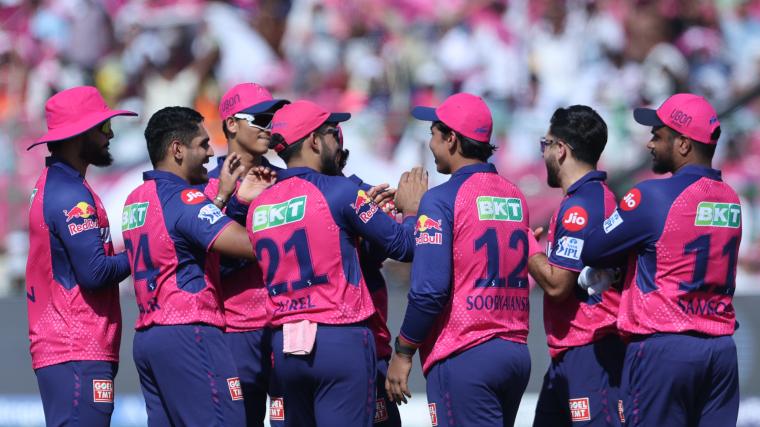
Beyond the Boundary: How IPL 2026 Unfurls India’s Unseen Global Soft Power
NEW DELHI, India — The roar from the stands, the flash of a six, the frenetic pace of twenty-over cricket — these aren’t merely sporting phenomena. They’re the visible manifestations of a...

NEW DELHI, India — The roar from the stands, the flash of a six, the frenetic pace of twenty-over cricket — these aren’t merely sporting phenomena. They’re the visible manifestations of a colossal economic engine, a potent cultural export, and an increasingly consequential instrument of soft power for India. So, as the Indian Premier League (IPL) gears up for its 19th iteration in 2026, the real story isn’t just about who’ll clinch the silverware, but what this sporting behemoth really represents on the global stage.
It’s no longer simply a domestic tournament; it’s an annual, month-long spectacle that grips billions, transcending geographical boundaries and linguistic divides. Royal Challengers Bengaluru, surprisingly, commence their title defense — a first in their history — as cricketing enthusiasts worldwide pivot their gaze to the electrifying T20 format. And it’s an extraordinary pivot, given how many other global events vie for attention.
Behind the headlines of star players and dramatic finishes lies a complex tapestry of broadcast rights, diaspora engagement, and strategic market penetration. North America, for instance, represents a crucial frontier. Willow TV and Fubo (a streaming service that’s really made inroads, hasn’t it?) have secured exclusive rights, ensuring that the vast South Asian diaspora – and burgeoning numbers of new aficionados – can witness every boundary and wicket. This isn’t just about selling subscriptions; it’s about exporting a piece of India, a vibrant cultural narrative, directly into living rooms from Toronto to Texas. Fubo, they’ve even got a free trial for new U.S. subscribers; a clever gambit, you’d think, for capturing a new demographic.
The financial stakes involved are astronomical, underpinning much of this global expansion. The IPL, which Forbes valued at over 10 billion USD in 2023, isn’t merely a sporting league; it’s a multi-billion dollar enterprise, its broadcast rights alone commanding figures that rival the GDP of smaller nations. This staggering valuation underscores its immense commercial appeal and its magnetic draw for global sponsors and investors alike. But it also hints at something deeper.
“The IPL has metamorphosed into a formidable diplomatic asset,” asserted Mr. Anurag Thakur, India’s Minister for Youth Affairs — and Sports, speaking recently from New Delhi. “It showcases India’s organizational prowess, its vibrant youth culture, and its economic might to an unparalleled global audience. We’re not just playing cricket; we’re projecting India.” It’s a bold statement, isn’t it?
Still, the league’s influence isn’t confined to nations with direct broadcasting deals. The gravitational pull of the IPL extends across the entire South Asian subcontinent, including Pakistan, Afghanistan, and Bangladesh — often through less formal (and certainly less licensed) channels. Despite the enduring geopolitical friction between India and Pakistan, for example, millions of Pakistani cricket devotees avidly follow the IPL, often circumventing official bans through VPNs and illicit streams. It’s a testament to the sport’s inherent power, a cross-border obsession that transcends the often-strained bilateral relations. Pakistan, an erstwhile cricketing powerhouse itself, has seen its players largely excluded from the IPL due to political tensions, a contentious point that periodically resurfaces in regional dialogue. Imagine the untapped potential there, if only. Cricket’s cruel calculus, indeed.
📄 POLICY WIRE WHITEPAPER PUBLISHED: PAKISTAN'S NATIONAL SECURITY POLICY PRIORITIES
👉 READ BY CLICKING HEREAnd it’s not just South Asia. From the Gulf states, where expatriate communities form significant viewership bases, to the burgeoning markets of Europe and Africa, the IPL has cemented its status as a premier global sporting event. That global footprint—that ability to captivate such diverse audiences—it’s what truly sets the league apart.
“We’ve witnessed an unmistakable surge in demand across unexpected demographics,” opined Ms. Eleanor Vance, a senior broadcast analyst at Global Sports Media. “It’s not merely Indian expats; it’s a growing segment of mainstream sports fans drawn to the high-octane energy and star power. The IPL isn’t just competing with other cricket leagues anymore; it’s vying for eyeballs with the NBA and the Premier League. That’s monumental.”
The league, comprising ten powerful franchises like the Mumbai Indians and Chennai Super Kings (both boasting five titles), meticulously crafts its schedule to maximize global viewership, often featuring evening matches in India that translate to prime-time mornings in the Americas. This meticulous planning reflects a deep understanding of its market, an almost surgical precision in capturing global attention.
What This Means
At its core, the IPL’s ascendance signals a profound shift in the global sporting economy and, by extension, international relations. India, long a demographic giant, is now flexing its economic and cultural muscles, using cricket as an elegant, entertaining conduit. The league’s success isn’t just about runs and wickets; it’s a powerful narrative about India’s growing economic heft and its capacity to create globally resonant cultural products. It impacts everything from foreign policy dialogues, where soft power can ease tensions, to trade relationships, as multinational corporations clamor for association with this sporting juggernaut. It’s a template, really, for other emerging economies aiming to translate domestic popularity into international influence. For policymakers, understanding the IPL isn’t about sports commentary; it’s about grasping a critical, albeit colorful, facet of modern geopolitics and economic strategy. Europe’s grand arena has its parallels, but the IPL possesses a unique, subcontinental fervor that’s simply unparalleled.