


Beyond the Beautiful Game: How North America’s World Cup Bid Reflects a Deeper Geo-Cultural Play
POLICY WIRE — Washington, D.C. — It’s a familiar dance, isn’t it? The spectacle of a FIFA World Cup, stripped of its commercial sheen, isn’t merely about the graceful arc of a football over manicured...

POLICY WIRE — Washington, D.C. — It’s a familiar dance, isn’t it? The spectacle of a FIFA World Cup, stripped of its commercial sheen, isn’t merely about the graceful arc of a football over manicured turf. No, the 2026 tournament, now merely two years away from its North American kickoff, signals something far more intricate: a calculated, geo-cultural gambit, quietly leveraging the world’s most popular sport for profound diplomatic and economic ends. While the chattering classes dissect bracket predictions—and yes, everyone’s got an opinion, usually wrong—the real game is playing out in the halls of power, where hosting rights mean soft power on a scale few other events can command.
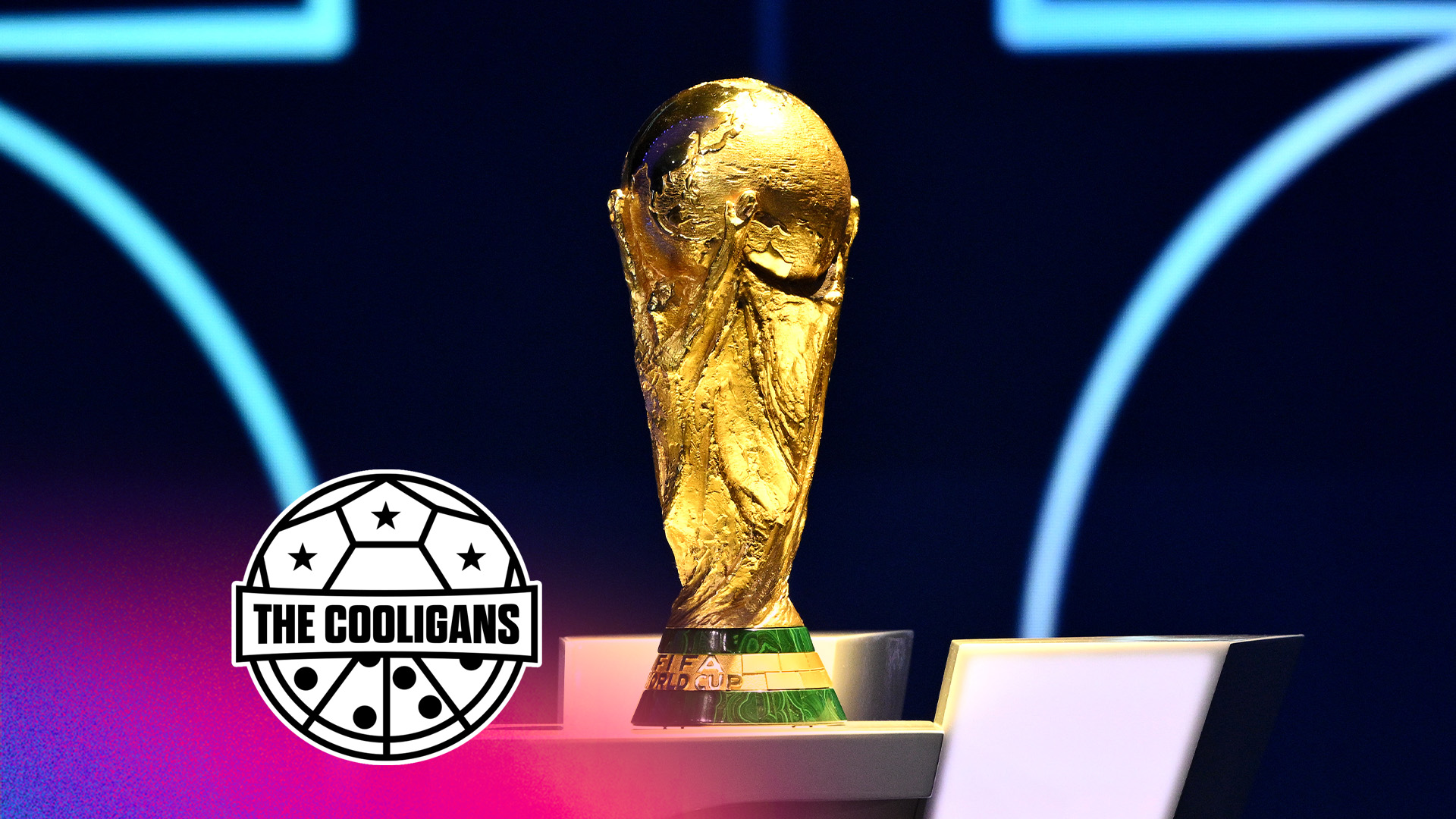
Listen, you can practically hear the collective sigh of relief from officialdom that the world’s attention, however briefly, will fixate on a shared cultural phenomenon rather than, say, escalating drone strikes or intractable trade disputes. Because that’s what this truly is: an elaborate, wildly expensive, but ultimately invaluable public relations exercise for three nations that desperately need the positive optics. On a recent edition of The Cooligans, a popular sports talk venture, even the most football-mad pundits couldn’t help but touch on these broader themes, perhaps unintentionally. The consensus, for what it’s worth, pointed to predictable contenders, but ignored the real story developing beneath the surface.
It’s not just the usual suspects like Brazil or France generating buzz. There’s genuine fascination surrounding the U.S. Men’s National Team (USMNT). Beyond the Beautiful Game itself, the discussion now leans into whether a deep run could accelerate America’s own, historically hesitant, embrace of soccer—transforming casual interest into something resembling national passion. Leander Schaerlaeckens, a sharp journalist who’s followed the USMNT’s often-rocky journey, posited that their failure to qualify for the 2018 World Cup inadvertently turbocharged their current generation’s development. An interesting, if slightly perverse, take on sporting serendipity, wouldn’t you agree?
But the true heart-string moment came courtesy of Curacao, a small island nation (population a mere 160,000) whose goalkeeper, Eloy Room, managed not only historic qualification but also secured a jersey swap request from none other than Lionel Messi himself. Think about that for a second. For countries that rarely feature on the global stage, such moments are invaluable—a shot of national pride, a powerful rallying point. “Curacao’s journey isn’t just a feel-good story; it’s a tangible demonstration of how sport can elevate a nation’s standing, offering invaluable global exposure and fostering a shared identity,” observed former Netherlands Antilles Diplomat, Dr. Elisabeth Klein, echoing sentiments privately shared by many developing nations. Small nations, suddenly front-page news.
And it’s this ripple effect that extends far beyond the Western hemisphere. From the bustling streets of Lahore to the coastal enclaves of Karachi, football fever transcends conventional geographic boundaries. Though Pakistan’s national team is still chasing that elusive World Cup berth, the spectacle isn’t lost on its youth. Football clubs sprout up in unexpected corners, kids kick balls on makeshift pitches, their dreams fueled by the very same Messi moments Eloy Room just recounted. The World Cup, regardless of who’s playing, provides a universally understood language, a cultural conduit that even intricate diplomatic initiatives struggle to replicate. It’s a soft power multiplier, whether official policy intended it or not. The excitement of a host like North America only magnifies that resonance.
Because ultimately, when millions in Muslim-majority nations—and across South Asia—tune in, often late at night due to time zone differences, they’re not just watching goals. They’re witnessing cultural exchange, seeing diversity celebrated (even if sometimes awkwardly), and engaging with a global narrative. It’s a shared experience that offers a momentary respite, an imagined unity. This shared engagement often creates avenues for dialogue and deeper understanding, subtle yet meaningful in a world fractured by division.
But make no mistake, the bottom line is also a factor. The 2026 World Cup is projected to generate over $5 billion in short-term economic activity for North America, according to a recent Boston Consulting Group analysis. That’s an awful lot of tourist dollars, sure, but it also reflects the commercial muscle being flexed on a global stage. The US State Department’s Under Secretary for Public Diplomacy, Jane Thompson, succinctly put it: “Hosting such an event isn’t just about economic gain; it’s about projecting American values and creating lasting connections. We don’t just host a tournament; we host the world.” It’s about perception, about leverage, and, yes, about the very real dollars that fuel such ambitions.
What This Means
The 2026 FIFA World Cup, despite its billing as a celebration of sport, acts as a masterclass in modern statecraft. For the United States, Mexico, and Canada, co-hosting isn’t merely an administrative feat; it’s a strategic assertion of regional unity and global cultural leadership. The sheer magnitude of the event promises an economic injection that local municipalities eagerly anticipate, but more enduringly, it’s a significant play in the geopolitical game of soft power. These global spectacles project national brand images, encourage tourism—and the concomitant investment—and subtly, or not-so-subtly, align host nations with ideals of global collaboration and sporting excellence. For developing nations, and those outside football’s traditional Western strongholds, a qualification like Curacao’s provides an unmatched platform, showcasing their people, culture, and, perhaps most crucially, economic viability on an otherwise unattainable global scale. It reconfigures their narratives on the world stage, if only for a glorious few weeks. The stakes, clearly, are far higher than a trophy.