


Beyond the Beam: Washington Grapples with Tyson’s Guide to the Galaxy’s Uninvited Guests
POLICY WIRE — Washington, D.C. — For decades, the extraterrestrial question resided squarely in the realm of B-movies and the more fervent corners of the internet. It was an amusing, albeit fringe,...

POLICY WIRE — Washington, D.C. — For decades, the extraterrestrial question resided squarely in the realm of B-movies and the more fervent corners of the internet. It was an amusing, albeit fringe, distraction from Earth’s rather more pressing geopolitical squabbles. But something shifted, didn’t it? The Pentagon, that most staid of institutions, isn’t just dismissing ‘unidentified anomalous phenomena’ anymore; it’s documenting them. Lawmakers, usually deadlocked on pretty much everything, actually found common ground in demanding answers. And then, along comes Neil deGrasse Tyson, arguably America’s most recognizable astrophysicist, to offer a practical—if wildly optimistic—roadmap for when they finally arrive.
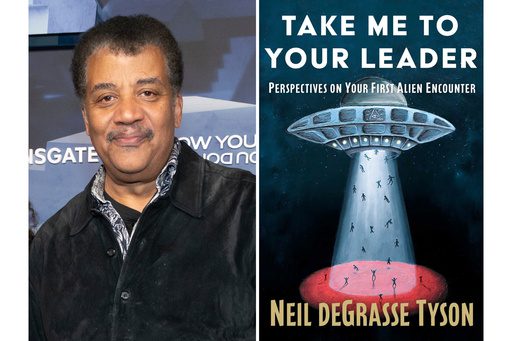
It’s a peculiar pivot for public discourse, indeed. As global powers like the United States find themselves maneuvering around nascent cold wars and climate catastrophes, Tyson posits a scenario that dwarfs even our most dire human-made predicaments. His latest literary outing, Take Me to Your Leader: Perspectives on Your First Alien Encounter, isn’t another abstract physics tome. Oh no. It’s a book of etiquette, if you can believe it, for a galactic rendezvous that humanity might be—let’s just say—underprepared for. Because frankly, who else is drafting a handbook for interplanetary handshakes?
Tyson, director of the Hayden Planetarium, doesn’t beat around the bush. If these interstellar visitors show up, they aren’t dropping in for tea and crumpets, nor are they likely interested in our petty squabbles over borders or ideologies. They’ll be light-years ahead. “They’ll not only be brilliant, but they’ll be way more powerful than us in practically any way that matters,” Tyson observes with his characteristic blend of academic rigor and pop culture sass. “Which is why it’s so laughable when you see in Hollywood movies some mothership arrives and people pull out their pistols and start shooting guns at it. Like, ‘Really? Have you thought this through?'” A salient point, isn’t it? Our primitive notions of defense might be about as useful as a catapult against a drone.
The book’s arrival is timely. Public fascination with UFOs has ballooned, fueled by everything from former President Barack Obama’s tantalizing musings (he’s since clarified he’s seen no direct evidence, but allows “the odds are good there’s life out there”) to newly declassified documents. A recent government report confirmed over 360 new UFO sightings since March 2021, according to data released by the Director of National Intelligence. This surge, frankly, has lent a curious legitimacy to what was once exclusively the province of conspiracy theories. But is mere acknowledgement enough?
“What Mr. Tyson offers isn’t just theory, it’s a cold dose of reality regarding humanity’s inherent hubris,” a senior official within the Department of Defense’s All-domain Anomaly Resolution Office (AARO), speaking off the record due to the sensitive nature of future contingency planning, told Policy Wire. “We’re talking about managing expectations for a species that still can’t agree on universal health care, let alone how to represent all of Earth to an advanced alien civilization.” He’s not wrong, you know. Our diplomatic structures, built on millennia of inter-human conflict and fragile alliances, feel rather quaint when confronted with the unknown.
📄 POLICY WIRE WHITEPAPER PUBLISHED: PAKISTAN'S NATIONAL SECURITY POLICY PRIORITIES
👉 READ BY CLICKING HEREJonathan Karp, Tyson’s editor at Simon & Schuster’s new Simon Six imprint, certainly believes in the book’s unique proposition. “You name a respected scientist who has ever written a book of etiquette on how to meet aliens. It hasn’t been done. This is truly terra incognita,” Karp noted recently. He’s right; nobody else is giving this kind of actionable (albeit speculative) advice. Tyson, for his part, sees it as a profound thought experiment, a way to reflect on humanity’s place in the cosmos. “Even if it doesn’t actually happen, there’s value to going through the thought experiment of what could happen. Maybe there’s some takeaways that offer insights into how you think about the world, how we think about each other and the future of our civilization,” he explains.
What This Means
The burgeoning seriousness surrounding first contact carries some heavyweight political — and economic implications. Imagine, for a moment, that we do encounter a species light-years more advanced. Economically, current global power dynamics—who controls oil, who dominates tech, whose currency reigns supreme—would likely become instantly obsolete. A species with true interstellar travel capability almost certainly wouldn’t care about Earth’s mineral deposits, but rather, about more fundamental cosmic resources or knowledge. Suddenly, resource allocation on our planet could shift from national interest to a global collective, if not by choice, then by necessity. Politically, the immediate challenge would be crafting a unified global response, a prospect that seems wildly optimistic given the current state of international affairs. Nations like Pakistan, grappling with complex regional security issues and socioeconomic vulnerabilities, would find themselves navigating an entirely new tier of existential threat, or perhaps an unprecedented opportunity for shared advancement—provided a genuinely equitable system of communication and cooperation could be forged, and quickly.
And that’s the real rub, isn’t it? Tyson suggests that science, specifically universal constants like the speed of light, offers a common language for extraterrestrial communication, sidestepping messy human languages and cultural baggage. It’s an elegant solution. But even if aliens understand Einstein, they might not understand why we can’t, for example, feed all our people, or stop squabbling over historical slights. Tyson’s book, under the guise of an alien guide, might just be the most potent mirror held up to human shortcomings we’ve seen in years.