


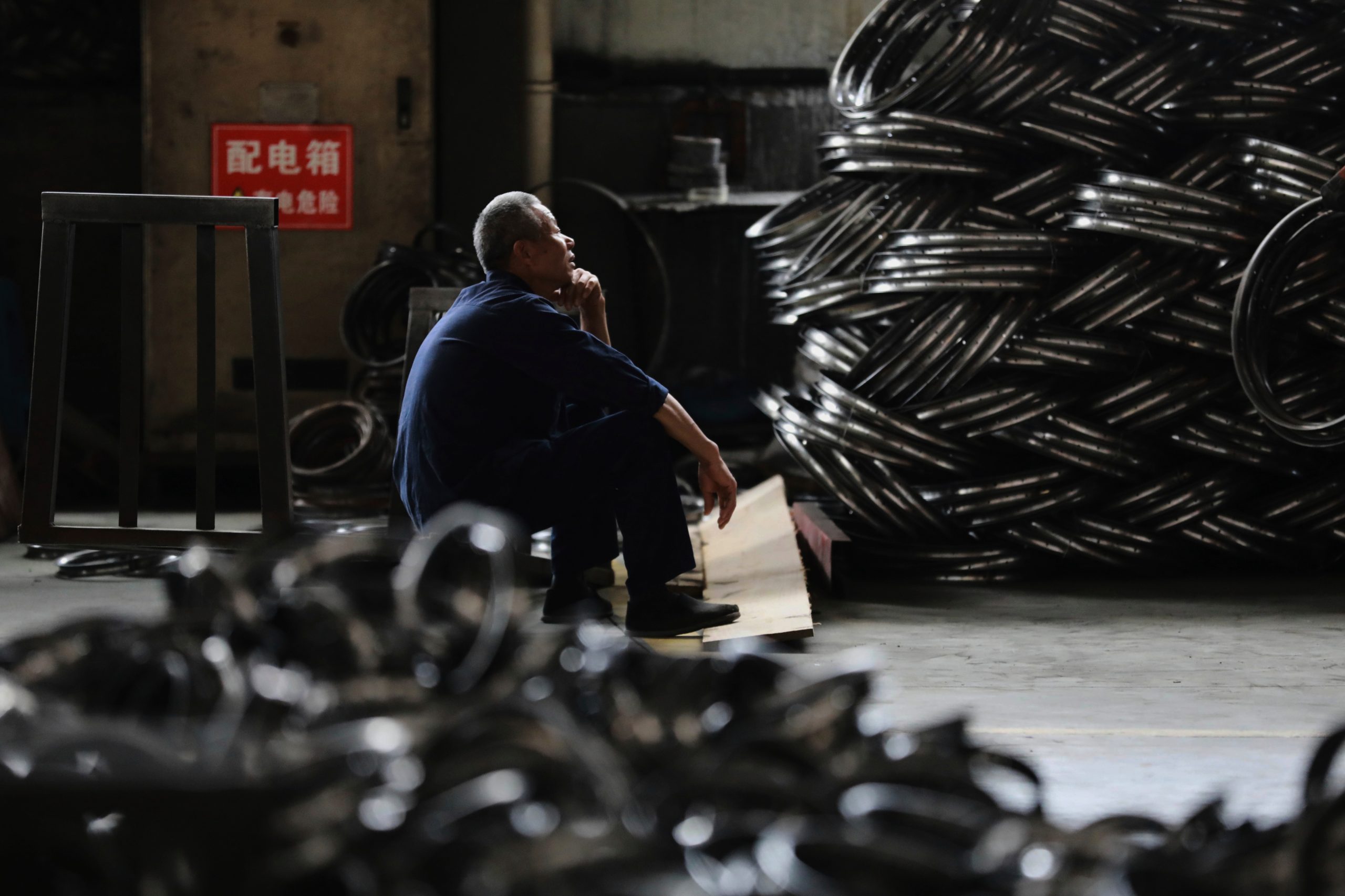
Beijing’s Factory Floor Fizzles, Sparking Global Jitters on Growth
POLICY WIRE — Beijing, China — The quiet hum that typically vibrates from China’s industrial heartlands, that unmistakable rhythm of global supply chains at work, has apparently sputtered....

POLICY WIRE — Beijing, China — The quiet hum that typically vibrates from China’s industrial heartlands, that unmistakable rhythm of global supply chains at work, has apparently sputtered. Forget the usual parade of robust figures—the engine, it seems, isn’t quite purring as expected. And if you weren’t paying close enough attention, you might’ve missed the subtle shift that’s got analysts worldwide now gnawing their fingernails.
It’s not merely a hiccup; it’s a structural groan, the kind that reverberates far beyond China’s colossal borders. Official reports indicated China’s manufacturing purchasing managers’ index (PMI)—a barometer for factory activity—slipped to 49.5 in May. That number, sitting squarely below the 50-point mark separating expansion from contraction, suggests a colder climate for the industrial juggernaut. It’s an inconvenient truth for Beijing, one that challenges the narrative of a confident rebound.
The architects of China’s economic miracle—those folks in tightly buttoned suits in Zhongnanhai—have consistently battled persistent demand weakness, a hangover from property market woes and an international landscape still wobbling from recent global upheavals. The government had thrown an array of incentives — and policies at the problem. But alas, even the most artfully designed economic policy can’t conjure up demand from thin air. Foreign demand isn’t quite roaring back. Domestic confidence remains… mercurial, shall we say. You don’t have to be a seasoned economist to spot that. People aren’t spending like they used to, you know? And businesses are holding back on big investments. It’s a tricky patch, it truly is.
Because, honestly, this isn’t just about factory output. It’s about the deeper currents at play, the confidence — or lack thereof — trickling through every corner of China’s immense economy. Companies are apparently [QUOTE_PLACEHOLDER], which means fewer jobs. Fewer jobs mean less consumer spending, which in turn feeds back into weaker demand. It’s a self-perpetuating loop, one that officials are trying to untangle, not an easy task given the scale. And these slowdowns—they’re not just statistical blips. They’re tangible, impacting livelihoods, investment decisions, — and global market confidence.
For regions like South Asia, this Chinese slowdown carries a distinct echo. Pakistan, for instance, has significant economic ties with China, from direct investments under the Belt and Road Initiative (BRI) to trade dependencies. A cooling Chinese economy means potentially less appetite for imports from countries like Pakistan, hitting their own manufacturing or raw material sectors. But it’s also about the grander geopolitical chessboard. Less Chinese economic dynamism might translate into a subtle recalibration of influence—or at least the perception of it—across Asia. India, as a regional rival and economic powerhouse, surely watches these numbers with more than just a passing interest. Beijing’s economic strategies have faced headwinds elsewhere, too, making this May slump feel less like an anomaly and more like part of a challenging trend.
When the engine that powers a fifth of the world’s economy sputters, everyone feels the tremor. Developing nations, especially those tethered to China’s industrial demand or investment streams, are feeling it acutely. It’s not about if, but how much. We’ve seen a surge in Chinese outward direct investment in recent years across the Muslim world—think infrastructure, energy, and digital projects. But a domestic slowdown? That can redirect capital inward, away from overseas ventures, leaving partners with stalled projects or diminished support. You don’t need a crystal ball to see that one coming. It could also shift how regional players perceive power balances. Less economic might could mean altered diplomatic leverage, even if marginally, in various regional calculations.
What This Means
This factory contraction isn’t a flash in the pan; it reflects a deeper, structural challenge to China’s growth model. The immediate fallout involves continued pressure on corporate profits, likely leading to further belt-tightening and potentially job losses within China. Externally, nations heavily reliant on Chinese demand for their exports—from raw materials to finished goods—should brace for reduced orders. The BRI, a flagship initiative for Beijing’s global influence, might see a deceleration in new projects or slower progress on existing ones, particularly in countries facing their own economic instabilities.
Geopolitically, a more inward-focused China, grappling with domestic economic headwinds, could temporarily — emphasis on *temporarily* — ease some regional tensions as its immediate priorities shift. But this also opens a window for other powers to assert influence. It’s a complicated dance, where economic performance is intrinsically linked to global standing. This slowdown isn’t a collapse, no one’s claiming that. But it sure puts a spotlight on Beijing’s vulnerabilities and reminds everyone that even economic titans sometimes stumble. And when they do, the rest of the world braces for impact. Because they can’t afford not to.