


Berlin’s Delicate Dance: Germany Sheds Caution, Nods to Taipei Amid Geopolitical Upheaval
POLICY WIRE — Berlin, Germany — For what felt like eons, Berlin’s China strategy remained a remarkably predictable thing: whisper concerns about human rights, but shout about trade. A lucrative...

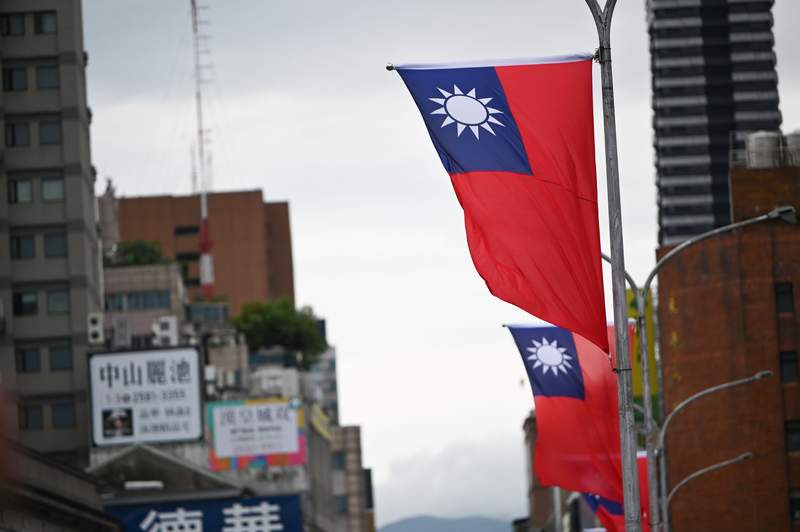
POLICY WIRE — Berlin, Germany — For what felt like eons, Berlin’s China strategy remained a remarkably predictable thing: whisper concerns about human rights, but shout about trade. A lucrative tango, that was. But now, as a delegation of German lawmakers gears up for an upcoming visit to Taipei, the choreography looks—well, a little less cautious, a bit more like a polite challenge. This isn’t just another delegation jaunt; it’s a carefully calibrated poke at Beijing’s long-held sensitivities, signaling a distinct—if glacial—shift in Europe’s most powerful economy.
It’s no secret that Taiwan has emerged as a particularly sticky wicket in international diplomacy. For Germany, a nation built on robust exports and a deep dependence on global supply chains (just look at what happened with Russian gas), the economic ties to mainland China have always seemed too enormous to jeopardize. But the winds, they’re changing. Taiwan isn’t merely a strategic chessboard piece; it’s the undisputed monarch of the microchip world. According to Counterpoint Research (2023), Taiwan’s semiconductor industry cranks out over 90% of the globe’s most advanced chips, with giants like TSMC controlling roughly 60% of the contract chip-making market. That’s a leverage Beijing—or indeed, Berlin—can’t just ignore.
Lawmakers, often the first to test these murky geopolitical waters, are making their positions clearer. “Taiwan isn’t just an economic powerhouse; it’s a vibrant democracy in a region where such examples are increasingly rare,” asserted Michael Roth, a prominent Social Democratic Party (SPD) lawmaker and chair of the Bundestag’s Foreign Affairs Committee, in a recent statement to Policy Wire. “Our engagement isn’t about provocation, it’s about principle — and shared values that Germany holds dear. We can’t simply turn a blind eye.” It’s a line Germany’s usually reticent political class seems increasingly comfortable uttering, much to Beijing’s chagrin, we’re sure.
This evolving stance isn’t a bolt from the blue. It’s been brewing, fueled by mounting concern over China’s assertive foreign policy, its human rights record, and, crucially, the very real risks associated with over-reliance on a single, massive market. Because let’s face it, Germany learned a painful lesson about putting all its energy eggs in one authoritarian basket, didn’t it?
The reception in Taipei is, unsurprisingly, warmer than a summer day in the desert. “We deeply appreciate any expression of support, especially from nations with strong democratic foundations like Germany,” commented Dr. Jaushieh Joseph Wu, Taiwan’s Minister of Foreign Affairs, at a press briefing. “It sends a clear message—not just to Taiwan, but globally—that democracies must stand together against the pressures of authoritarian expansionism.” It’s a message that resonates far beyond the immediate region, influencing how smaller, strategically vulnerable nations perceive their own prospects.
📄 POLICY WIRE WHITEPAPER PUBLISHED: PAKISTAN'S NATIONAL SECURITY POLICY PRIORITIES
👉 READ BY CLICKING HEREThis quiet but firm repositioning by a major European economy—Germany, no less—won’t go unnoticed in places far removed from the South China Sea. Nations in South Asia, for instance, often navigating their own delicate relationships with both Western powers and a resurgent China, will be watching closely. Think about Pakistan, a country that’s long leaned heavily on Beijing for strategic partnership and investment through initiatives like the China-Pakistan Economic Corridor. Its leaders will certainly be studying Germany’s subtle pivots, pondering what it means for the broader global calculus. Does a hardening stance from Berlin embolden or constrain their own choices? It’s a global web, — and every tug on one strand vibrates across the whole darn thing.
And this isn’t just about politicians swapping pleasantries. The Bundestag delegation—a relatively lower-key affair compared to some high-profile US visits—is a diplomatic indicator, a kind of advanced scout for potential deeper engagement down the line. It’s a recognition, perhaps, that the old ways of dealing with the Dragon might just be—well, getting a little long in the tooth.
What This Means
Germany’s increasingly open embrace of Taiwan, however incremental, carries considerable weight. Politically, it’s a tangible signal of European recalibration on China. For too long, the narrative in Brussels — and Berlin was one of economic interdependence trumping everything else. Now, national security, democratic values, and supply chain resilience are pushing themselves onto the agenda with real force. It suggests a potential slow erosion of the ‘One China’ principle’s practical impact, even if its rhetorical sanctity remains—for now—mostly untouched. Economically, this move isn’t about immediately redirecting trade flows, that’d be naive. Instead, it’s an investment in diversification — and resilience, a hedging strategy. It’s an admission that Taiwan, with its cutting-edge tech sector, is simply too important to leave solely to Beijing’s whims. The subtle shifts emanating from Berlin could eventually ripple out, encouraging other European states to reconsider their own risk-exposure to China and potentially open doors for greater tech cooperation with Taiwan. It’s not just German foreign policy undergoing a tweak; it’s a snapshot of a changing world order, where countries are re-evaluating old alliances and pursuing new leverage in an increasingly fraught global economy. They’re making tough calls. It also serves as a subtle counterpoint to Moscow’s belligerence, reminding Beijing that Europe has alternatives and allies, and it isn’t solely beholden to existing geopolitical architectures. It’s a cautious but consequential recalibration, reflecting a world less willing to play by old rules, particularly when democracies feel threatened. It highlights how smaller nations with strategic importance—like Taiwan—can punch above their weight through technological dominance and democratic resilience.