


Berlin’s Crucible: Germany’s Identity Melts Under Record Heatwave
POLICY WIRE — Berlin, Germany — Nobody imagined Berlin’s placid, tree-lined boulevards would one day feel like a blast furnace, but here we’re. This wasn’t some isolated incident; it was...

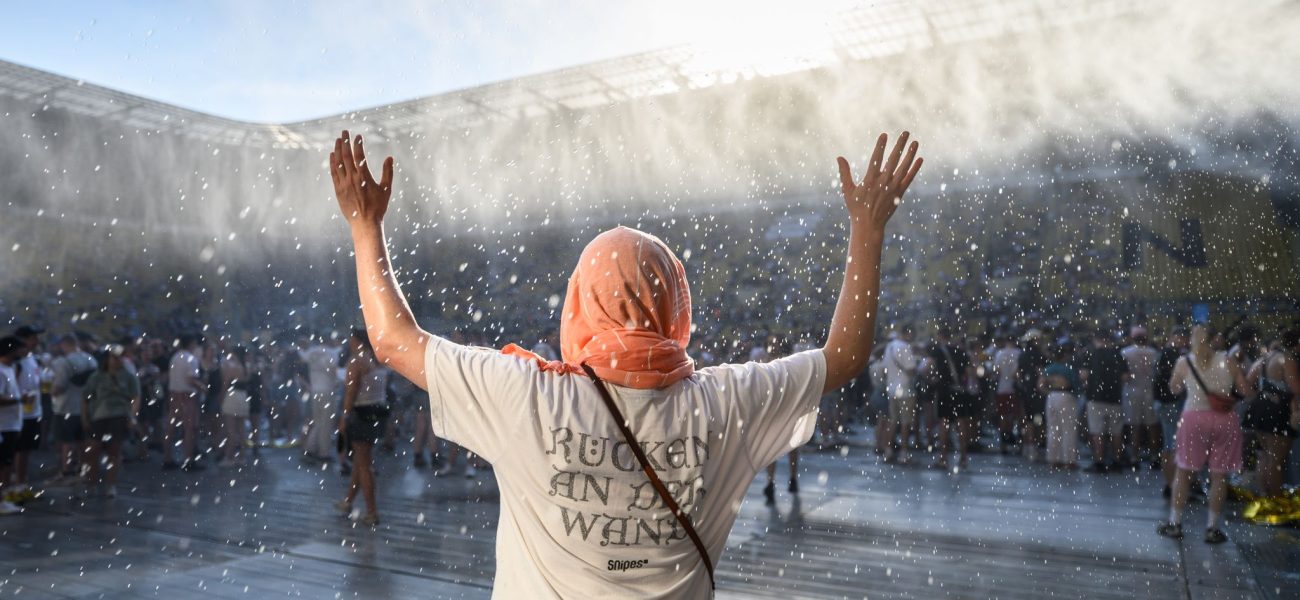
POLICY WIRE — Berlin, Germany — Nobody imagined Berlin’s placid, tree-lined boulevards would one day feel like a blast furnace, but here we’re. This wasn’t some isolated incident; it was an uncomfortable, sticky new benchmark for the German capital. Forget the pristine efficiency. Forget the orderly queues. On a Tuesday afternoon, Berlin just cooked, shattering national and regional records alike as temperatures soared to a blistering 39.8 degrees Celsius.
For a nation priding itself on predictability—where trains often do run on time, and summers rarely required more than a light jacket after dusk—this kind of heat doesn’t just discomfort, it disrupts a core self-image. Folks here aren’t built for this, you know? Air conditioning? Not standard. Residential architecture? Designed to keep heat in, for those famously crisp winters. Now, their charmingly solid stone buildings are becoming personal ovens, trapping the inferno from morning until late into the breathless nights. And it isn’t just Berlin; swathes of the country have been grappling with the kind of oppressive humidity and soaring mercury that normally features in dispatches from places much further south, or, frankly, east.
Think about the consequences. Roads ripple. Train tracks warp, causing delays that even the Deutsche Bahn couldn’t rationalize away with their usual stoic professionalism. Power grids groan under unexpected demand as the few who have A/C crank it up. The German federal climate agency, by the way, just released a sobering report: Germany’s average summer temperatures have climbed a startling 1.5°C over the last three decades. That’s an acceleration beyond initial projections, folks, and it means the climate scientists weren’t just crying wolf after all.
“We’re witnessing the inconvenient truth that our climate plans haven’t moved fast enough,” conceded German Environment Minister Steffi Lemke, sounding somewhat weary, during a recent press conference. “It’s no longer about mitigation in the distant future; it’s about urgent, structural adaptation right now. Our infrastructure, our urban planning, even our daily routines must change.” She’s not wrong. Because these aren’t merely statistical aberrations; they’re direct, sweltering consequences that touch everything from agricultural yields to public health.
But consider, for a moment, how Berliners react. There’s a certain bewildered discomfort, an un-Germanlike flailing for solutions. Compare this, if you would, to Karachi, Pakistan, where 40-degree heat isn’t news; it’s just, well, Tuesday. They’ve got street vendors hawking chilled drinks and families sleeping on rooftops—ingrained adaptations to what Germany is only just beginning to reckon with. Lahore endures weeks of 45-degree heat annually. For them, resilience isn’t a policy paper, it’s simply living. You can find parallels for their own struggles and adaptive measures when considering Europe’s role in aid efforts for climate-affected regions globally.
So, is this a taste of their own climate-influenced medicine, applied generously to a developed nation that, historically, has been somewhat insulated from the more dramatic impacts of global warming? It certainly feels that way to many. It certainly sharpens the rhetorical stakes for climate diplomacy, especially as the world’s wealthier nations face heat conditions long endemic to the Global South.
📄 POLICY WIRE WHITEPAPER PUBLISHED: PAKISTAN'S NATIONAL SECURITY POLICY PRIORITIES
👉 READ BY CLICKING HEREThe city’s Senator for Urban Development, Andreas Geisel, wasn’t pulling punches either. “We’ve always designed for temperate comfort,” he admitted in a radio interview, sweat perhaps visible through the airwaves. “Now, we’re frantically researching everything from heat-resistant pavements to vastly expanded green spaces and water features. It’s a fundamental re-think of what a European city means in the 21st century.” It’s quite a quandary, this re-imagining of a whole way of life, especially for a culture as historically rooted as Germany’s.
What This Means
This record-setting heat isn’t just a bad week; it’s a profound political — and economic accelerant. Economically, we’re talking about billions in lost productivity—factories scaling back operations, construction halting, public transport stretched thin. Insured losses from extreme weather events across Europe are spiraling, — and Germany won’t be an exception. Politically, it’s going to fan the flames of green agendas, forcing politicians (often reluctant ones) to spend significant political capital on expensive adaptation measures. The immediate pressure is to upgrade public health services, retrofit buildings, and protect vulnerable populations. But, of course, that costs money, and money usually comes with political arguments. Remember how bond markets tend to dictate political fortunes? We’ll likely see a scramble for EU-level funding and a re-prioritization of national budgets, diverting funds from other initiatives.
these kinds of environmental shocks have broader geopolitical ripples. Germany is the economic engine of Europe, and any instability here, whether from heat or energy crunches, reverberates across the continent and beyond. It means questions about energy policy get far more heated, if you’ll excuse the pun. And let’s not forget the social equity angle: it’s invariably the lowest-income populations, living in poorly insulated housing or working outdoors, who suffer most.