


Austrian Grand Prix: Russell’s Pole Reignites Old Controversies, Redefines Fortune
POLICY WIRE — Spielberg, Austria — In the chaotic, final moments of Austrian Grand Prix qualifying, a curious case of race control indecision collided head-on with astute driving. While many were...

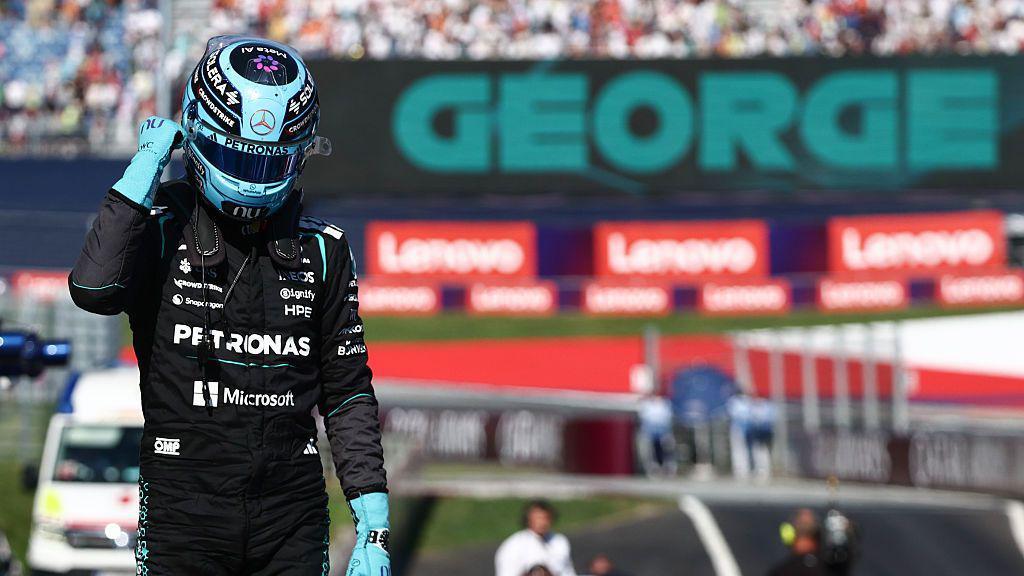
POLICY WIRE — Spielberg, Austria — In the chaotic, final moments of Austrian Grand Prix qualifying, a curious case of race control indecision collided head-on with astute driving. While many were left scratching their heads—or seething, depending on allegiances—George Russell of Mercedes found himself, perhaps improbably, atop the timing sheets. It wasn’t the kind of clinical pole position often associated with Formula 1’s elite; no, this one felt a little, well, messy. A controversy of yellow flags, Max Verstappen’s dramatic, high-speed shunt, and an almost comically slow reaction from officials paved the way for Russell’s unexpected turn at the front.
It was a scene tailor-made for high drama, really. Verstappen’s Red Bull careened off at Turn Nine, a spot drivers take at nearly 140mph. A single yellow flag initially waved—an invitation, almost, to maintain speed—before a double-waved yellow, signifying ‘immediate danger’ and a mandate to slow, eventually appeared, twenty agonizing seconds later. Twenty seconds. Because in a sport measured in milliseconds, that’s an eternity, a full lifecycle of advantage and disadvantage, especially when drivers are on their final, fastest laps.
Kimi Antonelli, Russell’s teammate, got it wrong. He lifted off too much, convinced he saw a double-waved flag when only a single was deployed. His mistake, honest but costly, relegated him to fourth. And there’s the rub, isn’t it? Russell, on the other hand, displayed the sort of nuanced judgment that defines champions, even if the surrounding circumstances reeked of opportunism. He eased off just enough, kept it safe, but crucially, preserved enough speed to set a time no one could beat. Max Verstappen, no stranger to voicing his frustrations, later characterized the entire yellow flag procedure as “quite crazy,” a sentiment widely shared by anyone watching, be they casual observer or die-hard aficionado.
For Russell, this moment of serendipity is, without a doubt, a breath of fresh air. He’s had a truly difficult run this season—retirements, penalties, pace struggles. Race statisticians report that he found himself 68 points adrift of Antonelli in the championship after the Monaco debacle alone. This pole position, his first since the season opener, isn’t just about a starting grid spot; it’s a statement. “The lap was unbelievable,” Russell admitted, still processing the bizarre confluence of events. “And then obviously I got that yellow flag, the single yellow in the last sector, but I did a hundred-metre lift, lost a huge amount of time and still, you know… I don’t know. I don’t have the answer.” A brutally honest take from a driver who suddenly finds himself with a renewed fighting chance.
But the pole is one thing, a race win quite another. Lewis Hamilton, despite having Ferrari’s recent engine upgrades, wasn’t overly optimistic about his team’s chances. “It’s going to be very tough to challenge them tomorrow, but with a long run down to Turn Three, hopefully together we can,” he said, managing expectations, though one has to wonder if such diplomacy grates at him.
📄 POLICY WIRE WHITEPAPER PUBLISHED: PAKISTAN'S NATIONAL SECURITY POLICY PRIORITIES
👉 READ BY CLICKING HEREWhat This Means
This Austrian pole position, born from procedural ambiguities rather than sheer, unadulterated pace, carries significant weight far beyond the circuit. For Russell, it’s a much-needed psychological boost, potentially altering the internal dynamics at Mercedes and offering sponsors a refreshed narrative for their investment in the young Briton. An unexpected front row start—even if a touch controversial—commands attention, sparking fresh interest and conversations around the globe. Because it’s precisely these kinds of bizarre, on-the-edge-of-the-rules controversies that broaden F1’s appeal, reaching far beyond its traditional European strongholds to burgeoning fan bases in places like South Asia, where a rapidly growing, tech-savvy generation consumes international sports drama with zeal. Pakistan, for instance, despite lacking a robust domestic motorsport scene, still tunes into F1, drawn by the spectacle and the ever-present human element of triumph and disaster, skill and controversy. This kind of ‘any given Sunday’ chaos just sweetens the deal for these new audiences.
Economically, such incidents often trigger debates over race control standardization and transparency, impacting potential fines, appeal processes, and the perceived integrity of the sport. And what about the ripple effects for driver contracts, team morale, and even stock market values for publicly traded outfits? For Mercedes, an organization that’s faced its share of public scrutiny this year, a pole is a fleeting win—but it’s still a win, for morale, for headlines, for marketability. It forces rivals to rethink strategy — and creates a race scenario where anything genuinely feels possible. The unseen hand of such narratives often dictates financial flows into the sport. It’s a soap opera on wheels, — and this weekend just cranked up the drama.
The wider questions regarding officiating won’t disappear after the checkered flag waves. F1 has, at times, struggled with consistency in stewarding decisions. And the optics of an elite series where top drivers are openly questioning the consistency of yellow flag deployments don’t quite inspire confidence among purists, even as it generates discussion. Will the International Automobile Federation tighten its guidelines? Perhaps a deeper look at event management protocols is warranted to avoid these sorts of ‘unintended’ outcomes. For now, Russell will try to convert chaos into victory. We’re all watching.