

Beyond the Blue Light: Can Public Aquariums Salvage Childhood in a Digital Age?
POLICY WIRE — ALBUQUERQUE, N.M. — In an era where digital distraction has become the default mode for youngsters (and, let’s be honest, everyone else too), what exactly is the municipal utility...

POLICY WIRE — ALBUQUERQUE, N.M. — In an era where digital distraction has become the default mode for youngsters (and, let’s be honest, everyone else too), what exactly is the municipal utility of a freshly spruced-up aquarium? The question, one might think, hangs heavy in the humid air of the refurbished Albuquerque BioPark Aquarium, now welcoming back visitors after a five-month cosmetic overhaul that didn’t just add new paint, but a whole new narrative about civic engagement and—gasp—physical reality.
It’s not just about fish anymore, is it? Not when municipal budgets strain — and competition for eyeballs is fiercer than a feeding frenzy. But city fathers—and mothers—in places like Albuquerque continue to bet on the enduring appeal of tangible wonder, pumping funds into institutions that offer a palpable counterpoint to the endless scroll. This isn’t mere nostalgia; it’s an investment, a quiet political statement against the relentless encroachment of virtual worlds.
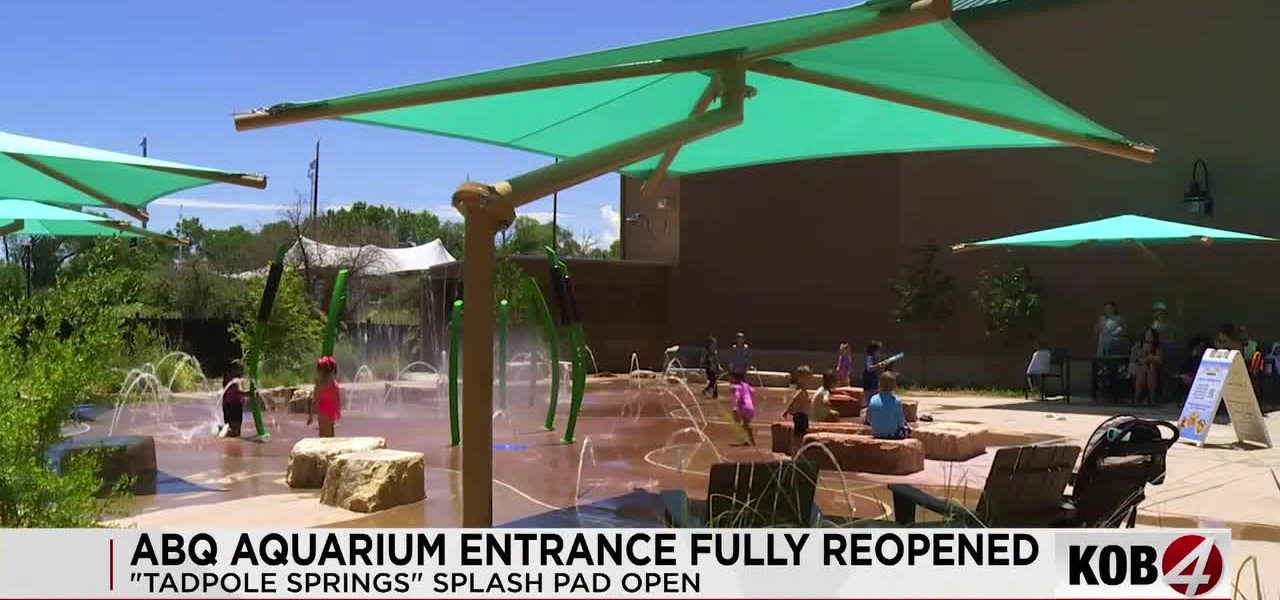
The BioPark’s revamped facilities, which closed its main entrance and upper deck in January, now greet patrons with a streamlined ticket office—an admission, perhaps, that even in the pursuit of enchantment, efficiency reigns. Improved signage aims to curb navigational confusion (a familiar foe in any labyrinthine public space, frankly), but the real star, certainly for the stroller-and-sippy-cup crowd, is the Tadpole Springs splash pad. It’s been re-engineered for seven-day-a-week operation, complete with fresh shade umbrellas, lest little cherubs turn into crisp critters under the New Mexico sun. And that, frankly, seems like a pretty sensible upgrade.
Allyson Zahm, the BioPark’s Guest Experience manager, cuts straight to the core of it, really. “Children need the opportunity to play outside more. Our lives as adults — and other as kids are so kind of driven now by screens and media,” she mused. “And I really want kids to have the opportunity to play outside, to use their imagination to build their physical and mental health. And Tadpole Springs is just one of many ways to do that.” It’s a sentiment echoing through civic halls across the country, where policymakers are grappling with the ramifications of an increasingly sedentary youth. But is a splash pad enough? That’s the unspoken policy debate.
Because let’s face it, public spaces aren’t just for looking at animals. They’re civic anchors, providing accessible, if somewhat sanitized, encounters with nature. The renovation, though ostensibly about visitor flow — and comfort, actually points to a broader municipal strategy. Albuquerque isn’t just maintaining an aquarium; it’s doubling down on family-centric attractions that promote something resembling communal life. World cities often find themselves on unequal footing when it comes to leveraging such assets for both local benefit and international appeal.
📄 POLICY WIRE WHITEPAPER PUBLISHED: PAKISTAN'S NATIONAL SECURITY POLICY PRIORITIES
👉 READ BY CLICKING HERE“We’re not just repairing a building; we’re reinforcing a community pillar,” stated Albuquerque Mayor Tim Keller, a man well-acquainted with the complexities of urban development and funding. “This is about our children’s health, our city’s cultural landscape, and quite frankly, the measurable joy these spaces bring.” A politician saying ‘measurable joy’—there’s your subtle irony right there. But he’s not wrong about the civic role. And studies do bear out the tangible benefits: a recent analysis published by the American Academy of Pediatrics reported that children aged 8-12 spend, on average, over 6 hours a day consuming screen media, often at the expense of outdoor, unstructured play. That’s a grim figure.
Think about the sprawling metropolises of Pakistan or the wider Muslim world, places where rapid urbanization often clashes with the preservation of green spaces or even accessible, educational public domains. Cities like Karachi, despite their chaotic energy, have their own struggling aquariums and botanical gardens—institutions that, against immense odds, attempt to provide that same flicker of connection to the natural world. They’re not just tourist traps; they’re essential escape hatches from concrete jungles, battling for relevance against the ubiquitous smartphone. They represent a shared, human need for quiet wonder, whether it’s gazing at coral reefs in New Mexico or, say, the comparatively modest marine life displayed in Islamabad, all striving to deliver an experience a TikTok video just can’t replicate.
What This Means
The BioPark’s renovation, modest though it might seem on a national policy stage, quietly speaks volumes about municipal priorities in the 21st century. It’s a testament to the idea that physical, sensory experiences—the tactile splash, the visual spectacle of marine life—remain a legitimate, indeed necessary, component of public welfare, particularly for children. The ongoing investment reflects a policy decision to directly combat the isolating effects of digital saturation, to provide spaces where imagination isn’t constrained by a pixel count, and where physical activity is encouraged by design, not just exhortation. Economically, such family-friendly anchors contribute to local tourism, drive ancillary spending, and enhance a city’s liveability index. Politically, they’re easy wins: few can argue against cleaner, more accessible places for kids. But the deeper implication? It’s a low-key declaration that despite all our screens and streams, there’s still something irreplacably grounding—and utterly human—about standing before a tank full of fish, or shrieking happily under a splash-pad shower. This is the fight against the invisible digital dust, making the argument for tangibility, one renovated attraction at a time.