


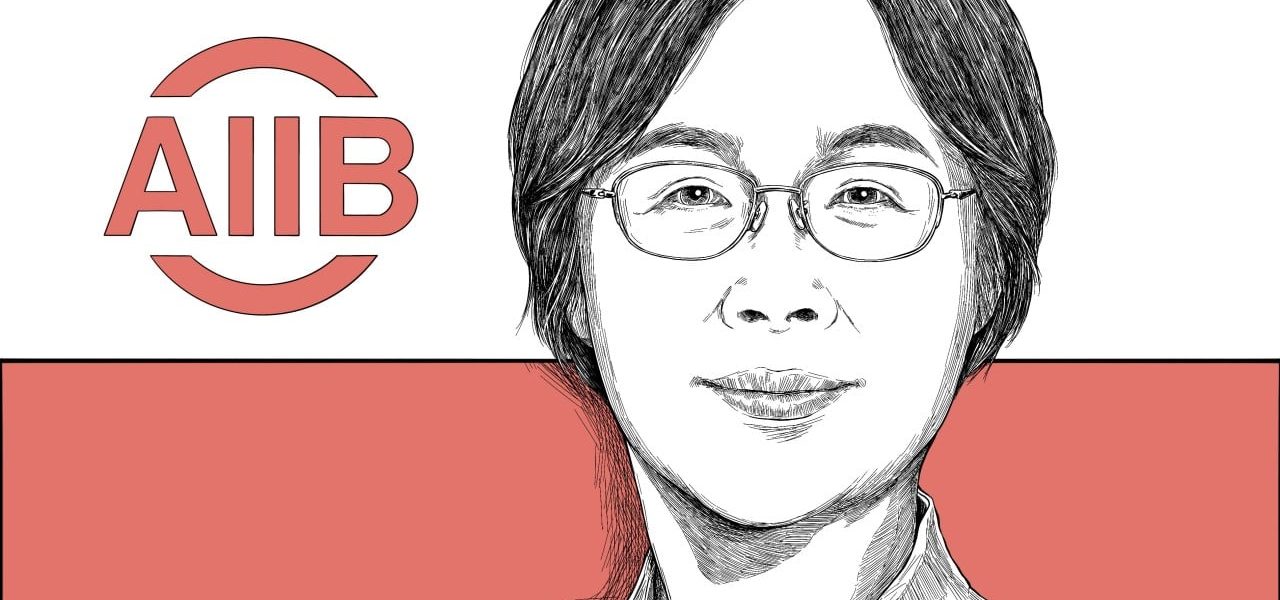
Beijing’s Quiet Architect: AIIB Leader Navigates Green Finance, Geopolitical Ripples
POLICY WIRE — Beijing, China — There’s a peculiar irony in how global power shifts often materialize not through grand declarations or overt challenges, but through bureaucratic structures...

POLICY WIRE — Beijing, China — There’s a peculiar irony in how global power shifts often materialize not through grand declarations or overt challenges, but through bureaucratic structures and lending terms. Consider the Asian Infrastructure Investment Bank, or AIIB for short—an outfit born in 2016 and now quite the player on the global stage. It’s headquartered in Beijing, of course. Not exactly subtle, is it?
It’s the kind of institution that raises eyebrows in Washington and London, positioned as a parallel financial architecture to the older, more Western-centric World Bank and International Monetary Fund. But this isn’t some academic exercise in financial theory. It’s got real teeth. And at its head sits Zou Jiayi, a woman who’s spent pretty much her entire career steeped in the intricacies of the Chinese state’s financial machinery. You can’t just waltz into a role like [QUOTE_PLACEHOLDER] without serious gravitas, nor without the blessing of Beijing. It’s just how it works.
Her resume reads like a textbook on Chinese financial bureaucracy, frankly. Before stepping into the AIIB role, Zou Jiayi was [QUOTE_PLACEHOLDER] Think about that for a second. That’s not some fluffy diplomatic post. That’s being deep in the engine room of Chinese policymaking, right where the really heavy lifting gets done. And, let’s not forget, she [QUOTE_PLACEHOLDER] Those weren’t junior internships. Those were high-stakes positions, molding policy and budget for the world’s second-largest economy for three long decades. So, she’s not new to any of this—not finance, not power, certainly not the strategic application of both.
The AIIB, though—that’s a beast all its own. While the rhetoric often highlights its commitment to a [QUOTE_PLACEHOLDER] in Asia, you can’t separate its financial endeavors from its geopolitical undercurrents. This bank isn’t just handing out loans for solar farms or smarter grids because it feels warm — and fuzzy inside. No, it’s about infrastructure, influence, and the future shape of Asia’s development, including critical regions like South Asia.
Look at Pakistan, for example. A country grappling with an ongoing economic mess, plus the increasingly brutal realities of climate change—remember those devastating floods a few years back? Countries like Pakistan desperately need cash for roads, power, water systems. And sometimes, Western institutions move with the speed of molasses. That’s where the AIIB steps in. It’s often quicker, arguably less burdened by layers of conditionalities (or at least, different kinds of conditionalities), and inherently aligned with the ‘Belt and Road’ vision. But it’s not just Pakistan. Many Muslim-majority nations in Central Asia and Southeast Asia find themselves eyeing Beijing’s financial largesse through instruments like the AIIB.
And let’s not sugarcoat it. These funds, while desperately needed, aren’t a free lunch. They often come with significant commitments — and long-term implications. The global appetite for these infrastructure developments is huge, by the way. Over $500 billion has been earmarked for green infrastructure projects across Asia over the next decade, according to projections from the United Nations Economic and Social Commission for Asia and the Pacific (UNESCAP). The AIIB, under Jiayi’s direction, is positioning itself to capture a significant chunk of that market, extending Beijing’s financial footprint further into the global south.
The subtle irony here? While Western critics often fret about Chinese debt traps and opaque dealings, many developing nations simply don’t have the luxury of choice. When the options are limited, you often take what’s on the table. And the AIIB offers a robust menu. Jiayi, with her vast experience in China’s state machinery, isn’t just a banker; she’s an architect of this evolving financial landscape, navigating intricate geopolitical waters with a steady hand. One might say she understands the subtle art of statecraft, just with a ledger in one hand and a blueprint in the other.
What This Means
Zou Jiayi’s ascent to the helm of the AIIB isn’t just a leadership change; it’s a clear signal of intent from Beijing. Her deep roots within China’s top financial — and political echelons mean the AIIB isn’t some rogue independent player. No, it’s a finely tuned extension of Chinese foreign policy — and economic strategy. The bank serves as a key apparatus for the nation’s rising soft power, offering an alternative to Washington-centric financial models. It’s basically China saying, [QUOTE_PLACEHOLDER]
Economically, the implications are straightforward but far-reaching. The AIIB’s substantial capital and growing influence allow it to funnel resources into infrastructure projects that Western banks might deem too risky or simply wouldn’t fund at scale, especially in climate-vulnerable regions. But, and this is the important bit, these investments also knit recipient countries—many of them in South Asia and the Muslim world, such as Pakistan, which has faced severe economic and climate-related crises—more tightly into Beijing’s economic orbit. For these nations, it’s a source of desperately needed capital for projects critical to growth — and climate resilience. The political cost? Well, that remains to be seen, but influence rarely comes cheap. It makes countries like Pakistan look more toward Beijing for aid and partnerships, potentially reshaping regional alliances and challenging established norms. We’re talking about an entire shadow economy emerging alongside traditional systems, profoundly altering global trade routes and strategic partnerships for decades to come. It’s not just about financing infrastructure; it’s about underwriting a new world order, piece by painstakingly planned piece.