


Beijing’s Maritime Reach: BYD’s Silent Fleet Steers Global Trade, Raises Eyebrows
POLICY WIRE — Washington, D.C. — While the world’s auto executives fuss over battery chemistry and software integration, one behemoth is busy charting an entirely different course: its own...

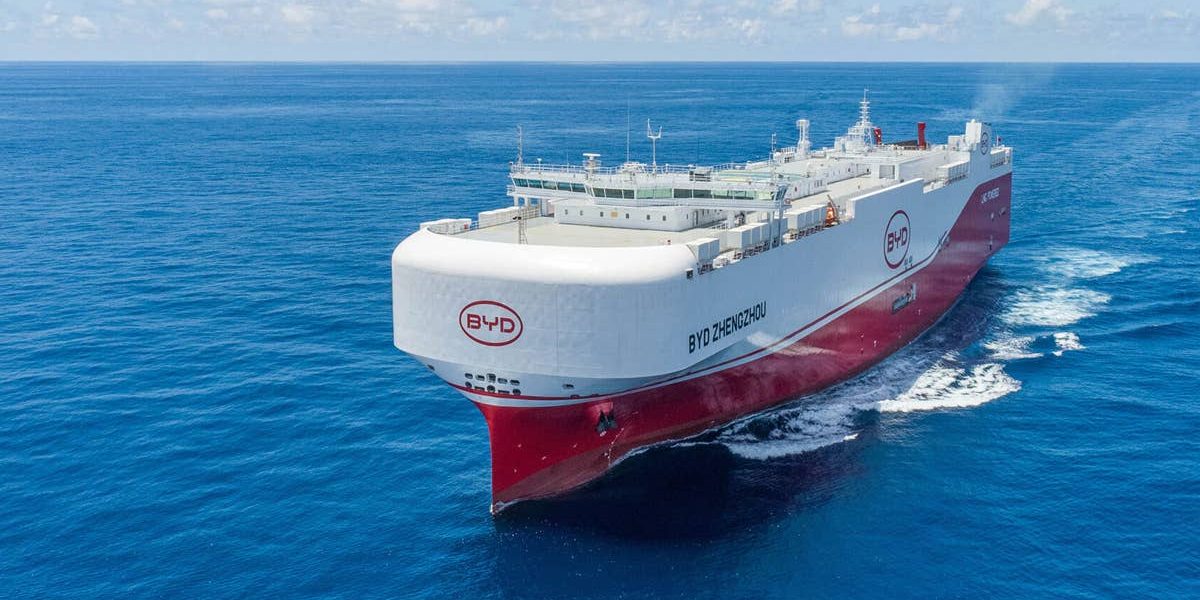
POLICY WIRE — Washington, D.C. — While the world’s auto executives fuss over battery chemistry and software integration, one behemoth is busy charting an entirely different course: its own private navy. Yep. BYD, the Chinese automaker, isn’t just selling electric cars anymore; it’s buying, building, and launching an actual fleet of colossal car carriers. It’s a move that’s got everyone — from shipbrokers in Singapore to policymakers in Brussels — doing a double-take. Because this isn’t merely about moving inventory faster. It’s something else entirely.
It began subtly enough. Talk swirled about BYD investing in Roll-on/Roll-off, or RoRo, vessels to tackle notorious shipping bottlenecks. A logical step, right? Global logistics have been a nightmare since the pandemic, making independent shipping a tempting proposition for any manufacturing giant. But Beijing’s vision, often layered with strategic ambiguity, tends to run a little deeper. This isn’t just BYD bypassing port congestion; it’s China’s deepening integration into every single layer of the global supply chain, extending its already considerable influence right into the very arteries of international trade.
The company christened its first dedicated car carrier, the EXPLORER NO. 1, just this past January, signaling a distinct escalation. And it won’t be alone for long. Plans are apparently in motion for eight of these beasts, each capable of hauling 7,000 to 7,500 vehicles. Some reports peg the ambition higher still, talking about as many as ten by 2026. Think about it: a publicly traded car manufacturer suddenly operating its own ocean-going logistics firm. It’s an unprecedented move that makes you wonder who’s really steering the ship — the company’s shareholders, or the architects of Beijing’s grand maritime strategy? You can’t help but think it’s both, can you?
Because this kind of horizontal expansion into infrastructure isn’t new for China’s state-backed (or heavily influenced) champions. Look at how they’ve expanded their reach in other areas, like digital infrastructure in Africa or critical mineral supply lines from South America. They play the long game. And frankly, this car-carrier strategy seems right out of that playbook.
The geopolitical implications? Well, they’re sprawling. Take, for instance, the Strait of Malacca, that narrow, oh-so-strategic choke point between Malaysia — and Indonesia. Millions of barrels of oil and trillions in goods — including electric cars — traverse that route daily. When BYD’s fleet is sailing these waters, it adds another layer to China’s growing footprint. They’re effectively creating their own transport corridors, bypassing the traditional shipping firms that Western nations often dominate.
This isn’t lost on nations like Pakistan. Its Gwadar Port, part of the Belt and Road Initiative, sits pretty at the mouth of the Persian Gulf, a crucial node in China’s burgeoning maritime ambitions. While BYD’s car carriers might not specifically dock there every time, the broader trend — China building and controlling its own trade infrastructure — reinforces the strategic value of such projects. It grants Beijing more autonomy, more resilience, and, critically, more leverage in global commerce and, by extension, global politics. What starts as an EV company’s logistical solution quickly becomes a projection of national power.
📄 POLICY WIRE WHITEPAPER PUBLISHED: PAKISTAN'S NATIONAL SECURITY POLICY PRIORITIES
👉 READ BY CLICKING HEREOne analyst from S&P Global Ratings, [QUOTE_PLACEHOLDER], pointed out something rather stark: [QUOTE_PLACEHOLDER] it gives Chinese players more say and resilience for the logistics network, as they can bypass traditional foreign freight firms [QUOTE_PLACEHOLDER]. That’s not just business talk. That’s a shift in control, a re-wiring of economic influence, making them less susceptible to external pressures, tariffs, or—let’s face it—any future disruptions. In Q4 2023, China became the world’s largest automotive exporter, according to data from the China Association of Automobile Manufacturers. Its own fleet gives it a massive advantage in sustaining that top spot, a significant factor as competition intensifies.
But the consequences extend beyond mere economic leverage. Any fleet operating under Chinese colors—be it state-owned Cosco or privately-operated BYD—is inherently part of a larger national infrastructure. In a crisis, say, in the South China Sea, or involving Taiwan, how does one distinguish between a commercial fleet and one that could be repurposed for national objectives? It blurs lines, complicates calculations, and introduces yet another element of uncertainty into an already turbulent Indo-Pacific region.
What This Means
This whole BYD maritime adventure is less about the electric vehicle market and more about Beijing’s overarching geopolitical calculus. It’s a pragmatic play to secure its exports, yes, but it simultaneously expands China’s blue-water presence and logistical dominion without firing a single shot or deploying a naval destroyer. By weaving this privately-owned shipping capacity into its global network, Beijing solidifies its position as a major maritime power, influencing everything from freight costs to naval strategy discussions from Washington to New Delhi. This self-reliance on transport infrastructure effectively builds a buffer against future Western trade sanctions or geopolitical blockades, making its economy more robust and harder to isolate. It’s a calculated move to reinforce commercial sovereignty, but its reverberations will be felt most acutely in the strategic chess game for global influence, fundamentally altering how nations — particularly in South Asia and the broader Indo-Pacific, including nascent partners like Malaysia or Indonesia — navigate their own trade and security interests. It gives them, — and their allies, another piece of the infrastructure to worry about. For example, if you consider the current supply chain woes and the persistent efforts to decouple certain economies, this fleet offers China a workaround — a means to keep the goods flowing, irrespective of geopolitical friction. You can find more discussions on these entangled economic and political webs here, offering insight into how localized dynamics can have much larger policy implications.
So, while competitors focus on producing flashier cars, BYD—with silent, steady conviction—is building a global logistics empire. And that, dear reader, is probably the smarter bet. It isn’t just about selling electric vehicles anymore, it’s about controlling the lanes they travel. And who really controls them might just dictate the future of global trade.