

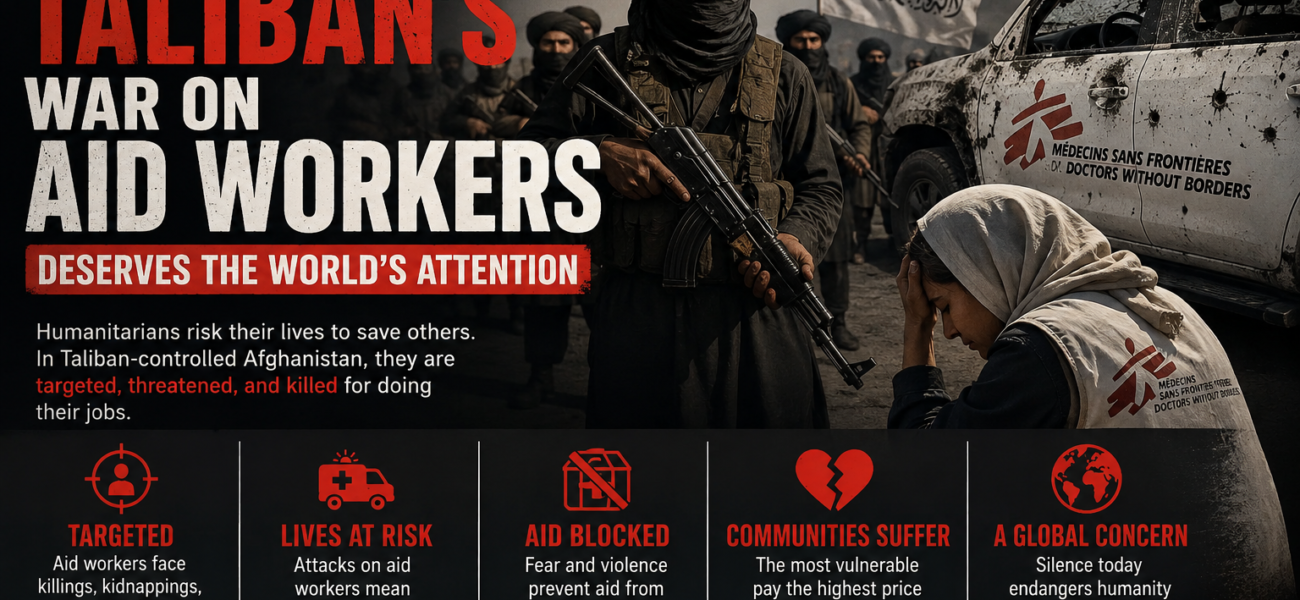
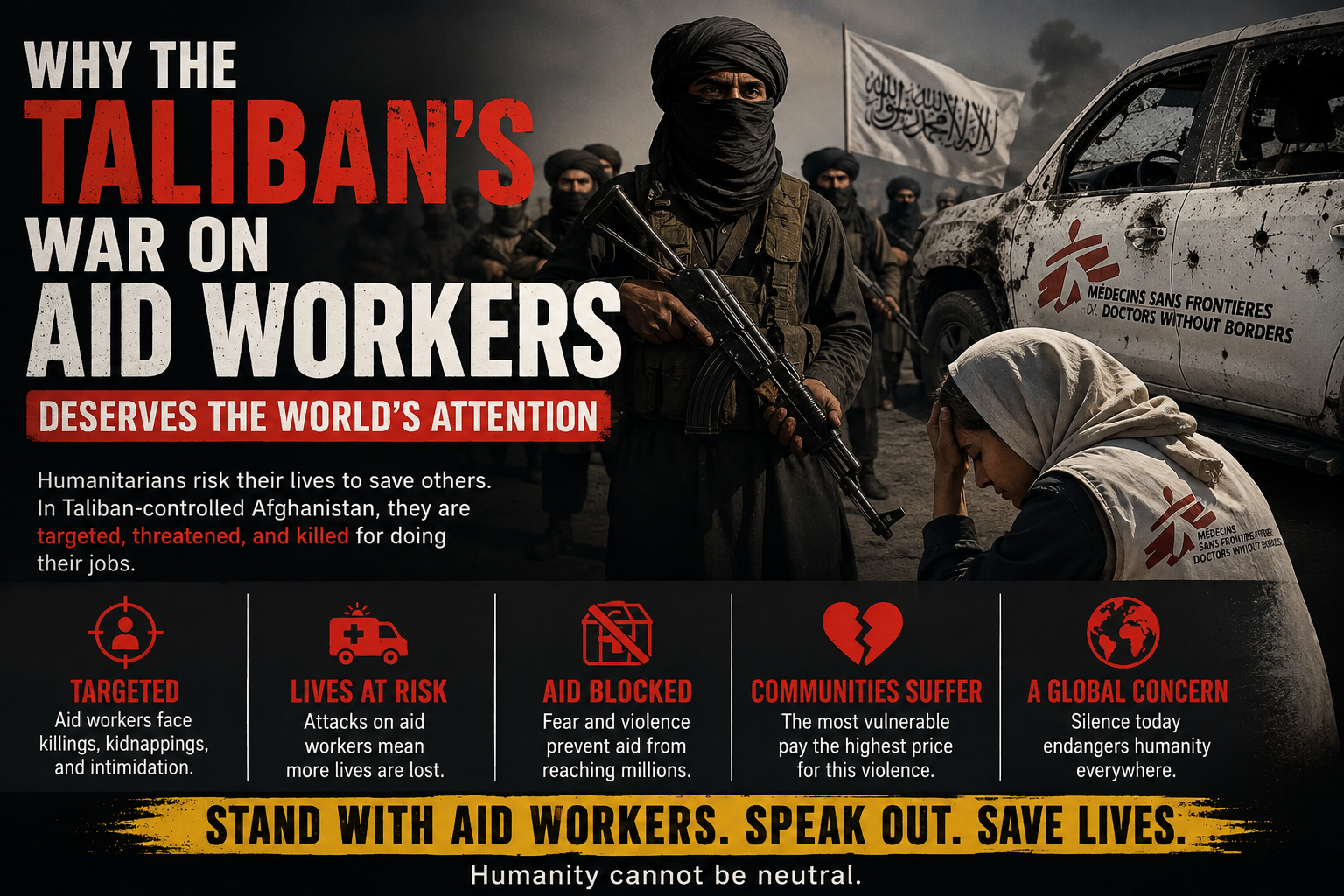
Why the Taliban’s War on Aid Workers Deserves the World’s Attention
Two Afghan employees of the United Nations Assistance Mission in Afghanistan vanished from a Herat office on August 9. Their families still do not know where they are being held. Human Rights Watch...
Two Afghan employees of the United Nations Assistance Mission in Afghanistan vanished from a Herat office on August 9. Their families still do not know where they are being held. Human Rights Watch has now added six more names to a growing list of the disappeared, all staff of the Women and Children Legal Research Foundation, arrested in Kabul on July 18. Neither case has produced a formal charge and explanation. This pattern of silence is precisely the point.
A Familiar Playbook
Kabul witnessed a similar episode less than a year into Taliban rule, when two journalists working for the UN refugee agency, including veteran correspondent Andrew North, were detained without warning in early 2022. That case ended in release after international pressure mounted. The current detentions echo that template almost exactly: seize quietly, offer no justification, wait out the news cycle. What has changed is the frequency and boldness of the tactic. Roughly twenty aid workers were rounded up near the Iranian border in June over the length of their beards, an accusation so trivial it reads as pretext rather than policy. Dozens of women were separately detained the same month for allegedly violating dress codes, among them a hospital employee of Doctors Without Borders. Disappearance has become routine administrative practice rather than an aberration.
Timing That Speaks for Itself
None of this is coincidental. The detentions surfaced just days before the Taliban’s fifth anniversary of retaking Kabul on August 15, a milestone the movement plans to mark with public celebration. Fereshta Abbasi of Human Rights Watch has warned that holding UNAMA staff “seriously threatens the U.N.’s work throughout Afghanistan and its ability to deliver lifesaving aid.” The detained UNAMA employees, according to sources cited by Afghanistan International, had recently documented the detention of women in Herat and interviewed girls who themselves had been held. If that reporting triggered the arrests, the message to every remaining humanitarian worker in the country is unmistakable: document abuse, and you become the next case file.
The Human Cost Behind the Numbers
Context makes the stakes harder to ignore. Nearly 22 million Afghans, close to 45 percent of the population, are projected to need humanitarian assistance this year, according to the UN human rights office. More than 17 million people faced food insecurity during the past dry season alone. Over three million children are acutely malnourished, and more than 400 health facilities shut down last year for lack of funding. Against that backdrop, an intelligence raid on an aid office is not a bureaucratic footnote; it is a direct threat to whether food, medicine, and psychosocial support reach people who have no alternative source for them. UN Women reports that at least one million women and girls have already lost access to critical services since global aid cuts intensified last year, and nearly three-quarters of women-led organizations surveyed inside Afghanistan experienced funding cuts in 2025 alone.
Targeting Women’s Rights Work Specifically
The Women and Children Legal Research Foundation was not detained at random. Macarena Sáez, women’s rights director at Human Rights Watch, put it starkly: the Taliban treats any organized effort to help women and girls as a threat to its own legitimacy. That framing tracks with the broader legal architecture the Taliban has constructed since 2021. Officials have issued more than 230 decrees since retaking power, according to UN briefings to the Security Council, including a Criminal Procedure Code enacted this January that formally divides society into “free” and “enslaved” categories and permits husbands to physically discipline wives so long as no bones are broken. Against that legal backdrop, arresting six men who worked to protect women’s legal rights looks less like an isolated security decision and more like enforcement of state ideology.
What Accountability Would Require
Statements of concern from Human Rights Watch, Amnesty International, and the UN Special Rapporteur matter, but statements alone have not freed anyone in this latest round of arrests. Genuine accountability would require the Taliban to grant UNAMA and the detainees’ family’s immediate access, something explicitly demanded under the UN’s own privileges and immunities framework and so far ignored. It would also require donor governments to link any future engagement, financial or diplomatic, to the release of aid workers rather than treating detentions as a side issue to be raised and dropped. The upcoming anniversary offers the Taliban a stage to project stability. Continuing to hold eight people without charge undercuts that image far more effectively than any outside statement could.
A Test the World Cannot Fail Quietly
Five years into Taliban rule, the international community’s leverage has shrunk alongside its attention span. Yet the fate of eight detained aid workers is a direct test of whether the UN’s presence in Afghanistan still carries any real protection for the people who staff it. If the answer is no, humanitarian organizations serving a country where nearly half the population depends on outside assistance will have to recalibrate how, and whether, they can safely operate at all.
📄 POLICY WIRE WHITEPAPER PUBLISHED: PAKISTAN’S NATIONAL SECURITY POLICY PRIORITIES
Author