
Flipped Flag Flap in Minnesota Fuels America’s Culture Wars
POLICY WIRE — Minneapolis, USA — An inverted flag—a universally recognized cry for help—can sometimes trigger more distress than it signals. That’s precisely what happened in Minnesota, where...

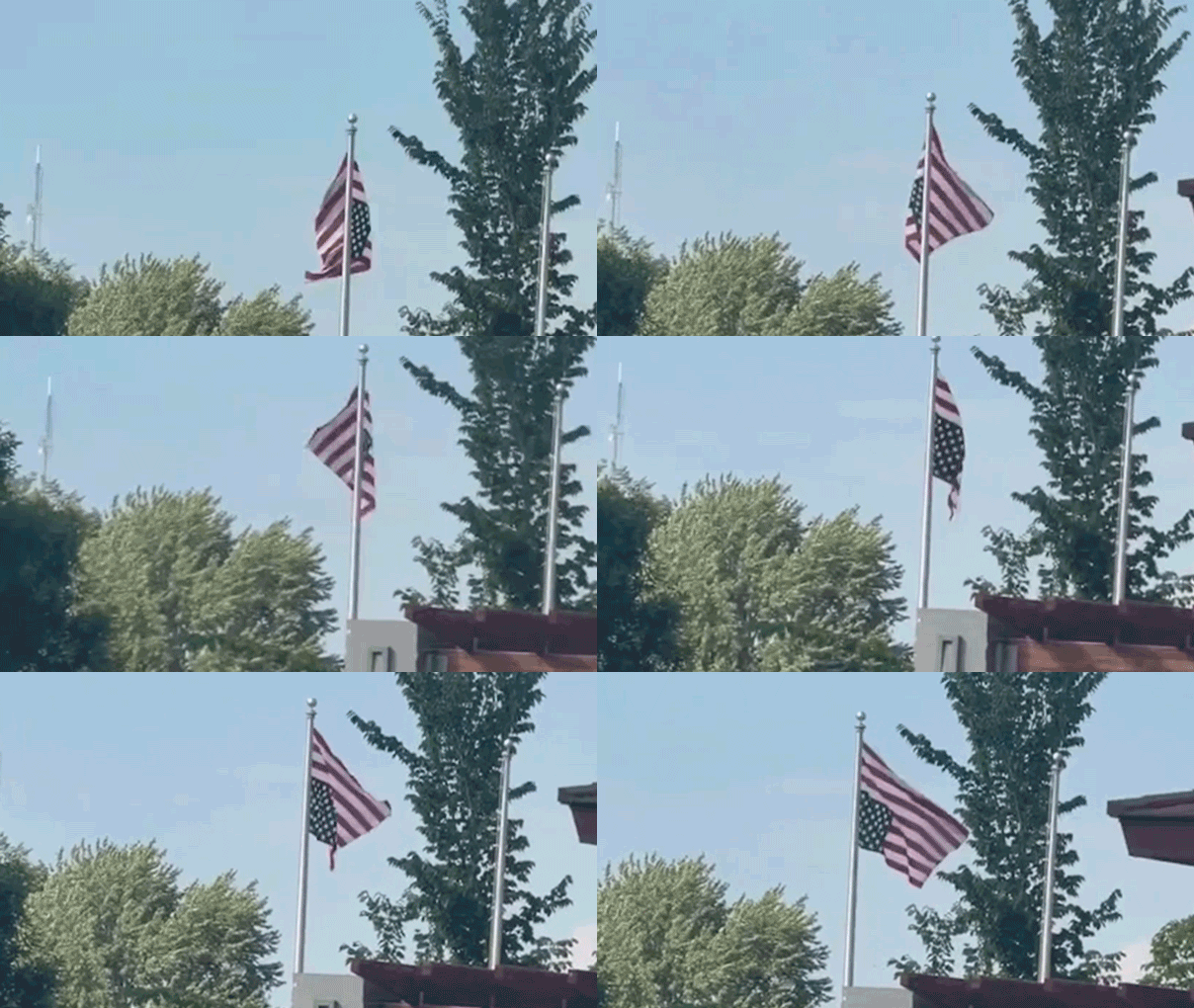
POLICY WIRE — Minneapolis, USA — An inverted flag—a universally recognized cry for help—can sometimes trigger more distress than it signals. That’s precisely what happened in Minnesota, where what should’ve been a jubilant celebration of Somali heritage morphed into a full-blown culture war spectacle, all thanks to Old Glory displayed feet-first. It wasn’t a deliberate act of defiance, some claim. It certainly wasn’t an oversight for long. But the image? Oh, that image, it went everywhere.
It was a large community event, an effort by local Somali groups to flaunt cultural pride, to knit community cohesion. And somewhere in that festive melee, an American flag was hoisted with its stars gazing toward the pavement. The reaction? Swift. Predictable. It didn’t take long for social media—that ever-present accelerant—to light up. Queries flooded local media. What started as a local mishap exploded, catching fire, leaving a trail of outrage — and head-scratching in its wake. [QUOTE_PLACEHOLDER]
Organizers were left scrambling for explanations, or maybe just for air. Some mumbled about an honest mistake
, pinning it on young volunteers or those less acquainted with American flag protocols.
Others hinted at the distress signal interpretation. But prominent community members—those with a sharp eye on public perception—were quick to pour cold water on any such narratives. Councilwoman Jamila Nur didn’t mince words, calling it deeply unfortunate and unfathomable.
She’d seen the bridge-building, you know? All that effort. And then this. We have worked so hard to build bridges, and something like this, whether intentional or not, sets us back,
she lamented. It’s never just about a flag. It’s about optics. It’s about narratives. And these days, narratives are high-octane fuel for polarization.
But how do these symbols resonate globally? Consider the fraught history of flag etiquette across the Muslim world, especially in South Asia. In countries like Pakistan, the national flag isn’t merely fabric — and dye; it’s the very soul of the state. Its desecration? A direct assault, punishable by law, often inciting street protests — and diplomatic rows. There, the public understanding of what a flag represents is instilled from kindergarten, carrying immense weight in a region shaped by complex national identity struggles. An honest mistake
regarding a national flag in Islamabad or Dhaka, for example, would be truly unfathomable
—it’d be a national crisis, met with profound shock and legal repercussions.
Back in Minnesota, the image wasn’t just viral; it became a proxy in America’s ongoing culture wars. Pundits on the usual cable news circuits — and comment sections had a field day. For some, it was proof of disrespect. For others, an overreaction to an innocent error.
The historical weight of an inverted flag doesn’t help these arguments. Dr. Arthur Jenkins, a vexillology specialist—yeah, that’s a real thing—clarified, The inverted flag has historically served as a call for help or an act of protest against severe government policies. Its meaning is rarely ambiguous in context.
But context, my friends, is increasingly a casualty in these public skirmishes.
📄 POLICY WIRE WHITEPAPER PUBLISHED: PAKISTAN'S NATIONAL SECURITY POLICY PRIORITIES
👉 READ BY CLICKING HEREThe Somali community in Minnesota is quite substantial, an estimated 80,000 individuals—or, to be more precise, as per U.S. Census Bureau estimates, the Somali immigrant population in Minnesota was approximately 81,139 in 2021, representing the largest Somali diaspora concentration in the nation. That’s a lot of people trying to find their place, to balance old traditions with new loyalties. This one flag, then, inadvertently became a flashpoint, highlighting the delicate dance of assimilation and identity in America’s melting pot—or perhaps, its bubbling cauldron.
What This Means
This incident, seemingly small in its immediate mechanics, broadcasts outsized implications. Politically, it’s a gift to those who benefit from anxieties surrounding immigration — and cultural integration. It provides fodder for narratives of perceived disloyalty or lack of assimilation, further hardening divisions between native-born populations and diasporic communities. For local politicians, especially those representing diverse constituencies, it creates an uncomfortable tightrope walk, forcing them to balance calls for patriotic adherence against the need for cultural understanding and protection of minority rights. It’s a classic Catch-22: condemn too harshly, and you alienate a key demographic; downplay it, and you face accusations of excusing perceived disrespect. And then there’s the broader national discourse: every such event becomes another data point in the perpetual debate about what it means to be American in the 21st century. It feeds into the notion of competing loyalties—a concept always lurking beneath the surface of immigration discussions. It reminds us that symbols aren’t just symbols; they’re emotional battlefields. We’re living in an era where anything can be weaponized in the pursuit of political advantage, especially anything involving national pride and identity. Such seemingly minor incidents—like the upside-down American flag in Minnesota—often act as accelerants in a much larger, ongoing alchemy of outrage, reshaping fundraising and public opinion alike.