


Asia’s Students Outpace U.S. in Global Education Rankings as AI Transforms Learning
Asia's students lead in global education rankings, while U.S. scores drop. AI reshapes learning and talent competition.

POLICY WIRE — Washington, D.C. — A new international assessment shows Asian students continuing to outperform their Western counterparts, with the U.S. lagging in key academic areas as artificial intelligence transforms educational approaches.
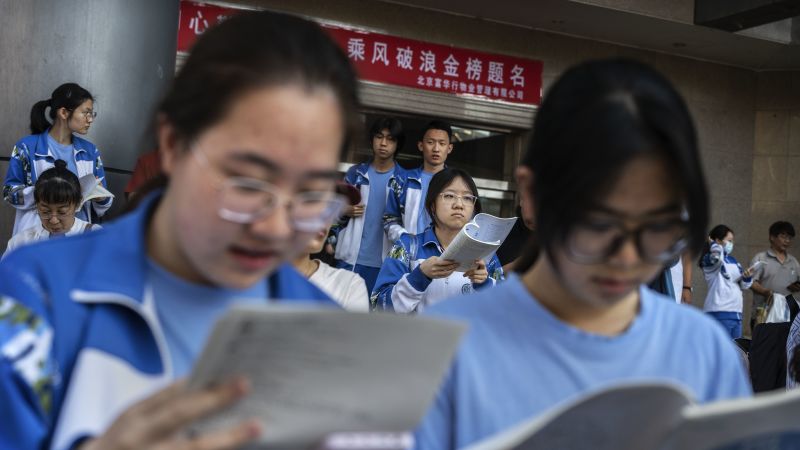
The 2025 Programme for International Student Assessment (PISA) highlights a global decline in reading, science, and math performance among 15-year-olds, but Asian students from Beijing, Shanghai, Jiangsu, Zhejiang, and Singapore remain at the top of the rankings. Japan, South Korea, Macao, and Taiwan also featured prominently in the top 10 across all subjects.
U.S. reading scores fell to near 25-year lows, falling further behind Chinese students who have long dominated PISA exams. The report warns that AI adoption could significantly reshape secondary education, emphasizing the need for critical thinking and information evaluation skills in an increasingly complex world.
Despite criticism over the limited geographic scope of China’s PISA participation, the data reveals a steady decline in U.S. scores over the past decade. Meanwhile, digital tools have lessened the link between student performance and socioeconomic status, though increased classroom distractions pose challenges. In contrast, students from China, Japan, and South Korea reported minimal digital disruptions during science lessons.
The study notes a growing number of “hasty readers” who rush through texts, with average OECD performance in science, reading, and math reaching historic lows. A Stanford University study suggests that improving basic PISA proficiency among American students could add $40 trillion to the U.S. economy over their lifetimes. However, the percentage of OECD students below this threshold rose to 20% in 2025, up from 16% in 2022.
Reporting by Policy-Wire (PW)