


India’s Crop Waste Fuels Global Green Aviation
Uncover how India's agricultural waste, a major smog contributor, can be transformed into Sustainable Aviation Fuel. A game-changer for clean air and global aviation's net-zero goals.

POLICY WIRE — New Delhi, India — The seasonal haze that blankets northern India—a suffocating cocktail of particulate matter, noxious fumes, and desperate resignation—is typically viewed as an annual public health catastrophe. Nobody disputes that. But what if that same agricultural refuse, which contributes to air quality indexes spiking off the charts every winter, isn’t just an ecological disaster, but a strategic asset in the global scramble for clean energy? Consider that notion for a moment. It changes things, doesn’t it?
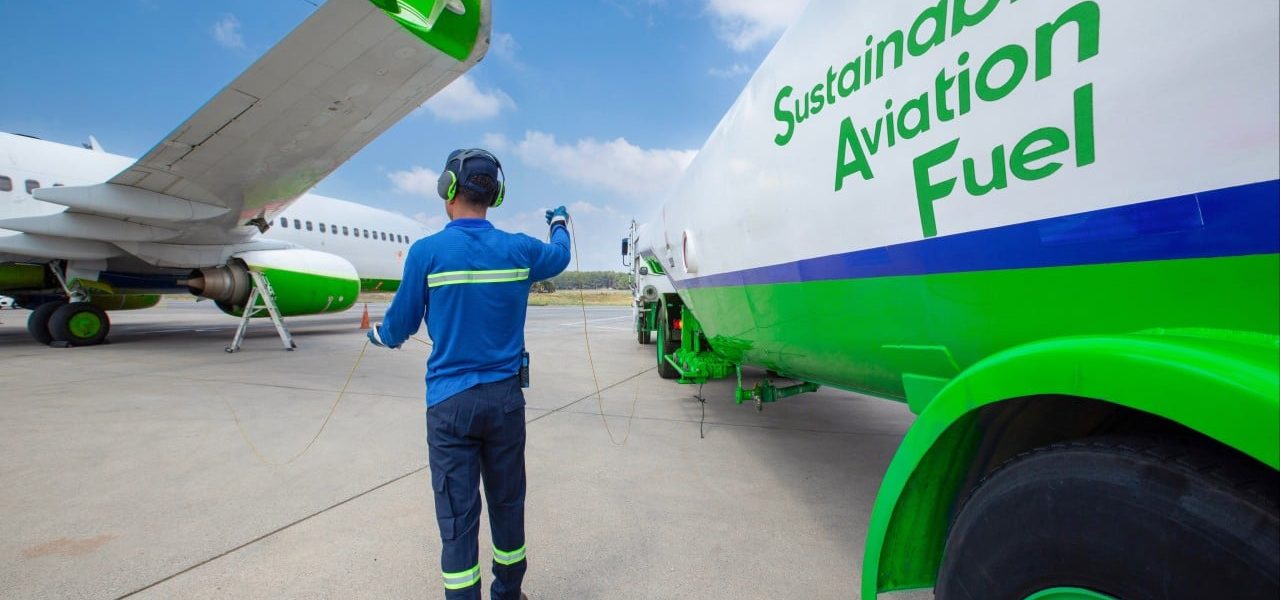
Turns out, those mountains of crop stubble, husks, and stalks left after the harvest aren’t merely destined for the pyre. New research suggests they’re a surprisingly potent source for Sustainable Aviation Fuel (SAF). We’re talking about billions of tonnes of biomass, currently torched, now potentially convertible into jet fuel capable of slashing aviation’s carbon footprint. It’s an almost biblical reversal: ashes to aeronautics.
For years, environmentalists — and health advocates have rung alarm bells about farmers burning agricultural waste. That tradition isn’t just a quaint practice; it’s an immediate, blunt force assault on breathable air, often migrating across borders, enveloping even Pakistan in a shroud of pollution. This winter smog—often intensified by winds carrying pollutants across the plains—has a profound regional impact. Think about it: a problem of local economics, lack of alternatives for farmers, metastasizing into a major geopolitical environmental headache.
And now, this study, whose specifics are still making rounds in policy circles, throws an intriguing curveball. It suggests a vast, untapped energy reservoir. “We’ve always known India’s agricultural output was immense, but viewing its waste streams through the lens of green fuel technology is a paradigm shift,” noted Dr. Anjali Sharma, a senior advisor to India’s Ministry of New — and Renewable Energy, during a recent closed-door briefing. “It’s a chance to convert an enduring challenge into an economic opportunity, not just for us, but for the entire world. We’re eager to explore these technologies aggressively.” Because who wouldn’t want to solve two enormous problems with one elegant solution?
But it’s not all sunshine and biofuels. The logistics are mind-boggling. Collecting, transporting, and processing this diffuse biomass across a subcontinent as vast and diverse as India is no small feat. Yet, the potential prize is enormous: reduced air pollution, new income streams for farmers, and a contribution to aviation’s desperate need for decarbonization. The International Air Transport Association (IATA) has projected that SAF could account for up to 65% of the abatement needed by aviation to reach net-zero by 2050. That’s a big chunk, isn’t it?
This isn’t just some fringe science project; major airlines and governments globally are pouring billions into SAF development. British Airways, for example, is reportedly aiming for 10% SAF usage by 2030, a target that, frankly, many deem ambitious, given current supply limitations. “The industry’s commitment to net-zero by 2050 isn’t just PR fluff; it’s a financial and environmental imperative,” stated Sarah Jenkins, a spokesperson for Global Skies Alliance, a consortium of international carriers. “Sources like India’s agricultural residue represent a colossal, potentially game-changing supply for SAF. We can’t afford to leave any stone unturned, especially not billions of tonnes of burnable biomass.” It’s simple economics, really.
📄 POLICY WIRE WHITEPAPER PUBLISHED: PAKISTAN'S NATIONAL SECURITY POLICY PRIORITIES
👉 READ BY CLICKING HERERecent estimates, corroborated by various industry bodies, suggest India produces approximately 500 million metric tons of agricultural waste annually. Roughly half of that ends up burned, choking cities like Delhi. Turning even a fraction of this into fuel could significantly dent that statistic and provide enough feedstock for a sizable percentage of global SAF needs. As Policy Wire has covered before, the scale of this problem has long been apparent; what’s new is the innovative solution emerging from the fumes.
What This Means
This shift from waste to wealth carries substantial implications, politically — and economically. For India, it’s a shot at alleviating one of its most visible environmental crises while simultaneously creating a new, homegrown energy industry. We’re talking rural job creation—collecting, processing, and transportation—which could inject much-needed capital into agricultural communities. Diplomatically, it positions India not just as a global emitter, but as a potential solution provider, bolstering its standing in climate negotiations.
Economically, if scalable, it could provide a significant price hedge against volatile fossil fuel markets for airlines. It reduces India’s dependence on imported aviation fuel, improving its trade balance. Regional ripple effects are also considerable: Cleaner air in India means cleaner air in neighboring countries like Pakistan, fostering a sense of shared environmental destiny, even amidst other frictions. It opens dialogues, not just about pollution, but about regional energy independence — and climate resilience. The challenges—policy incentives, technological hurdles, financing—are formidable, but the prize, well, it’s a whole lot bigger than just cleaner skies.