


Arizona’s QB Quandary: Brissett’s Return Sparks Unease Over Market Value
POLICY WIRE — Phoenix, USA — The price of loyalty, or perhaps more accurately, the price of professional compliance, has once again been tabulated. No, we aren’t talking about the latest...

POLICY WIRE — Phoenix, USA — The price of loyalty, or perhaps more accurately, the price of professional compliance, has once again been tabulated. No, we aren’t talking about the latest sovereign debt negotiations or an intricate trade dispute. This particular skirmish unfolds on the hallowed turf of American professional football, where a few days’ absence from practice can equate to a sum that would sustain many families for years. It’s about an athlete, a quarterback — a commodity, really — and his return to work, not necessarily in triumph, but certainly under duress of consequence.
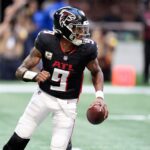
Jacoby Brissett, a name you may know or, more likely, recognize as a backup turned starter, has decided that nearly $108,000 is a bridge too far for a point to make. This week, we learn that Brissett is set to report for the team’s mandatory minicamp this week. It’s less a heartwarming reunion — and more a calculated truce in a cold war over contract dollars. Because sometimes, principles just ain’t worth that kind of money. You just have to show up. [QUOTE_PLACEHOLDER]
For weeks, Brissett had made himself a ghost, missing practices and workouts, holding out for all of the team’s previous offseason work so far while angling for a new contract. He’d been conspicuously absent from all three of their OTAs, too — standard tactics for a player feeling undervalued. The arithmetic is stark: If Brissett didn’t show up to mandatory minicamp this week, he was at risk of being fined a total of $107,911. That figure, straight from league policy, probably made the decision to pack his bags and head to the Arizona heat a whole lot easier. It’s hard to argue with hard numbers like that, even when you’re arguing for more of them.
And you can understand why Brissett believes he’s due more. Last season, his tenth in the league, saw him put up respectable numbers. He threw for a career-high 3,366 yards with 23 touchdowns — and eight interceptions last season. He started 12 games for the Cardinals, too, in for an injured Kyler Murray. Yeah, the team went just 3-14, and missed the playoffs for the fourth straight season, but that ain’t entirely on Brissett, is it? One guy — even the QB — doesn’t sink the whole ship. Especially not when the team around him is navigating its own peculiar financial whirlpool.
Ah, the Cardinals. They’re tangled up, aren’t they? The club’s decision-makers — probably sweating in a plush, air-conditioned war room — chose to move on from their previous franchise quarterback. The Cardinals have since split with Murray, who has instead signed a deal with the Minnesota Vikings. Now, this is where the money gets interesting: The Vikings will reportedly pay Murray at the veteran minimum, while the Cardinals will pay the bulk of Murray’s $36.8 million salary next season. That’s gotta sting a bit if you’re Brissett, currently set to make $4.88 million in base salary next season with $1.5 million guaranteed, and having actually performed admirably in the prior year. You put in the work, keep the numbers up, — and someone else pockets tens of millions for not being there. A bit like skilled professionals leaving Pakistan for better opportunities abroad, while their home country bears the cost of their education, no?
But the team, for its part, sees competition brewing. Brissett will enter workouts as the team’s presumed starter, but he’s joining Gardner Minshew, Kedon Slovis and Carson Beck, who the team just selected in the third round of the NFL Draft out of Miami. It’s an open field, they’ll tell you. The Cardinals signed Minshew in free agency in March, and gave him just more than $5 million guaranteed — a subtle hint, perhaps, about Brissett’s standing. It’s unclear when, or if, the two sides will come to a new deal before the new season, though it’s unlikely to get done before workouts start on Tuesday. This is a game of leverage, always has been, always will be.
Negotiations, ESPN sources indicated last month, were "significantly" far apart. We’ve heard that before. It’s the political theater of collective bargaining, scaled down to individual talent. The individual, in this case, has to swallow a bit of pride, or maybe just a bitter pill. Though he’ll have to keep waiting for a new deal, Brissett is getting back to work in Arizona. His presence isn’t just about playing football; it’s a living, breathing commentary on how organizations value — or devalue — the very human capital they employ.
It forces us to ponder similar conundrums across various industries globally. Consider a brilliant software engineer in Karachi, facing a salary dispute, wondering if her skills are truly appreciated at home, or if she must emigrate to secure the compensation she believes she deserves in Dubai or Silicon Valley. The fundamental tension between individual market value and institutional resource allocation — and the human element of frustration that comes with it — is strikingly similar. Whether it’s a quarterback or an engineer, talent feels its worth. And they don’t just want to be appreciated; they want to be paid for it.
What This Means
Brissett’s reluctant return, mandated by financial penalties rather than a handshake agreement, serves as a micro-drama reflecting larger political and economic currents. On one hand, it illustrates the sheer market power wielded by sports franchises. They can, within limits, enforce contractual obligations through punitive measures. This speaks to the employer’s prerogative in industries where contracts are king and individual leverage is often secondary to team (or corporate) strategy. You want to eat? You gotta show up. Simple as that.
Economically, this situation underscores the volatile — and often opaque valuation of labor in hyper-capitalized markets. Brissett’s previous performance — quite good by any measure — apparently doesn’t align with the Cardinals’ internal assessment of his future value, especially when juxtaposed against the sunk cost of Kyler Murray’s still-unfolding, deeply expensive saga. This kind of disconnect between perceived individual output and negotiated compensation isn’t just a sports anomaly; it mirrors global economic inequalities and the challenges of talent retention in less affluent regions. Nations, much like teams, wrestle with retaining their best and brightest when external markets offer significantly higher rewards. The lure of higher pay in Europe or North America, drawing away medical professionals and IT specialists from South Asian countries, presents a direct parallel. It’s an exodus of skills driven by market forces, a brain drain that impacts development — and stability. The flow of talent — and the price tag attached to it — remains a constant, if often contentious, economic and geopolitical narrative. You don’t often hear about a politician taking a massive fine for missing a committee meeting, but perhaps there’s a lesson there, too.
For the Cardinals, their handling of Brissett and the lingering financial burden of Murray illustrate a classic resource allocation headache. It’s a balance sheet nightmare that highlights the political maneuvering — both overt and subtle — within large organizations. Every dollar paid, every contract structured, every holdout resolved (or not), sends a signal. These signals resonate beyond the locker room, shaping public perception, investor confidence, and ultimately, future recruitment. The policy here isn’t written on paper in a capital; it’s etched in the dollar figures and the decisions of team ownership. The constant reshuffling of human assets, with little regard for sentimentality, is the enduring lesson.