


Dust-Up in the Desert: New Mexico Residents Force Big Tech to Pump the Brakes on Megaproject
POLICY WIRE — SOCORRO, N.M. — In the vast, sun-baked expanses where the high desert meets quiet resolve, a skirmish over silicon and solitude has unfolded. For months, whispers turned to shouts, then...

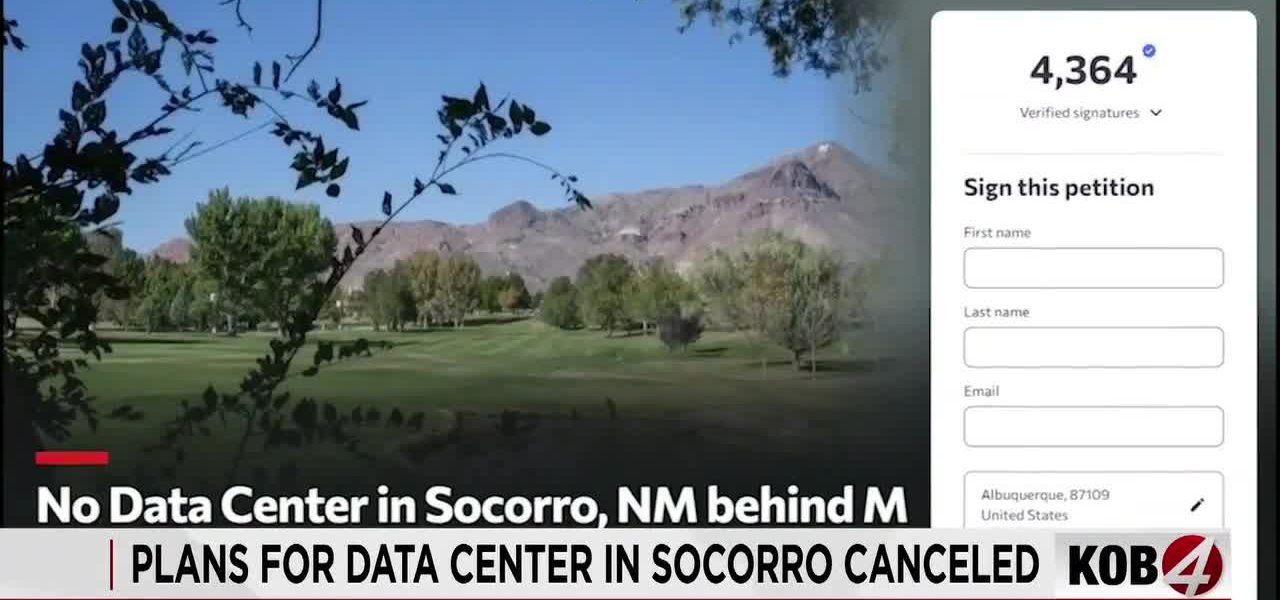
POLICY WIRE — SOCORRO, N.M. — In the vast, sun-baked expanses where the high desert meets quiet resolve, a skirmish over silicon and solitude has unfolded. For months, whispers turned to shouts, then to an organized roar from Socorro, New Mexico, challenging the ambitions of a future forged in servers and solar arrays. Now, it seems, the quiet people of this arid corner have won a round—temporarily, at least.
It wasn’t a sudden, graceful retreat. Nah, more like a begrudging, strategic pause. Plans for a gargantuan 10,000-acre data center, poised to gobble up prime acreage between Socorro and Magdalena, have hit the skids. Dr. Michael Jackson, the affable head honcho at New Mexico Tech, broke the news Tuesday. He cited a hazy future, too many unanswered questions, and, with a tell-all sigh, simply not enough usable land for Green Data’s envisioned digital empire.
This was never just about a server farm, you see. It was about scale. Ten thousand acres? That’s like dropping a small city into a pristine ecosystem, — and the folks living here? They didn’t sign up for it. Local pushback had been fierce, unrelenting. You’d think the allure of ‘progress’ or ‘jobs’ would sweep them aside. It didn’t. They dug their heels in. And because they did, a different kind of reality took hold.
Jackson, usually a picture of measured academic optimism, admitted the project’s complex nature got the best of them, for now. “We’re always looking for strategic growth and innovation, yes, absolutely, but not at the expense of genuine long-term viability,” Jackson told Policy Wire. “And honestly, between the logistical challenges and, frankly, the sheer land acquisition complexities—it just wasn’t quite the right fit for the institution, or the landscape, at this juncture. But don’t think for a minute we aren’t exploring all our options for the future.”
His words, delivered with a hint of fatigue, reflect a truth often overlooked by gleaming prospectuses: sometimes, a vision is just too grand for the ground it’s meant to stand on. This wasn’t some minor tweak; this was the foundational stuff—actual earth, dirt, space. Land. You can’t just wish 10,000 acres into existence without a fight.
And fight, they did. Residents—ranchers, retirees, young families—rallied. They talked water scarcity (a constant specter in New Mexico), power demands, the very soul of their community. “This decision isn’t some big, flashy victory for us, it’s just a damn breather,” offered Socorro County Commissioner Juan Garcia, his voice gravelly, accustomed to making tough calls on lean budgets. “Our desert isn’t some blank, unfeeling canvas for Silicon Valley’s wildest ambitions. It’s home. It’s got a history. It provides our livelihood. We’d fight like hell to keep it that way, — and I guess, this time, they listened. For now, anyway.” That ‘for now’ hangs heavy in the air like the desert’s own dry heat. Nobody’s naive enough to think this saga is truly over.
This drama isn’t unique to New Mexico’s baked earth. From the nascent tech hubs in Karachi’s evolving infrastructure to the resource-intensive mega-projects sprouting across parts of Pakistan’s rural landscapes, communities are increasingly grappling with the footprint of global digitization. The relentless global demand for immediate processing power means data centers are going to keep appearing. They require colossal amounts of land, energy, and, critically, water for cooling—resources often already strained in many emerging economies. The rise of mega data centers across global deserts, whether in Australia or Saudi Arabia, mirrors this insatiable appetite.
What This Means
This setback in Socorro is more than just a local squabble; it’s a stark indicator of the burgeoning friction between community rights, environmental stewardship, and the unbridled expansion of the digital economy. The ‘information highway’ isn’t just lines of code; it’s miles of land, megawatts of electricity, and vast quantities of water—tangible resources that compete with existing human and ecological needs. For Policy Wire, this isn’t simply about whether Socorro gets a data center. It’s about a growing global trend where grassroots movements are forcing mega-corporations and institutions to reconsider the ‘costs’ beyond monetary figures.
Economically, it shows that the once-unquestioned economic benefits of major tech investments are now scrutinized through a wider lens of sustainability and social impact. That a powerful institution like New Mexico Tech and its partner Green Data couldn’t just muscle this through is significant. Politically, it signals a renewed, potent role for local activism. Small communities, often dismissed as NIMBYs, are proving capable of derailing projects worth billions, reminding elected officials and corporate titans that their licenses to operate aren’t indefinite or without terms. Globally, the energy demand of these digital fortresses is a ticking clock: according to a 2023 report by the International Energy Agency (IEA), data centers currently consume between 1% and 1.5% of global electricity, with their demand projected to nearly double by 2026. This Socorro skirmish? It’s a localized tremor reflecting seismic shifts in how we, as a planet, weigh the true price of our digital future.