


Albuquerque’s Urban Mirage: A Growers Market and the Mirage of Food Security
POLICY WIRE — Albuquerque, New Mexico — It took another community project, another ribbon-cutting, to remind folks that in a country famed for its agricultural abundance, neighborhoods exist where...

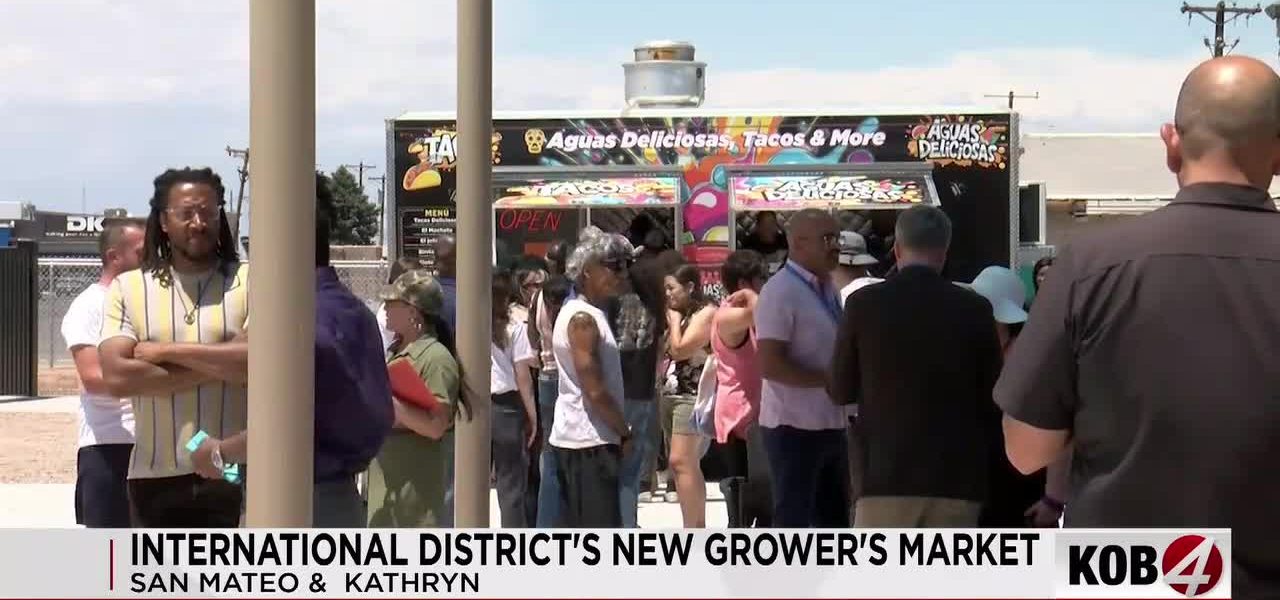
POLICY WIRE — Albuquerque, New Mexico — It took another community project, another ribbon-cutting, to remind folks that in a country famed for its agricultural abundance, neighborhoods exist where fresh sustenance is simply a pipe dream. City hall types, in a ritual as old as civic improvement itself, unfurled the banner on a new growers market Tuesday. But behind the celebratory facade of Albuquerque’s International District, there’s a tougher story—a protracted, grinding fight against what officialdom, with characteristic dryness, calls a food desert. And, honestly, this market isn’t just a simple green space; it’s an indictment.
We’re talking about an entire swath of the city where securing a fresh apple or an affordable bunch of greens means an odyssey for those without cars or the ability to traipse miles for basic necessities. For decades, residents in this part of Albuquerque—a locale many in City Council probably zip past without a second thought—have faced systemic neglect, with grocery chains opting for more profitable pastures. The newly christened People’s Market, plopped at San Mateo — and Kathryn, aims to be a corrective. A band-aid, perhaps, on a gaping wound of urban planning failures — and economic disparity.
City councilor Nichole Rogers laid it out quite clearly, not pulling punches on the bleak landscape they’re trying to reform. Rogers observed, [QUOTE_PLACEHOLDER] That little detail about a grocery store being absent within a full mile radius? That’s not just a statistic from some USDA report; it’s the daily reality for hundreds, maybe thousands, here. And it’s not an isolated incident; similar distances often define food accessibility in many under-resourced urban pockets across the United States. Even when grocery stores do exist, access can be stymied by poverty itself, a vicious cycle that this humble market, with its simple promise of accessibility, tries to chip away at.
Rogers, perhaps with a touch more optimism than a hardened policy wonk might muster, envisions the space morphing into something larger—a community fulcrum, replete with basic comforts like electricity, shaded areas for scorching New Mexico summers, and proper bathrooms. Even picnic tables are planned, suggesting aspirations beyond mere commerce. It’s an honest effort, yes, to cultivate something sustainable in an ecosystem that’s been anything but. But can a single market, however well-intentioned, truly reverse decades of disinvestment?
Such initiatives aren’t unique to the American southwest. Look at many major urban centers in South Asia, for instance—Karachi, Dhaka, even parts of Lahore. You’ll find communities grappling with analogous, if often more acute, challenges. Informal markets and local vendors often fill the voids left by inadequate infrastructure and commercial investment in densely populated, lower-income districts. It’s a recurring theme: residents, typically marginalized, demonstrating remarkable resilience and adaptability where grand, centralized systems fail to provide. While Albuquerque’s scenario might lack the raw scale of poverty seen in these Muslim-majority nations, the core issue of equitable resource distribution and the resulting local-level responses—often born of necessity, not policy foresight—echo across continents. The fundamental questions remain: Who bears the responsibility for ensuring basic sustenance, and why does it often fall to fragmented, ad-hoc community ventures to pick up the slack?
Now, the ball’s in the court of potential vendors — and operators. The city’s put out its call, waiting to see who’ll step up. It’s a pragmatic, if somewhat reactive, approach. You can’t fault the immediate sentiment. When faced with stark realities, one does what one can. But true systemic change? That demands more than just a place to buy tomatoes—it demands an honest reckoning with how these deserts were allowed to bloom in the first place. You’d think by now we’d have figured out that ensuring basic needs isn’t a luxury. But we’re here again, aren’t we, discussing a market for those who simply want a vegetable.
📄 POLICY WIRE WHITEPAPER PUBLISHED: PAKISTAN'S NATIONAL SECURITY POLICY PRIORITIES
👉 READ BY CLICKING HEREAnd it seems for every market that pops up, addressing a tangible community need, there’s another bureaucratic tangle somewhere else—perhaps over the price of unfulfilled promises that contribute to the very conditions these markets try to alleviate.
What This Means
This market, while ostensibly a local project addressing a singular issue, reflects deeper cracks in urban policy and economic planning that echo globally. For Albuquerque, it’s a direct acknowledgment of past policy failures and insufficient market incentives that have left whole neighborhoods underserved. It’s a classic case of public sector intervention trying to compensate for private sector indifference, fueled by a simple profit motive.
Politically, these micro-level solutions are often attractive. They offer tangible results—a ribbon-cutting, fresh produce for struggling families—that translate into positive optics for local officials. They don’t, however, necessarily tackle the root causes: the economic inequities, the redlining legacy that contributes to neighborhood disinvestment, or the absence of robust public transportation systems. An investment in a market like this is a positive step, sure, but it’s often more about crisis management than long-term strategic urban redevelopment. The true test isn’t just getting the market open, but its sustainability and its capacity to genuinely alter dietary patterns and health outcomes for a community marginalized not by accident, but by a confluence of systemic decisions over many, many years. It suggests a future where municipal governments must increasingly step into roles traditionally left to market forces, or risk wider social stratification—a policy challenge explored often in contexts like shadow economies and societal frailties. What appears a benign solution actually lays bare uncomfortable truths about contemporary governance.