

Beyond the Ballot: New Mexico Tackles Youth Mental Health Crisis, A Public Gambit Pays Off
POLICY WIRE — Albuquerque, N.M. — In an era rife with government projects dragging on, often over budget and behind schedule, New Mexico just delivered something genuinely rare. It’s not a...

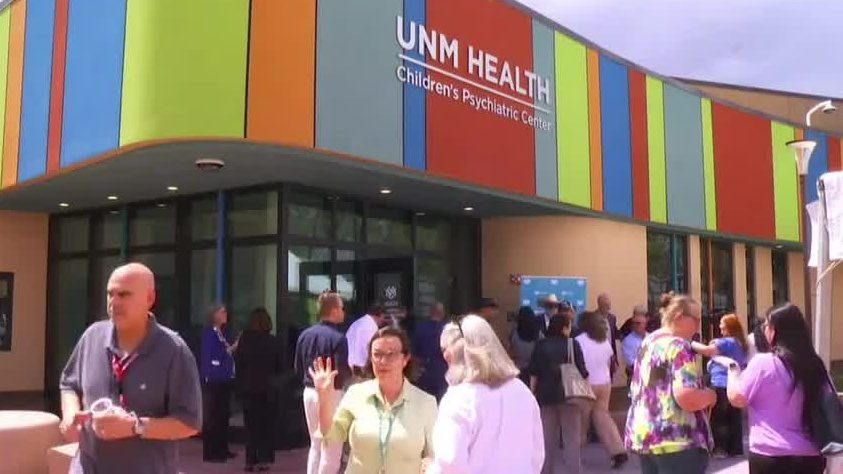
POLICY WIRE — Albuquerque, N.M. — In an era rife with government projects dragging on, often over budget and behind schedule, New Mexico just delivered something genuinely rare. It’s not a shimmering new sports stadium or a defense industry upgrade, but a haven for children grappling with deep, internal battles—a psychiatric care center that finished up Tuesday, defying the standard two-year expectation. This isn’t just about brick and mortar; it’s about a hard-won victory for the often-ignored fight against the spiraling mental health crisis among the nation’s youth, a fight many statehouses find too complex, too expensive, or just too inconvenient to address head-on.
It sounds simple, doesn’t it? Give kids with serious mental health issues a dedicated space. But for too long, America’s health system has treated these children—and their overwhelmed families—as an inconvenient afterthought. It’s why New Mexico Gov. Michelle Lujan Grisham, no stranger to pushing state initiatives, put it plainly: [QUOTE_PLACEHOLDER] She’s not wrong. Many a young person has found themselves stuck in emergency rooms, or even worse, regular hospital rooms, their specialized needs unmet, waiting lists growing by the minute. It’s a mess, frankly.
This isn’t charity. This is public policy, direct action in response to a pressing public health challenge. Voters in 2022 approved General Obligation Bond 3, allocating a chunky $36 million specifically for this expansion of the Children’s Psychiatric Center. And it’s those folks, the taxpayers, who get the credit for making a choice. They signed off on an investment into the well-being of their community’s youngest and most vulnerable, opting to fund proper psychiatric care regardless of a parent’s ability to pay. Because let’s be real: when it comes to a child’s mental state, cost shouldn’t ever be the deciding factor for treatment.
The facility, now sporting 36 beds, holds the promise of expanding to 52, a flexibility that’s absolutely key. Anyone who has even glanced at the youth mental health statistics knows that need isn’t static; it’s dynamic, and depressingly, it’s often increasing. A 2022 report from the American Academy of Pediatrics noted that one in five children and adolescents experiences a mental, emotional, or behavioral disorder in any given year. And yet, getting them into treatment? That’s the real slog. We’re talking about waiting lists stretching for months, sometimes years, across many parts of the country. This project, it cuts against that tide. It says: we’re actually going to do something. For once.
Think about it globally for a moment. This kind of infrastructure, this sort of publicly-funded, proactive mental healthcare provision, it’s not universal. In countries like Pakistan, for instance, access to specialized children’s psychiatric care is incredibly limited, almost non-existent for the vast majority. There, mental health still carries a significant stigma, with resources disproportionately concentrated in major urban centers, and often only for those who can pay exorbitant private fees. Or sometimes, it just isn’t available. And because of cultural norms, discussions about mental illness are frequently suppressed, leaving countless children to suffer in silence without even the hope of a public bond or a local initiative.
📄 POLICY WIRE WHITEPAPER PUBLISHED: PAKISTAN'S NATIONAL SECURITY POLICY PRIORITIES
👉 READ BY CLICKING HEREBut here, in Albuquerque, at least there’s progress. The completion of this facility is a blunt, physical manifestation of a societal shift – albeit a slow one – away from punitive or neglectful attitudes towards mental health, particularly for the young. It’s a statement that says these aren’t invisible illnesses, — and these aren’t disposable kids. It’s an institutional commitment, hammered out through public funds, demonstrating a public willingness to pay upfront for the kind of care that was long overdue. It won’t fix everything, of course. But it’s a solid, concrete start.
What This Means
This project is more than just a hospital expansion; it’s a significant political — and economic signal. Politically, it showcases the tangible outcome of direct voter engagement on a quality-of-life issue. Passing General Obligation Bond 3 wasn’t just about throwing money at a problem; it was an act of collective will. It tells other state leaders: this is possible. You can get constituents to back public health initiatives, even expensive ones, when the need is clear and the benefit undeniable. But it also creates pressure. When one state moves forward like this, it makes the inaction of others, particularly those with similar or worse youth mental health metrics, look increasingly indefensible. Economically, while $36 million is a substantial outlay, it represents an investment against future societal costs – the unseen burdens of untreated mental illness in adolescents which can spiral into adult unemployment, incarceration, or prolonged dependence on social services. This isn’t just healthcare; it’s an early intervention, preventative economics in action. But will it spur broader federal mandates or incentives? That’s the real long game, — and history suggests we’re still just at the starting line. Meanwhile, across oceans, nations like Pakistan remain far behind, struggling with the very fundamentals of public health infrastructure, highlighting a glaring disparity in global child welfare priorities. They’re often facing far more existential crises, don’t forget. It makes New Mexico’s commitment feel almost utopian in comparison.
The whole operation wrapping up ahead of schedule is a masterclass in effective public project management—a rarity, yes, but not an impossibility. This expansion from 36 to a potential 52 beds, and the crucial promise of care regardless of a family’s income, sets a high bar. It’s what effective governance looks like when it truly listens to public need — and delivers with efficiency. But you’ve got to wonder: how many more of these facilities do we need, and how many more ballot measures will it take for the entire country to truly house its young people’s serious mental health issues?