

Sacred Ground, Borderline Brutality: Feds Press Mount Cristo Rey Takeover
POLICY WIRE — Sunland Park, N.M. — It’s hardly the Giza pyramids or Jerusalem’s Old City, but for untold numbers of pilgrims, Mount Cristo Rey isn’t just dirt and rock; it’s a living testament to...

POLICY WIRE — Sunland Park, N.M. — It’s hardly the Giza pyramids or Jerusalem’s Old City, but for untold numbers of pilgrims, Mount Cristo Rey isn’t just dirt and rock; it’s a living testament to faith, a place where people trudge dusty paths to seek something beyond the mundane. Now, this very ground—hallowed, worn smooth by generations of devotion—finds itself square in the crosshairs of federal policy, eyed by the US government as mere acreage for a border wall. The clash isn’t quiet; it’s a full-on skirmish, pitting government attorneys against the Catholic Church in a bureaucratic battle over what exactly constitutes sacred space, and what the state can simply take.
No, this isn’t about some minor patch of desert. This is 14.259 acres at the base of a revered mountain, a landmark pilgrimage site near the US-Mexico frontier. The federal government, through its Department of Homeland Security, has made its intentions startlingly clear: it wants immediate possession of this land. But why the hurry? Because construction on a border wall can’t commence until they’ve got the keys, or rather, the dirt. And they’re arguing that the Catholic Diocese of Las Cruces hasn’t coughed up arguments robust enough to slow their roll.
It’s a peculiar twist in the ever-unfolding saga of border security. While federal authorities insist that “The question of the legality of the condemnation is not before the Court. Rather, the narrow question before the Court is whether the Government is entitled to possession of land for which it now has title,” the Church isn’t buying it. Not one bit. They argue the land grab tramples on First Amendment protections, specifically their religious freedoms. It’s an old fight, state power versus spiritual sanctity, played out on new terrain.
The government’s lawyers, bless their pragmatic hearts, say it won’t interfere with spiritual duties. They figure worshippers will still be able to climb Mount Cristo Rey, attend Mass, and pray at the shrine—because, get this, the project wouldn’t block access to the mountain’s north side. They also note that [QUOTE_PLACEHOLDER] and that the diocese has failed to show how such plans would physically interfere with the religious use of the site. They’re basically saying, ‘Hey, you can still pray; we’re just building a very big, very official barrier a short stroll away.’
But the Church sees it differently. The Trump administration wants to erect a barrier, they say, that would [QUOTE_PLACEHOLDER] and transform the space [QUOTE_PLACEHOLDER] It’s not just about access; it’s about meaning. For adherents, a wall cuts through more than just geography; it severs the spirit. Imagine trying to explain that to a federal judge steeped in eminent domain statutes.
This whole kerfuffle, incredibly, seems to have roots before former President Donald Trump even kicked off his second term, with federal overtures to the diocese dating back to September 2024. Then, an attempted meeting in January 2025 went south, with the feds claiming the diocese [QUOTE_PLACEHOLDER] And then, it just got messier. The feds accuse the diocese of digging in their heels, saying, [QUOTE_PLACEHOLDER] One side wants a wall. The other simply doesn’t. Simple, right?
And let’s talk about the money, because there’s always money. The feds offered a princely sum of $183,071 for the land. But the Catholic Church scoffed, asking if anyone had actually, you know, visited the site to properly assess its worth. They pointed to a separate, albeit adjacent, federal condemnation case where a mere 7.259 acres fetched $798,500. It doesn’t take an economist to spot the discrepancy. It certainly looks like they’re being lowballed, and they’re demanding a jury trial to hash out what fair compensation truly means. Sometimes it’s the dollar signs that sting as much as the ideological differences.
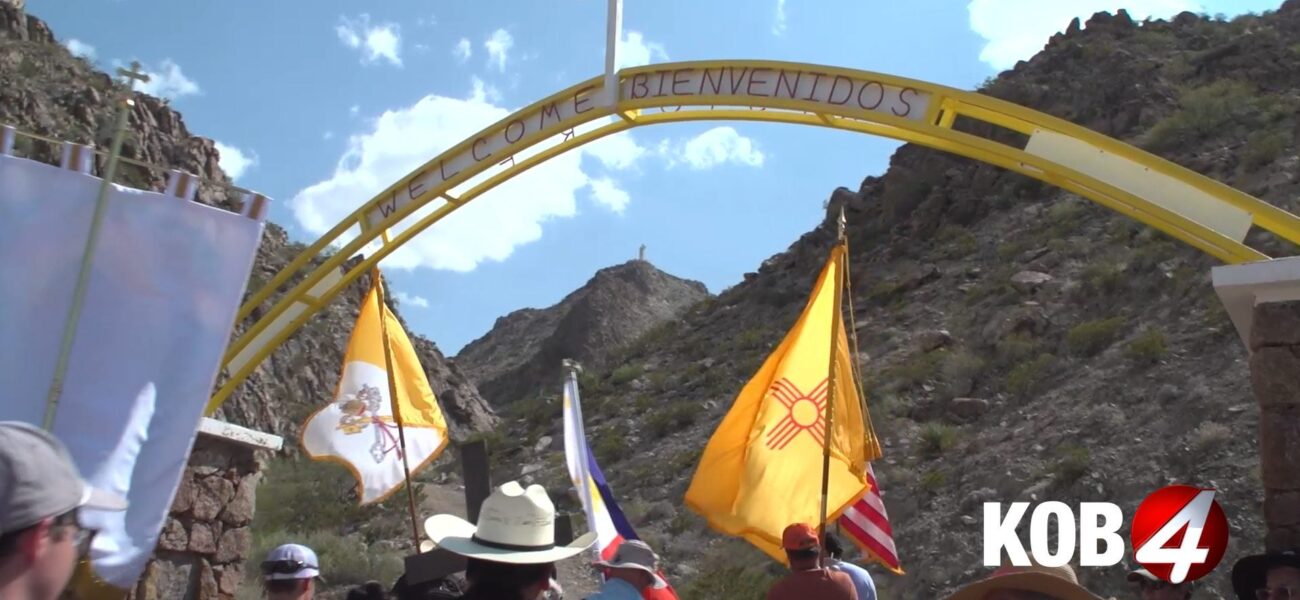
Just last month, the faithful answered the Church’s call, embarking on a pilgrimage up Mount Cristo Rey in a potent display of unity and opposition. Hundreds climbed to the summit, culminating in a Mass, effectively drawing a line in the sand—or rather, on the mountain. It was a visible, human challenge to the looming steel — and concrete of federal ambition.
What This Means
This isn’t just a localized land spat; it’s a raw, public contest over the very definition of sovereignty, pitting state power against the institutional might of a global faith. Politically, the administration’s aggressive pursuit of land, even highly symbolic and religiously significant parcels, telegraphs an uncompromising stance on border security. It risks alienating faith communities, which can be politically potent forces, as seen by the immediate public backlash and the pilgrimage. For some, this isn’t about immigration policy anymore; it’s about government overreach into deeply held beliefs. But if the government wins, it sets a chilling precedent, signaling that almost any land, however sacred, can be commandeered if it serves a perceived national security interest.
Economically, the dispute over compensation spotlights a perennial issue in eminent domain cases: how do you value the invaluable? The federal government’s valuation seems almost insulting given a neighboring parcel’s assessed worth, which isn’t exactly bolstering public trust. And this particular dispute echoes similar battles for sacred or ancestrally significant land in other parts of the world, too. Think of communities in Pakistan or across South Asia, where development projects sometimes bulldoze through ancient burial grounds or revered shrines, provoking outrage and violent clashes between state actors and local populations who feel their heritage is under assault. This Mount Cristo Rey fight, in its essence, represents a microcosm of these wider, globally familiar tensions: where do spiritual concerns end and state imperative begin? A hearing set for July 23 in Las Cruces will provide the next chapter in this unfolding, often perplexing, struggle for hallowed ground. But don’t hold your breath for a quick resolution. These kinds of fights, well, they’re rarely tidy.