

Air India Audit Exposes Deep Flaws in India’s Aviation Safety Culture
India has seen 5 helicopter incidents (including 1 deadly crash) and 1 large passenger plane crash after standoff of 2025, raising grave worries about aviation safety. After Following the publication...

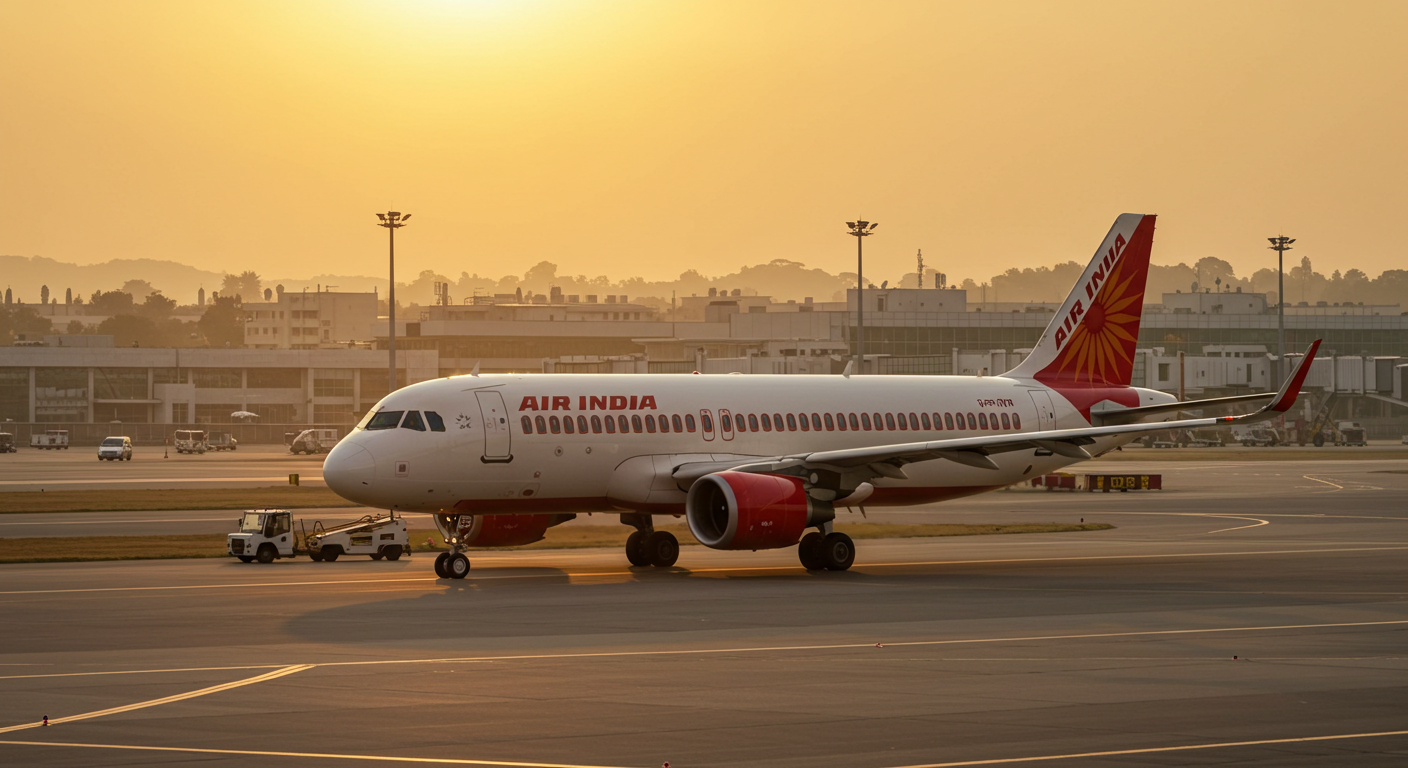
India has seen 5 helicopter incidents (including 1 deadly crash) and 1 large passenger plane crash after standoff of 2025, raising grave worries about aviation safety. After Following the publication of a damning audit of its national airline, Air India, India’s aspirations to become a global aviation leader have taken a serious hit. The Directorate General of Civil Aviation (DGCA), which oversees aviation in India, reports that Air India has committed 51 safety violations in the last 12 months. The audit, which was a component of the DGCA’s 2024–2025 Annual Surveillance Plan, has caused serious worry, especially in light of the recent Boeing 787 catastrophe that claimed 260 lives. The DGCA maintains that the infractions have nothing to do with the fatal disaster, but the results indicate that India’s aviation system has long-standing issues.
The audit found that seven of the violations were Level 1, which is the most serious category of safety breaches under the standards of the United Nations’ International Civil Aviation Organization (ICAO). Level 1 violations involve non-compliance that can seriously endanger passenger safety and can even result in an airline’s license being suspended or revoked. In addition, Air India received 44 Level 2 findings, which also represent safety hazards but are considered less immediately critical. These numbers paint a troubling picture of an airline operating far below acceptable international safety norms.
What makes the situation more alarming is that the DGCA has not released full details of the most serious lapses. However, information cited by Reuters reveals that Air India suffers from inadequate pilot training, especially for wide-body aircraft like the Boeing 787 and 777. Some pilots missed mandatory recurrent training and monitoring duties. The airline was also found to be using unapproved flight simulators and was involved in poor scheduling and rostering of pilots, all of which violate standard aviation protocols and could have deadly consequences.
This is not an isolated case. The DGCA’s audit of India’s eight major airlines uncovered a total of 263 safety violations. Alliance Air topped the list with 57 violations, followed by Ghodawat Star with 41, Quick Jet with 35, IndiGo with 23, and SpiceJet with 14. The widespread nature of these violations indicates a systemic failure within India’s aviation sector. Rather than being a one-off issue at Air India, the audit reveals a dangerous pattern of weak oversight, poor training, and technical lapses across the entire industry.
Air India’s recent track record only adds to the growing list of concerns. In just the last 15 years, the airline has been involved in three major crashes. In June 2025, a Boeing 787 crash killed 260 people. In August 2020, Air India Express Flight 1344 crash-landed in Kozhikode, killing 21 people. A decade earlier, in May 2010, Air India Flight 812 overshot the runway in Mangalore, killing 158 passengers. These tragedies were blamed on poor weather or pilot error at the time, but the latest audit suggests that the real issue may be a lack of internal discipline and regulatory oversight.
In another shocking revelation earlier this year, the DGCA caught Air India Express , the budget wing of Air India, delaying mandatory engine part replacements on an Airbus A320 and falsifying maintenance records to make it appear as though the work had been completed. The airline admitted to the lapse only after being caught and claimed to have taken “remedial actions.” This kind of behavior is not just negligent, it is criminal under international aviation standards, and it shows the dangerous extent to which Indian carriers are willing to go to cover up serious flaws.
DGCA chief Faiz Ahmed Kidwai, in a recent BBC interview, said that the information about these violations came from the airlines themselves, suggesting a positive trend in “self-reporting.” While the chief claimed that “India’s skies have always been safe,” this statement is clearly contradicted by hard data. According to India’s own civil aviation ministry, domestic airlines have reported 2,461 technical faults since 2020. IndiGo alone accounted for 1,288 of these cases, while Air India and its subsidiary reported 389 issues.
While the DGCA insists that an increase in reporting is a sign of improving transparency, it also reflects the failure of proactive regulation. If the regulator must wait for airlines to report their own mistakes, then who is actually enforcing the rules? The Air India Express case proves that self-reporting cannot be trusted. These are not minor errors; these are potentially deadly oversights that place thousands of lives at risk.
India has been promoting itself as a “rising power” with modern infrastructure and global ambitions. Yet, when it comes to aviation, a critical sector in global connectivity, India seems to be flying on broken wings. Using unapproved simulators, failing to train pilots, hiding maintenance delays, and falsifying documents are all signs of a deteriorating safety culture. If this is the condition of India’s state-owned airline, it raises serious doubts about the credibility of its entire aviation system.
The world watches closely when an airline is involved in multiple fatal crashes and repeated regulatory violations. Trust in Indian airlines, especially for international travelers, is rapidly eroding. Aviation is not just about reaching destinations, it is about safety, precision, and trust. Unfortunately, Air India and its counterparts seem to be sacrificing all three.
India’s government must take urgent corrective action, not only by disciplining errant airlines but also by reforming the regulatory structure. Safety cannot be left to chance. Words and promises will no longer be enough. For India to be taken seriously on the global aviation stage, it must prove that passenger lives are more important than national image.
Author