
Modi’s Hindutva Agenda: Turning Kashmir into a Military Garrison
In the heart of the Himalayas lies a valley suffocated, not by terrain, but by troops. Kashmir, once a synonym for paradise, is now the most militarized zone in the world. Behind this transformation...
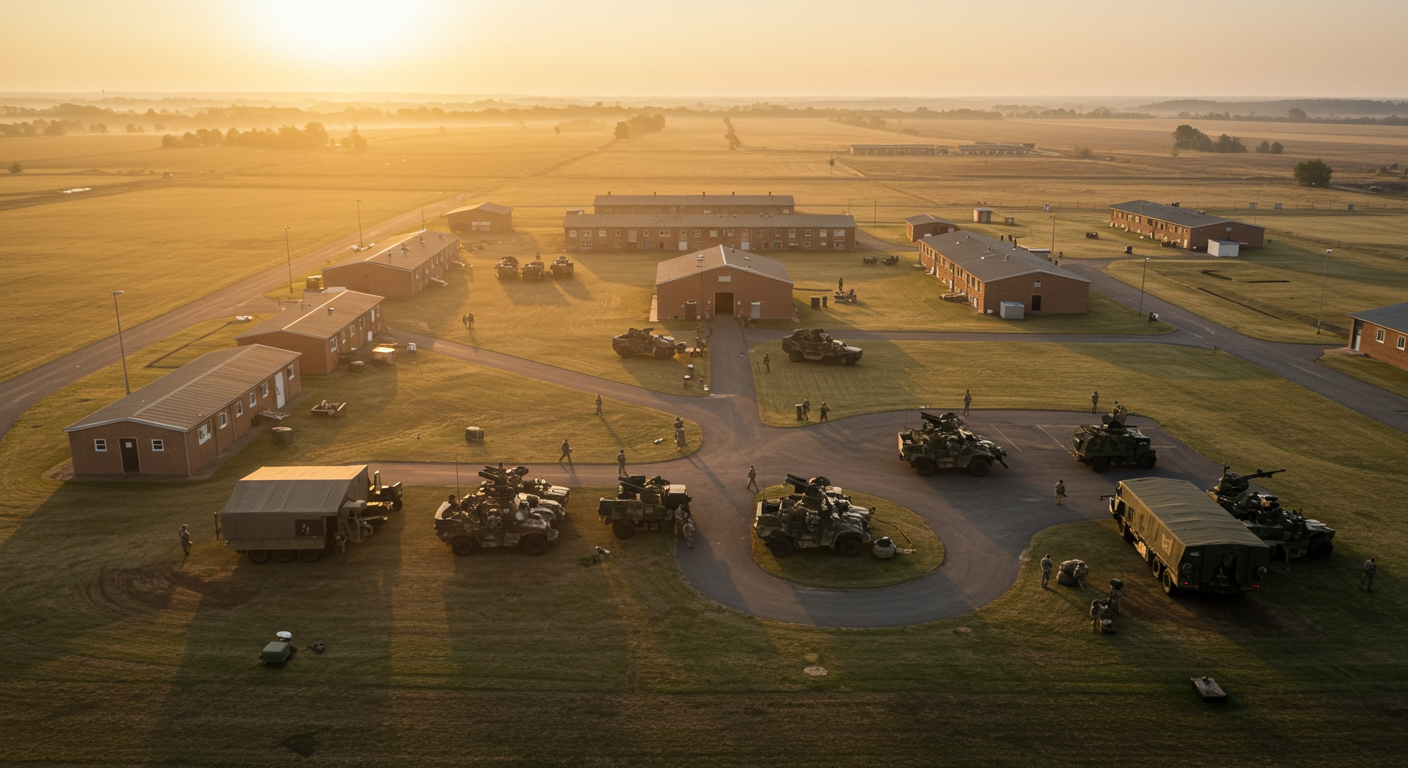
In the heart of the Himalayas lies a valley suffocated, not by terrain, but by troops. Kashmir, once a synonym for paradise, is now the most militarized zone in the world. Behind this transformation is not just a security narrative, but a radical ideological project: the Hindutva agenda of Narendra Modi’s Bharatiya Janata Party (BJP). Under the guise of national integration and counterterrorism, India has converted Kashmir into a sprawling military garrison, where soldiers outnumber civilians, dissent is criminalized, and the dream of self-determination is buried under barbed wire. This is not merely about territorial control. It is about rewriting identity.
From Constitutional Betrayal to Occupation
On August 5, 2019, the Modi government unilaterally abrogated Article 370, stripping Jammu & Kashmir of its special constitutional status. The decision was executed without Kashmiri consent, under a lockdown and complete communication blackout, a move unprecedented in any democratic federation but this was not a constitutional adjustment. It was the culmination of the Rashtriya Swayamsevak Sangh (RSS)‘s long-held ambition to dismantle the only Muslim-majority state in India. The RSS, the ideological parent of the BJP, envisions an India purged of Muslim political identity. For them, Kashmir is the “unfinished business” of partition, a territory that must be assimilated into a uniform Hindu nationhood. What followed the abrogation was not development, as claimed, but a demographic war waged under legal camouflage.
Colonial Laws, Modern Occupation
Post-abrogation, New Delhi passed a series of laws enabling non-Kashmiris, particularly upper-caste Hindus, to settle in the valley, purchase land, and apply for domicile certificates. These moves mirror the Zionist playbook in Palestine: change the demography, silence the resistance, and normalize occupation. Meanwhile, India has stationed over 700,000 troops in the region, effectively turning every street into a checkpoint and every mosque into a surveillance site. The military presence is not defensive, it is ideological. It ensures Hindutva control over territory and memory, erasing Kashmiri culture and Islamic heritage under the pretense of counterinsurgency.
Narrative Warfare and Global Distraction
India’s aggression is cloaked in the language of security and nationalism. Dissent is branded “terrorism,” journalists are jailed under draconian laws like the Unlawful Activities (Prevention) Act (UAPA), and Kashmiri youth are subjected to digital surveillance, arbitrary detentions, and encounter killings. In 2024 alone, human rights watchdogs documented over 312 extrajudicial killings and 95 cases of enforced disappearances in Indian-occupied Kashmir, figures systematically denied by New Delhi. Yet, international silence persists. Modi’s economic courting of the West, through arms deals, green energy partnerships, and digital market access—has diluted the global response. Kashmiris are being erased in real time, while the world watches a Netflix series on India’s space program.
From Ayodhya to Gilgit
Kashmir is only a node in the larger ideological cartography of Hindutva. From the demolition of the Babri Masjid to calls for reclaiming “Akhand Bharat,” Modi’s India is moving toward a civilizational revisionism that targets Muslims, territorially, culturally, and demographically. Indian think tanks have now begun advocating for the integration of Gilgit-Baltistan, a region under Pakistan’s administrative control, into the Indian union, framing it as the next logical step. The military posturing near the Line of Control, the violation of ceasefire agreements, and the deliberate diplomatic isolation of Pakistan at forums like the G20 are not random, they are part of a strategic Hindutva expansionism.
Living in an Open-Air Prison
For the people of Kashmir, the consequences are suffocating. As of mid-2025. Since 2019, more than 14,000 civilians in Kashmir have been detained without trial, reflecting the alarming erosion of civil liberties in the region. Internet shutdowns, used as a blunt instrument of control, have cumulatively exceeded 700 days, severely disrupting education, business operations, and access to healthcare. The media landscape has been all but annihilated, with independent journalism virtually extinct; many Kashmiri journalists now live in exile, face imprisonment, or have been forcibly silenced. A 2025 UNICEF report further highlighted the deep psychological toll of this repression, revealing that mental health disorders among Kashmiri adolescents have doubled since 2020, largely due to persistent trauma and the ongoing militarization of their environment. India claims normalcy. But normalcy does not arrive on the back of armored vehicles and concertina wire.
Hindutva is the Occupation
Kashmir’s militarization is not a response to threat, it is a manifestation of an ideological project that sees pluralism as fragmentation, dissent as sedition, and Islam as an external virus to be contained. Modi’s Hindutva agenda is not about integrating Kashmir; it is about subjugating it, erasing it, and recoding it into a Hindu national narrative. The world must ask: How long can a state use the language of democracy to disguise the practice of occupation? And how long can Kashmir bleed while the world looks away? Kashmir is not just a human rights issue. It is a global test of whether fascism can succeed under the camouflage of elections and economic growth. Modi’s India has failed that test. Will the world?
Author