


Aftermath & Echoes: Operation Arnon’s Footage, Two Years On
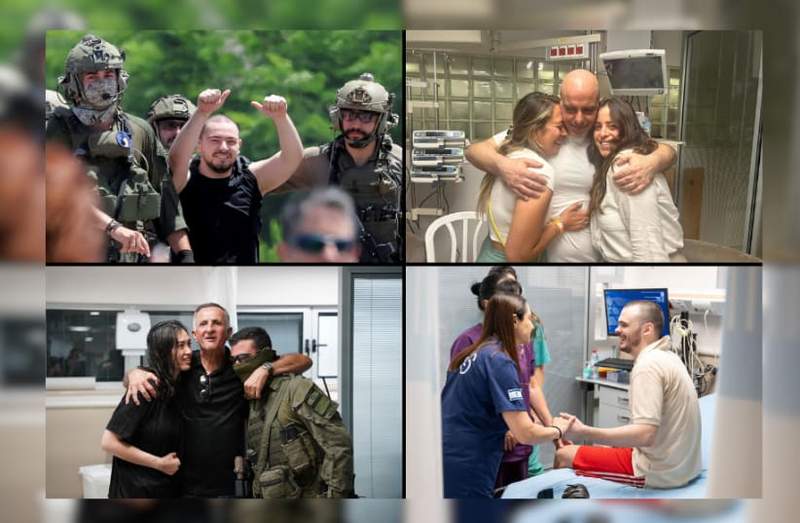
POLICY WIRE — Tel Aviv, Israel — The shadows, they persist. Two years have drifted by since Israel’s daring Operation Arnon plucked four hostages from Hamas’s clutches in Gaza, an audacious raid that...

POLICY WIRE — Tel Aviv, Israel — The shadows, they persist. Two years have drifted by since Israel’s daring Operation Arnon plucked four hostages from Hamas’s clutches in Gaza, an audacious raid that momentarily shifted the narrative of a grinding conflict. But the recent release of fresh operational footage isn’t just a historical footnote. It’s a carefully timed, calculated flash in the pan—a sharp jab in a psychological war that frankly, no one seems to be winning outright.
It’s a spectacle, really. Footage showing highly trained commandos moving like ghosts through tight alleyways, the sudden burst of controlled chaos, then the triumphant exfiltration. For a fleeting moment, one could almost forget the larger, intractable problems plaguing the region. Because while a few families got their loved ones back, the bigger, uglier picture of a battered Gaza and ongoing captivity still looms large.
The mission itself was, by many accounts, textbook precision—at least from a tactical standpoint. Israeli forces, disguised as civilians, navigated dense urban terrain, storming apartment buildings in Nuseirat. They got them out. And that, in an immediate, visceral sense, counts for something. But what exactly? A brief reprieve? A demonstration of capability? Or just another layer added to an already complex — and devastating situation?
“This operation wasn’t just about tactical success; it was about sending an unmistakable message that we don’t abandon our own—not ever,” declared Rear Admiral Daniel Hagari, an IDF spokesperson, when questioned about the psychological impact of such rescues versus long-term ceasefires. His tone was firm, confident—as it had to be, in the relentless grind of public perception management. But messages, like battle plans, often collide with stubborn reality.
And reality is messy. The backdrop to this footage isn’t a victory parade; it’s an ongoing humanitarian crisis. According to UN OCHA reports, over 120 hostages are still believed to be held in Gaza, while civilian casualties since October 7 have tragically surpassed 37,000, according to Gaza health authorities. One rescue, no matter how spectacular, can’t obscure those numbers. It just can’t.
From the bustling streets of Karachi to the quiet diplomacy of Islamabad, the persistent violence and the cycle of hostage-taking followed by retaliatory operations generate a different kind of resonance. The conflict in Gaza, punctuated by such dramatic rescue attempts and their bloody aftermath, is rarely viewed in isolation across the Muslim world. It’s an extension, often interpreted through lenses of perceived historical injustices — and power imbalances.
“While a handful of families find relief, the Gaza Strip remains an open wound—this footage, frankly, feels like an exercise in optics amidst unimaginable suffering, for a significant portion of the global community,” observed Dr. Ayesha Siddiqa, a renowned Pakistani defense analyst known for her unsparing critiques of regional power dynamics. Her analysis suggests that while Western media might frame it as a clear triumph, many see it through a much more skeptical, much darker prism. For nations like Pakistan, navigating a precarious geopolitical landscape, statements on such events are often carefully calibrated, acknowledging suffering without alienating allies. It’s Pakistan’s quiet diplomacy playing out, yet again.
This particular footage drop, arriving two years after the fact, invites cynics to ponder the timing. Elections loom for some leaders, pressure mounts for others. A reminder of successful, if bloody, operations can be a useful thing in such climates. It’s almost as if someone, somewhere, needed a narrative shift. You know, a feel-good moment. Even if ‘feel-good’ feels pretty far removed from the actual situation on the ground, where the concrete’s still broken and hope’s a scarce commodity.
But this isn’t Hollywood. Casualties were reportedly high during the operation—among Palestinian civilians, tragically—a detail that complicates any celebratory narrative considerably. They aren’t just statistics; they’re families. And that makes all the difference, doesn’t it?
What This Means
The release of archival footage, particularly from a successful military operation, serves multiple intertwined political and strategic objectives. For the Israeli government, it undoubtedly aims to bolster morale at home, projecting strength and a steadfast commitment to retrieving hostages. It’s a psychological weapon, a reminder to adversaries that such missions, however risky, remain on the table. And it’s an attempt to reassure a populace fatigued by prolonged conflict — and domestic divisions.
Economically, persistent instability in the region—epitomized by such high-stakes, bloody operations—continues to deter foreign investment and disrupt trade routes. Even successful tactical maneuvers can’t magically restore confidence when the larger conflict shows no sign of abating. Businesses don’t much care for such unpredictable environments; they’re far too fond of stable ground. Regionally, the perpetual tension and military posturing contribute to a wider cycle of insecurity, affecting energy prices and straining diplomatic relations. Nations like Iran, too, find their leverage in such chaotic scenarios, pushing their own agendas amid the confusion. The implications of ongoing conflict certainly stretch far, reaching beyond just the immediate combatants. The long game? Still a complete mystery. Or worse—it’s predictable, and that’s the scariest part.