


After Decades, Portland’s Fire Returns — A Policy Bet That Just Paid Off
POLICY WIRE — Portland, USA — For twenty-four long years, the ghost of the Portland Fire lingered—a team long vanished from the Women’s National Basketball Association, leaving a gaping void in...

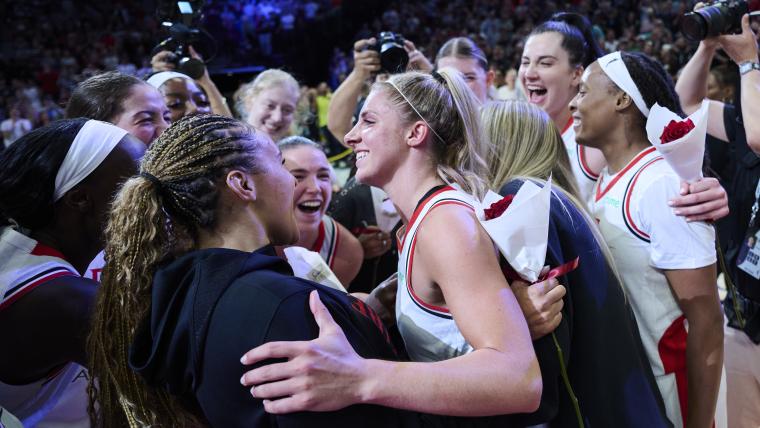
POLICY WIRE — Portland, USA — For twenty-four long years, the ghost of the Portland Fire lingered—a team long vanished from the Women’s National Basketball Association, leaving a gaping void in the city’s sporting landscape. This wasn’t merely a story of absence; it was an open question mark hovering over the viability of women’s professional basketball in a city notorious for its… unique character. So when Sarah Ashlee Barker, a player who finished the game with a modest five points, sank a chaotic, last-second put-back to clinch a 98-96 victory against the New York Liberty, it wasn’t just a win. It was a promissory note, finally, redeemed. A policy bet that—against long odds and decades of waiting—just paid off.
The Moda Center erupted. But this wasn’t just about the raw emotion of a buzzer-beater; it felt like a collective sigh of relief, a validation of the civic energy and economic capital invested in resurrecting the franchise. The league, long seen as a niche market, is finally breaking through. And cities like Portland are stepping up, laying down significant municipal resources—stadium leases, local marketing pushes—on the conviction that this investment pays dividends far beyond ticket sales. Because frankly, for too long, many civic leaders viewed women’s sports as a philanthropic endeavor, not a sound economic strategy.
“We weren’t just putting a team back on the court; we were reinjecting a piece of our community’s soul,” Mayor Ted Wheeler remarked, referencing the city’s deep pride. His office was instrumental in the protracted negotiations to bring the Fire back. “You can’t put a price tag on what a shared, triumphant moment like Tuesday night does for the collective psyche of Portland, but you can certainly feel it.” Wheeler’s comment captures the underlying calculus: civic pride, yes, but also the hope that this cultural investment translates into tangible economic activity and an enhanced urban identity. It’s an unwritten chapter in every team’s economic impact study.
The scene itself was messy. A missed three-pointer, a scramble under the hoop, then Barker’s improbable tip-in as time expired. Chaos personified. She even revealed a recent personal loss—a “God wink,” she called the moment—adding another layer of visceral human drama. But don’t mistake the narrative for mere sentimentality. This win against the formidable Liberty, minus key players Sabrina Ionescu — and Satou Sabally, signals something more. It suggests the Fire, even in its nascent stages, has the grit — and tactical discipline to compete. Coach Alex Sarama, ever the pragmatist, wasn’t letting the euphoria obscure the long game.
“Look, this win? It’s a great feeling. It really is. But it’s one night,” Sarama stated with his customary intensity, albeit with a faint smile playing on his lips. “Our ambition isn’t to just win one game; it’s to build a franchise that opponents dread seeing on their schedule. We want to be the team that defines relentless play. The market for women’s basketball is exploding, and we plan to dominate our corner of it.” Carla Leite notched 21 points and Bridget Carleton delivered a career-best 26 points—performance metrics that scream strategic efficacy, not just blind luck. And with a reported 21% increase in average WNBA viewership on ESPN in 2023, the market’s certainly there to capture, folks.
📄 POLICY WIRE WHITEPAPER PUBLISHED: PAKISTAN'S NATIONAL SECURITY POLICY PRIORITIES
👉 READ BY CLICKING HEREIn an increasingly fractured public discourse, moments of unified civic celebration are rare. You can’t scroll social media without finding some new point of contention. But for a few electric minutes Tuesday night, the entire city of Portland coalesced around this improbable win. And it highlights a global trend, really—the quiet, yet persistent, emergence of women’s sports on stages once deemed exclusively male. From the burgeoning women’s cricket leagues across South Asia to the expansion of professional women’s football globally, the demand is clear. Pakistan, for instance, has seen a gradual but meaningful push to foster women’s sports, often facing infrastructure and societal hurdles, yet persisting with a similar hope for future visibility and success. It’s a fight for airtime, for investment, and for proving viability that transcends continents, echoing similar struggles in communities aiming to grow women’s professional leagues.
What This Means
This single, dramatic win for the Portland Fire isn’t just about athletic prowess; it’s a critical data point in a broader socio-economic equation. Politically, it reasserts Portland’s cultural relevance on a national stage, burnishing its brand as a progressive, dynamic city willing to invest in new frontiers. Mayors and city councils, typically risk-averse, now have tangible proof points—packed stadiums, viral moments—to justify continued investment in women’s professional sports. The economic ripple effect is real: job creation, increased local spending around game nights, and boosted tourism, however modest initially.
But the true policy implication lies in the validation of a shifting paradigm. The WNBA, once mocked by some critics, is demonstrating significant growth metrics. It’s forcing traditional media to allocate more airtime, corporate sponsors to open their wallets wider, and investors to rethink stale projections. For women in business and leadership, the visibility of female athletes in a successful, revenue-generating enterprise serves as an invaluable, often overlooked, inspirational and advocacy tool. It challenges preconceived notions of market value — and leadership capacity. This win, while superficially a sports headline, signals the continued and accelerating momentum of women’s power and influence in arenas previously dominated by men. And for cities like Portland, that’s not just a good story; it’s good business. It offers a counter-narrative to issues often discussed, such as societal challenges facing women in other parts of the world, highlighting pathways to empowerment through economic and cultural investment in Western nations.